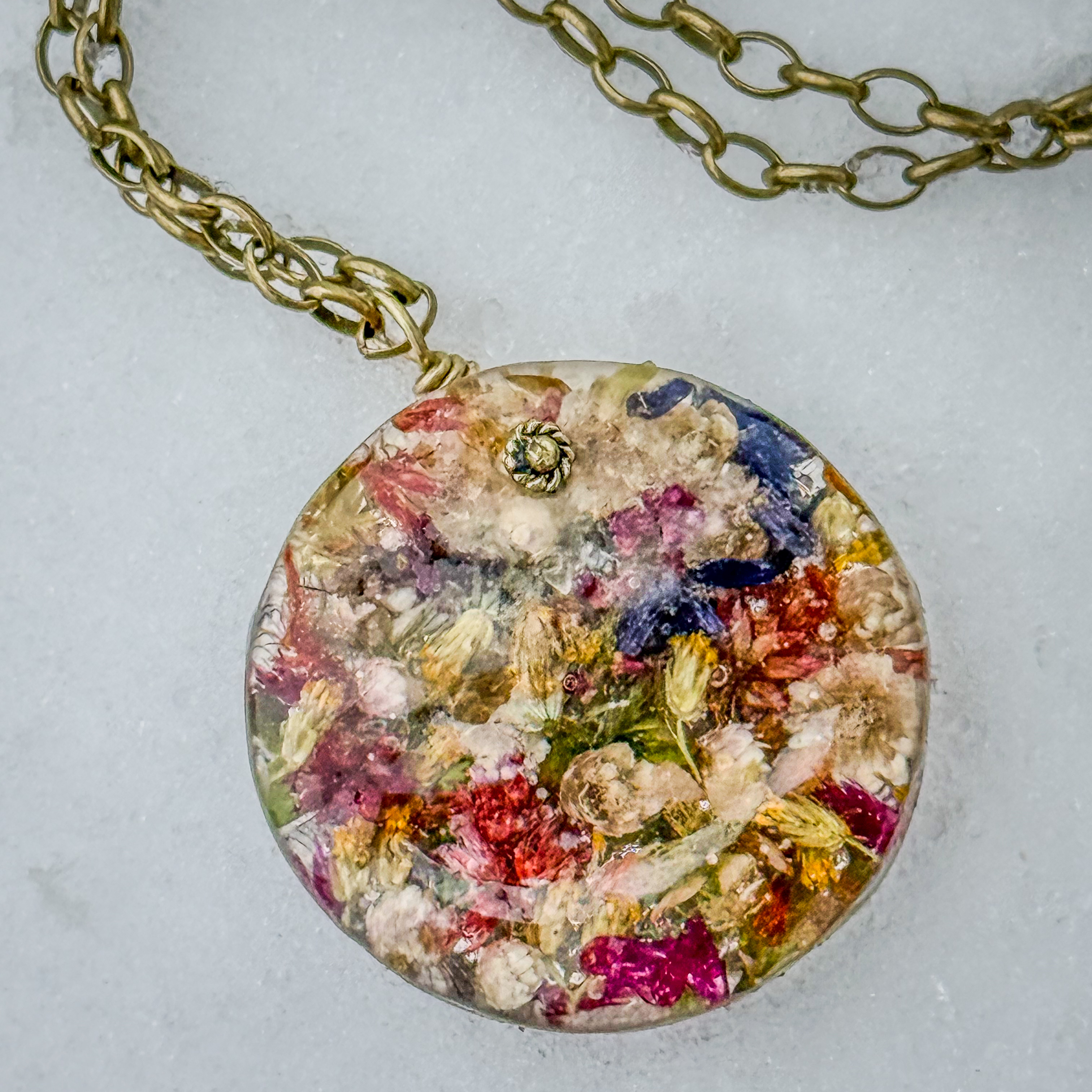
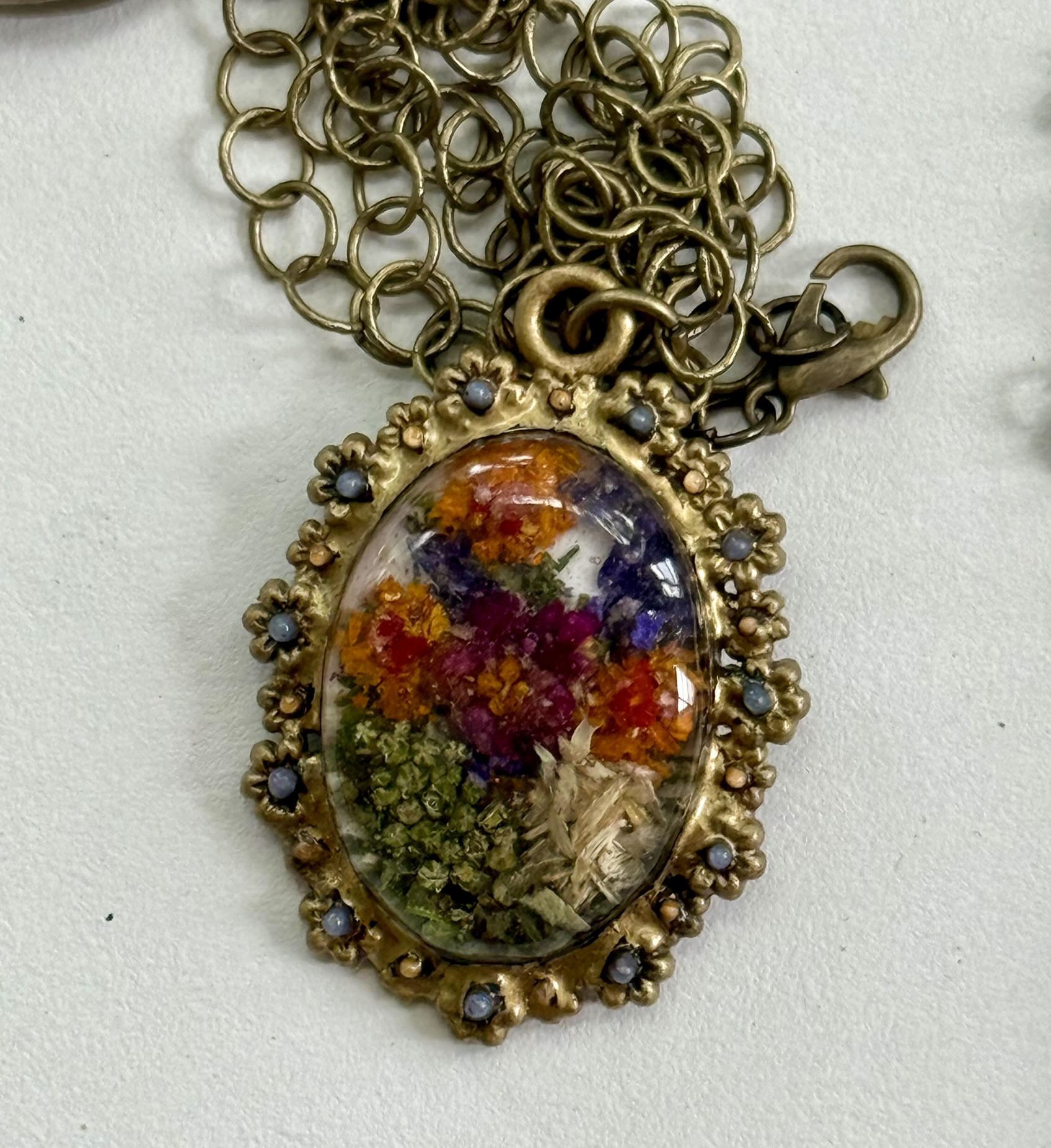
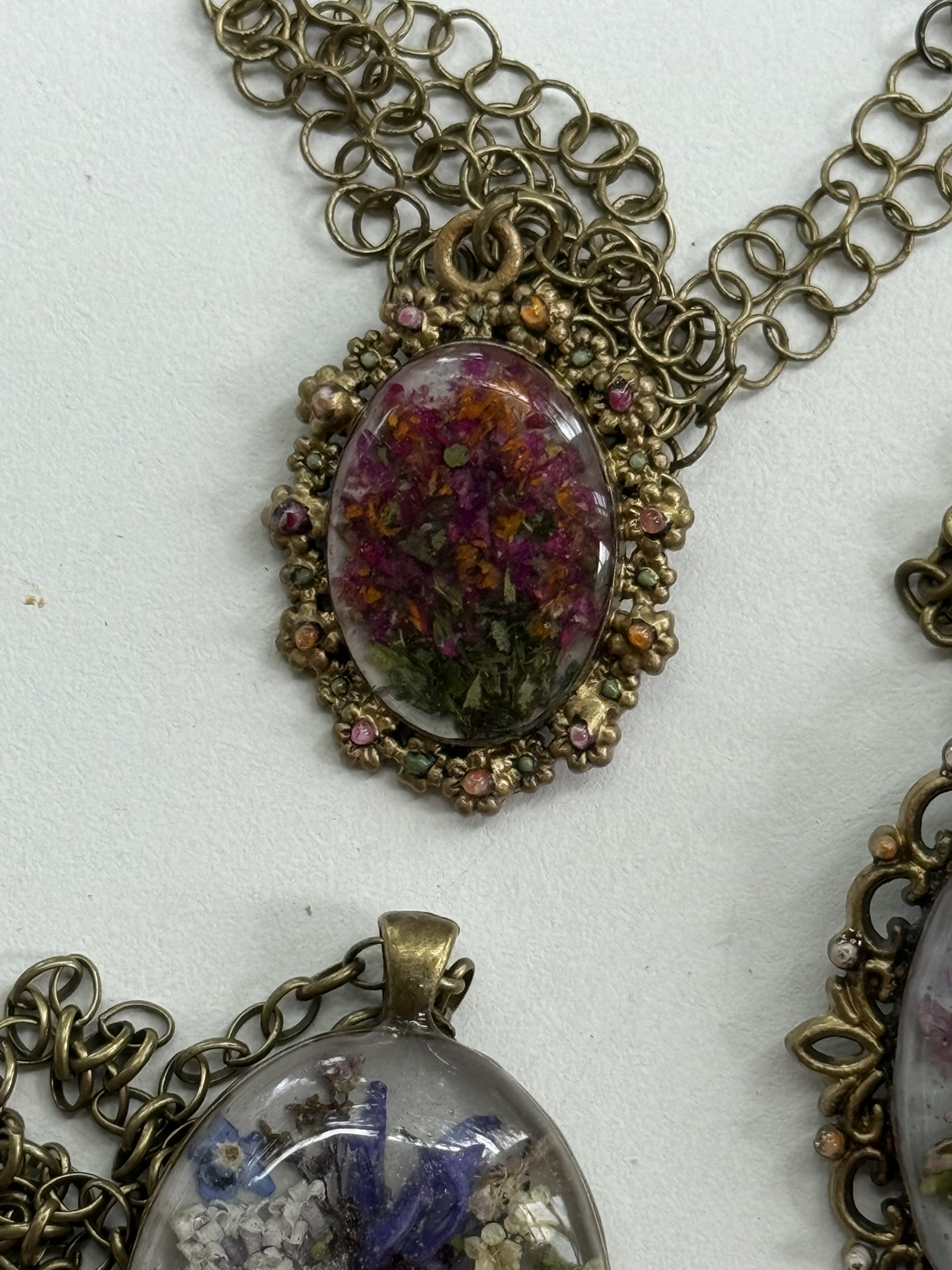
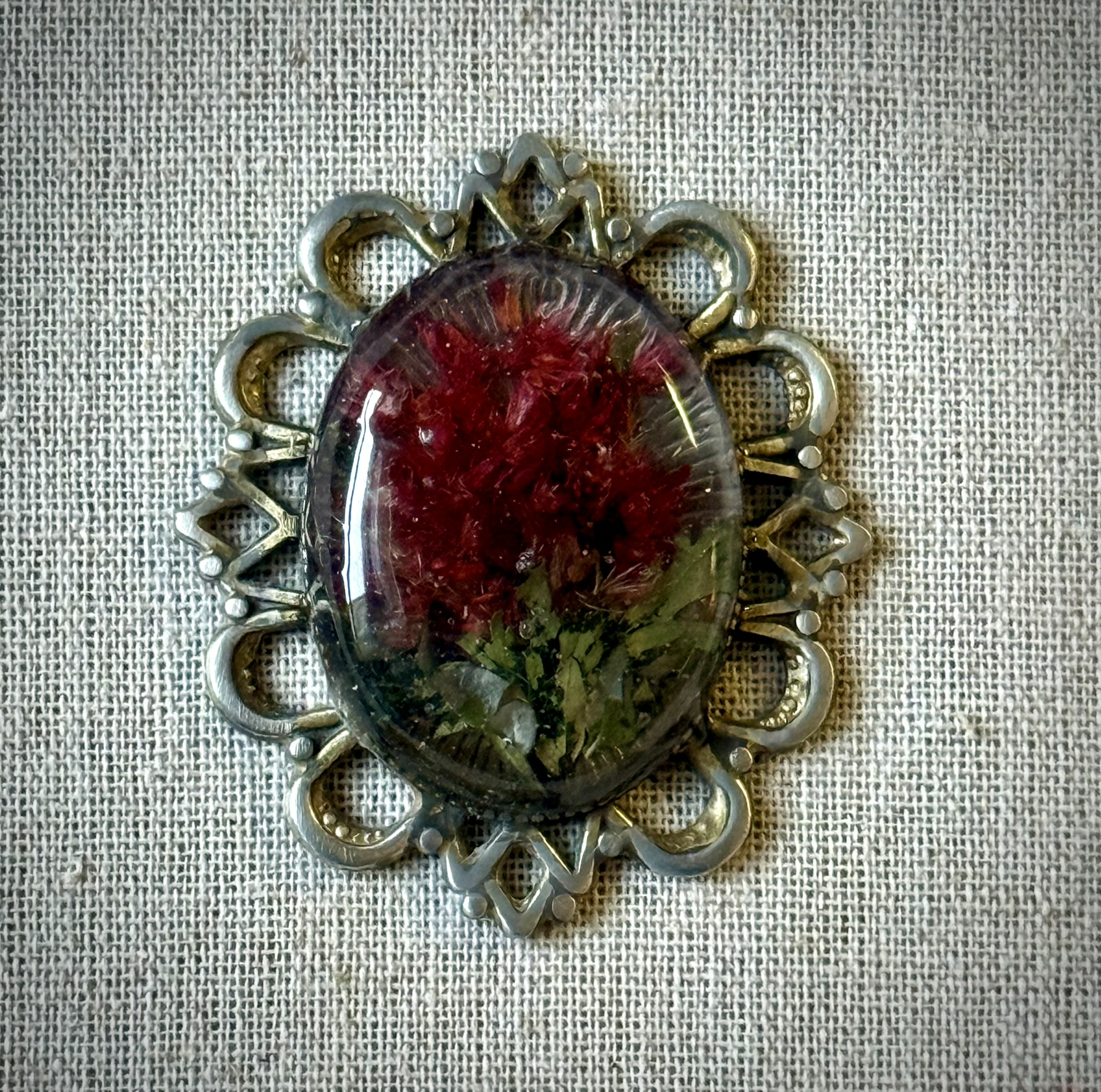
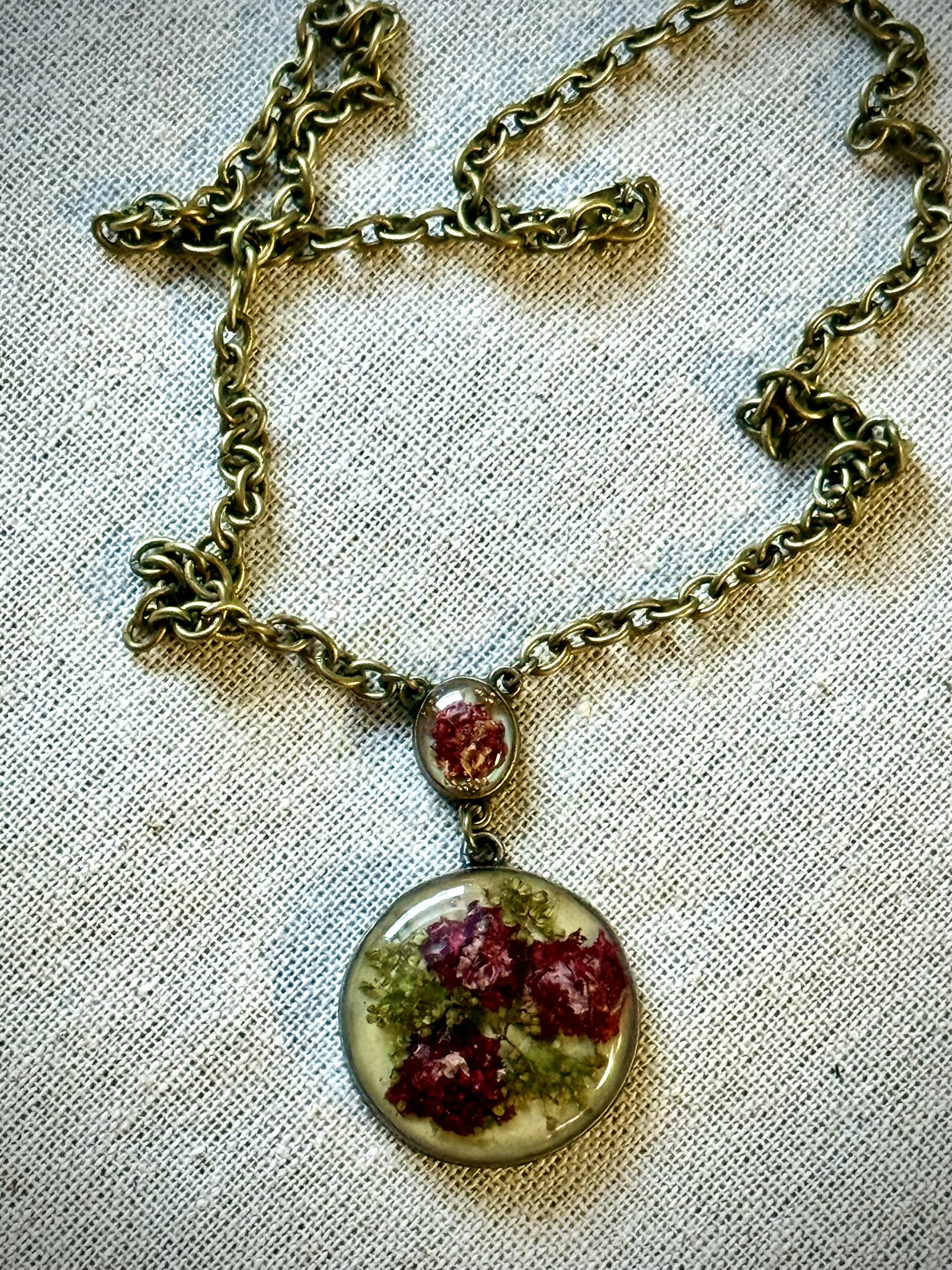
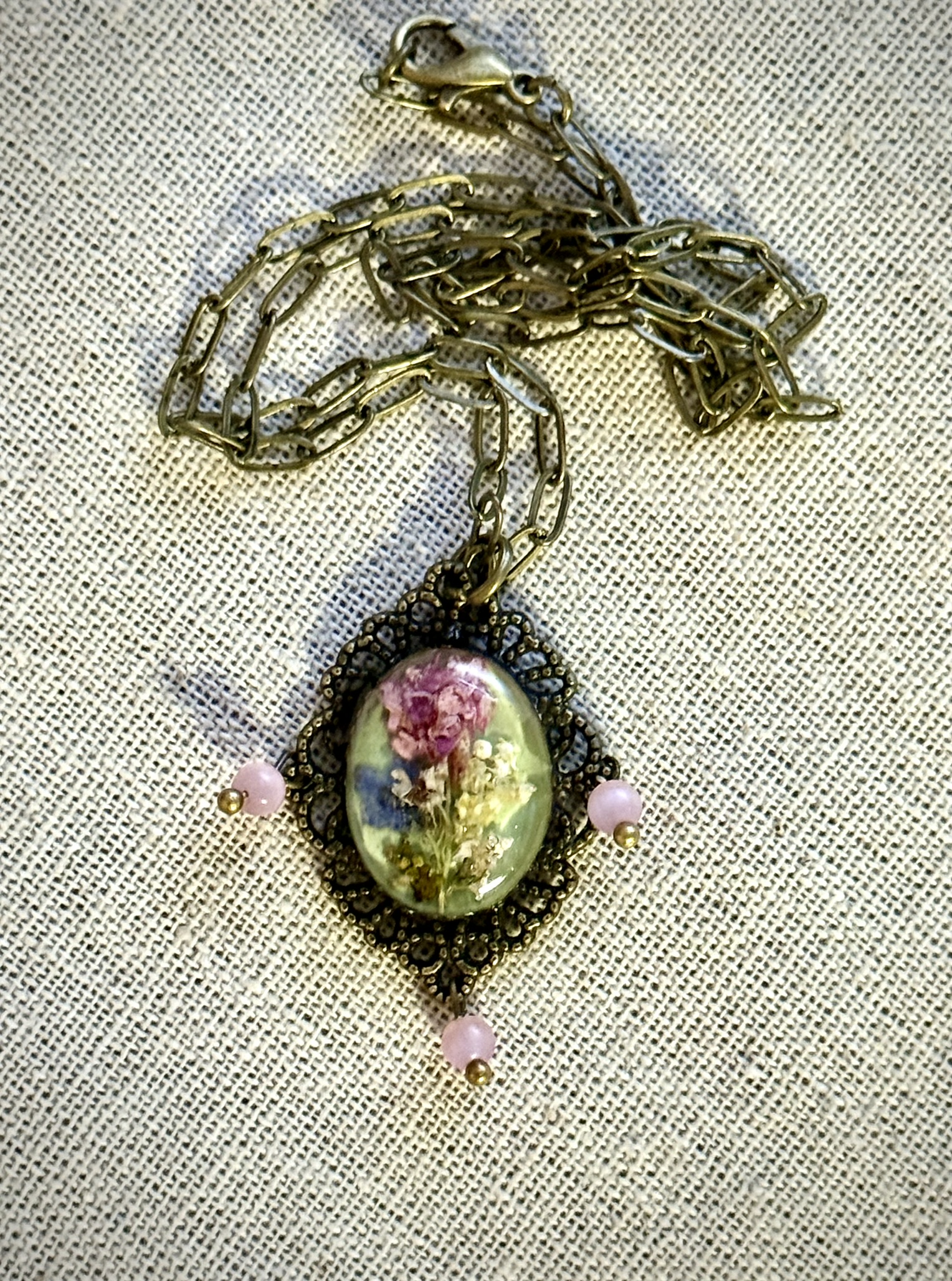
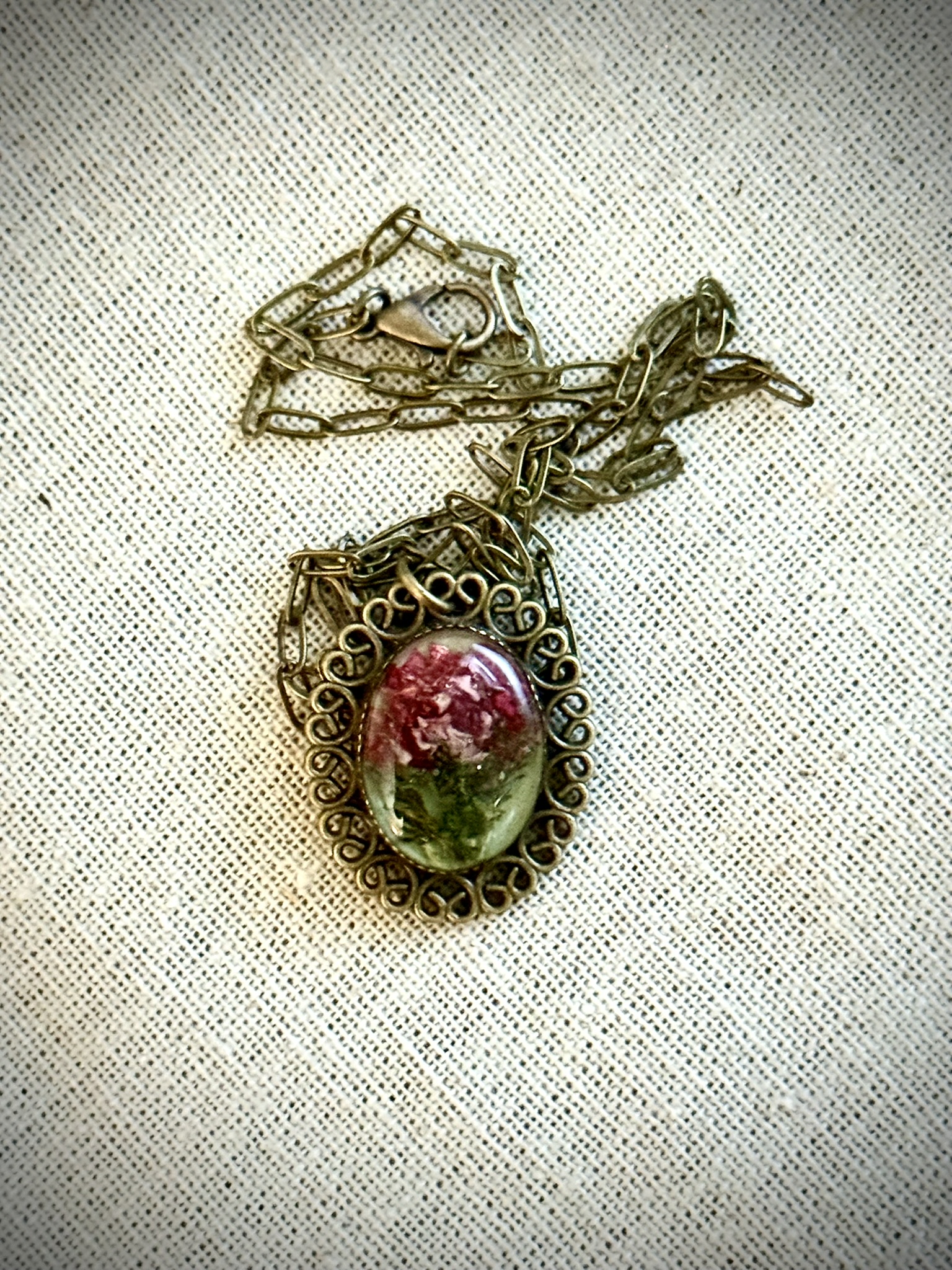
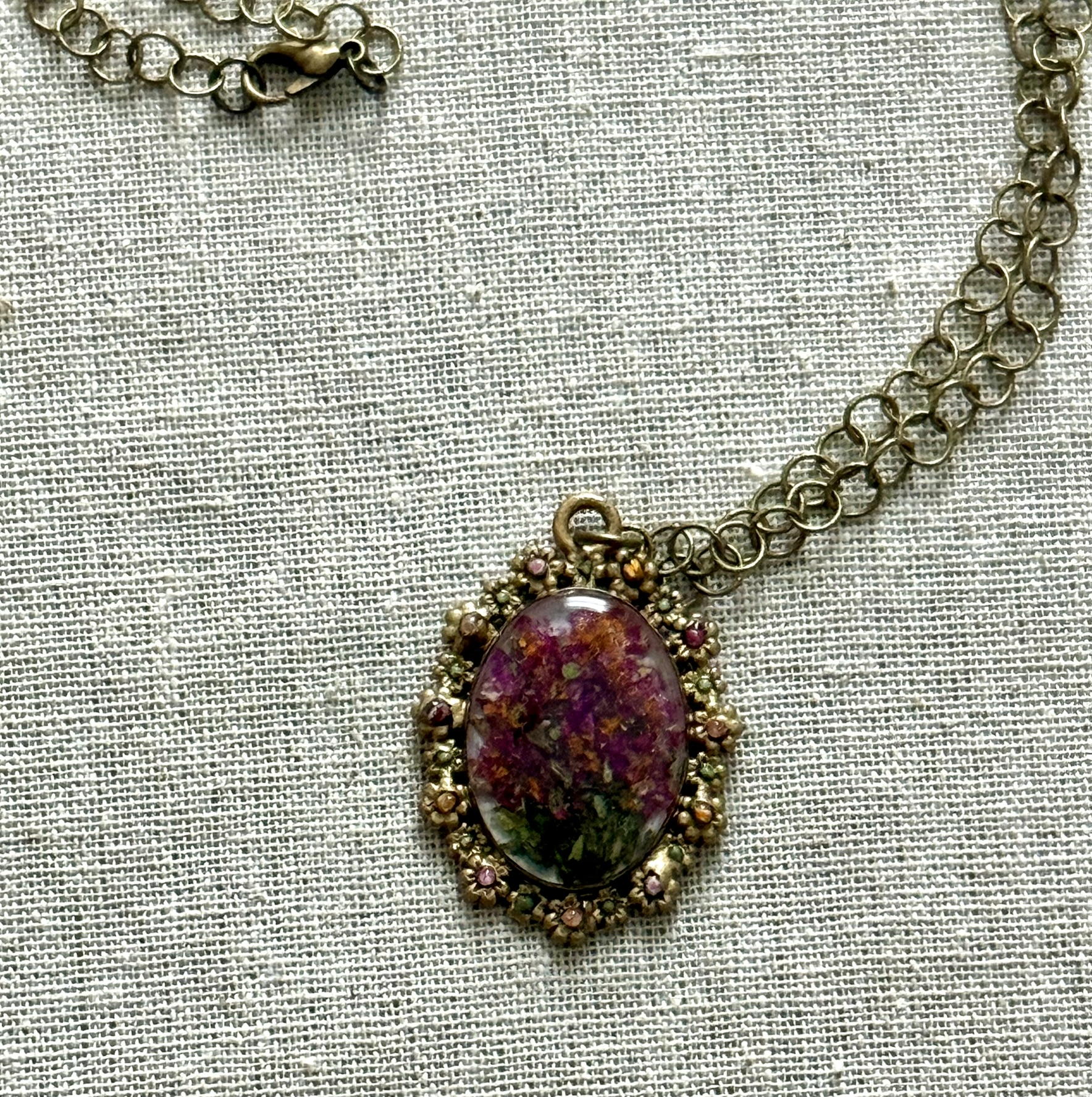
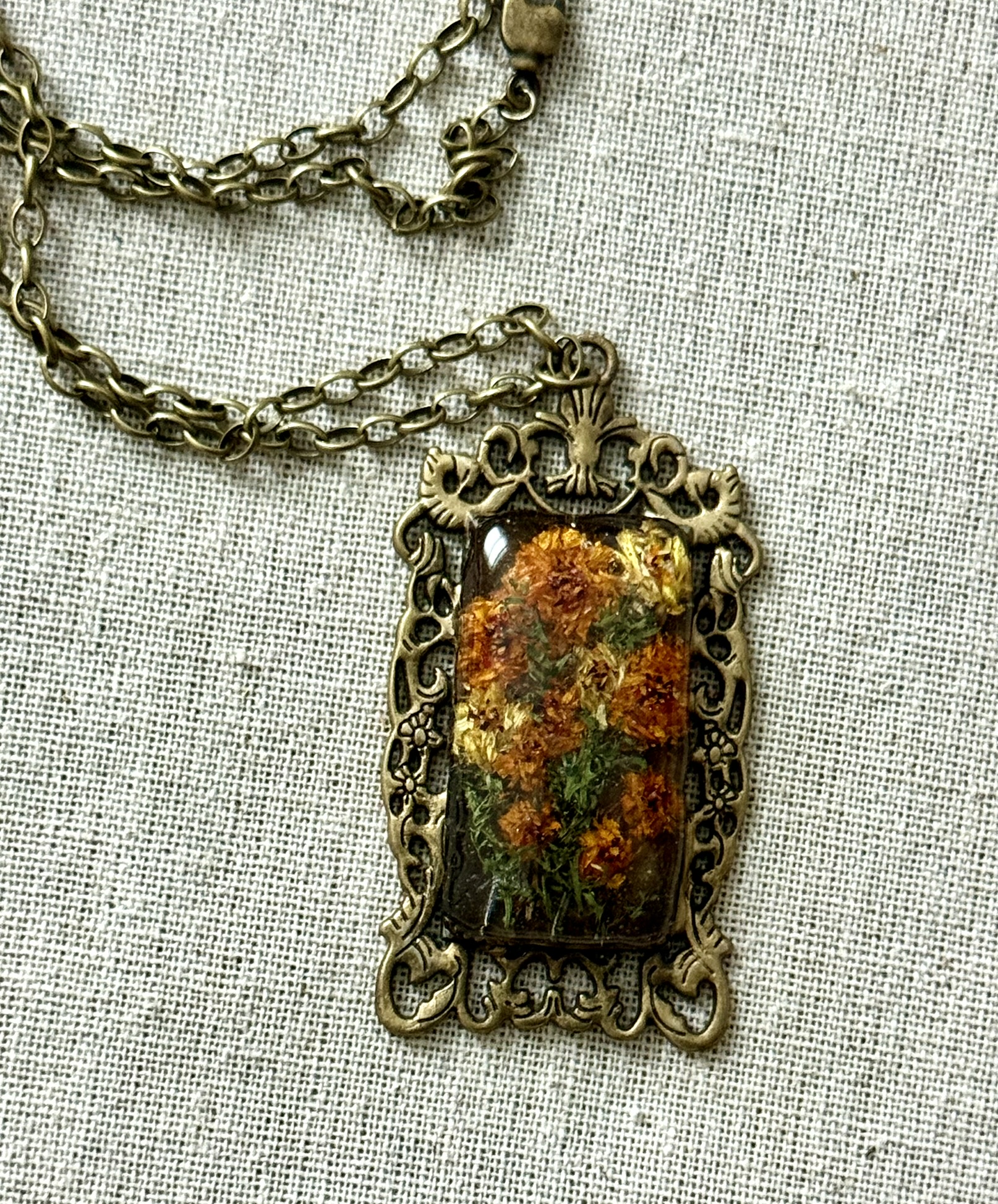
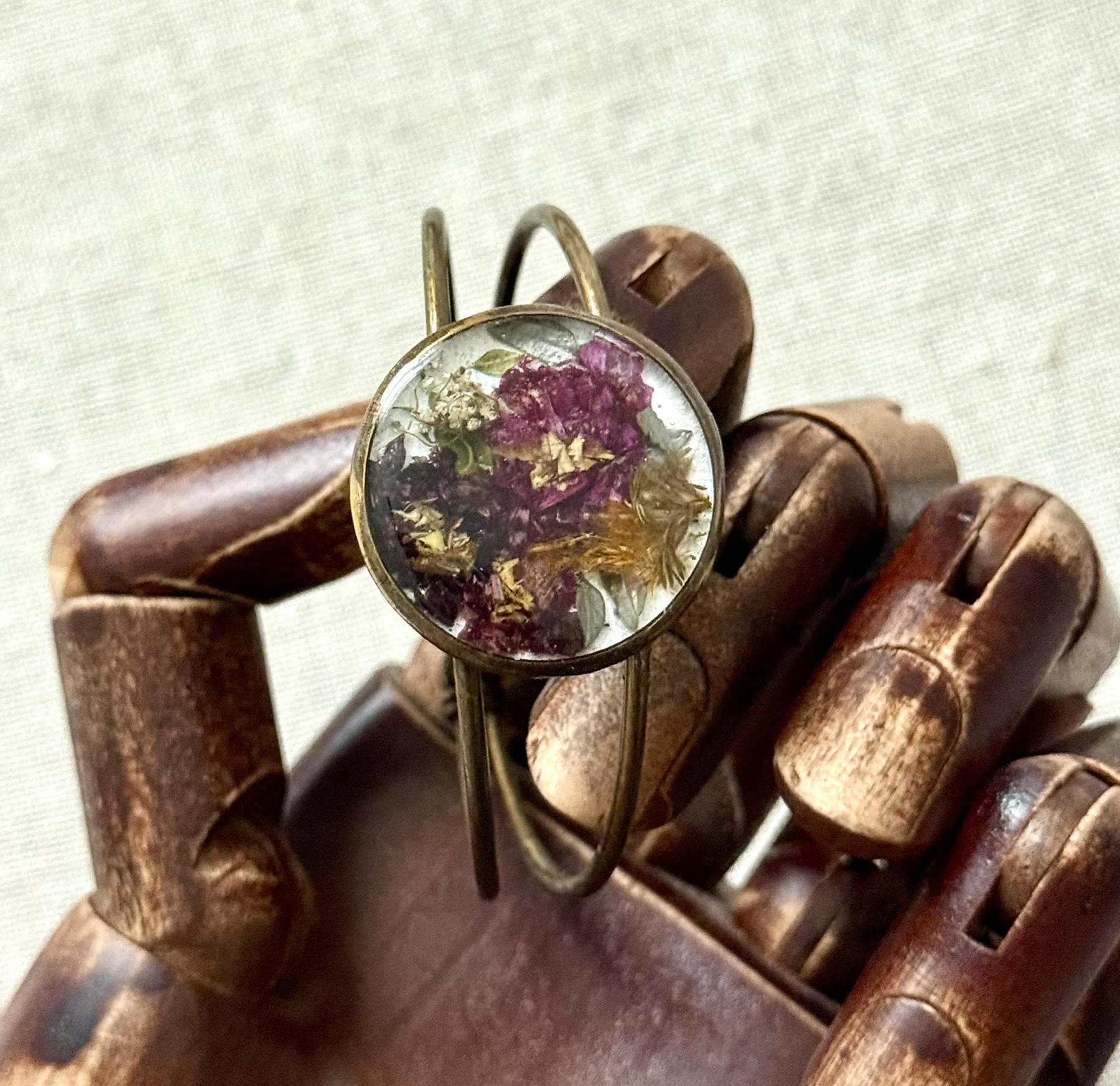
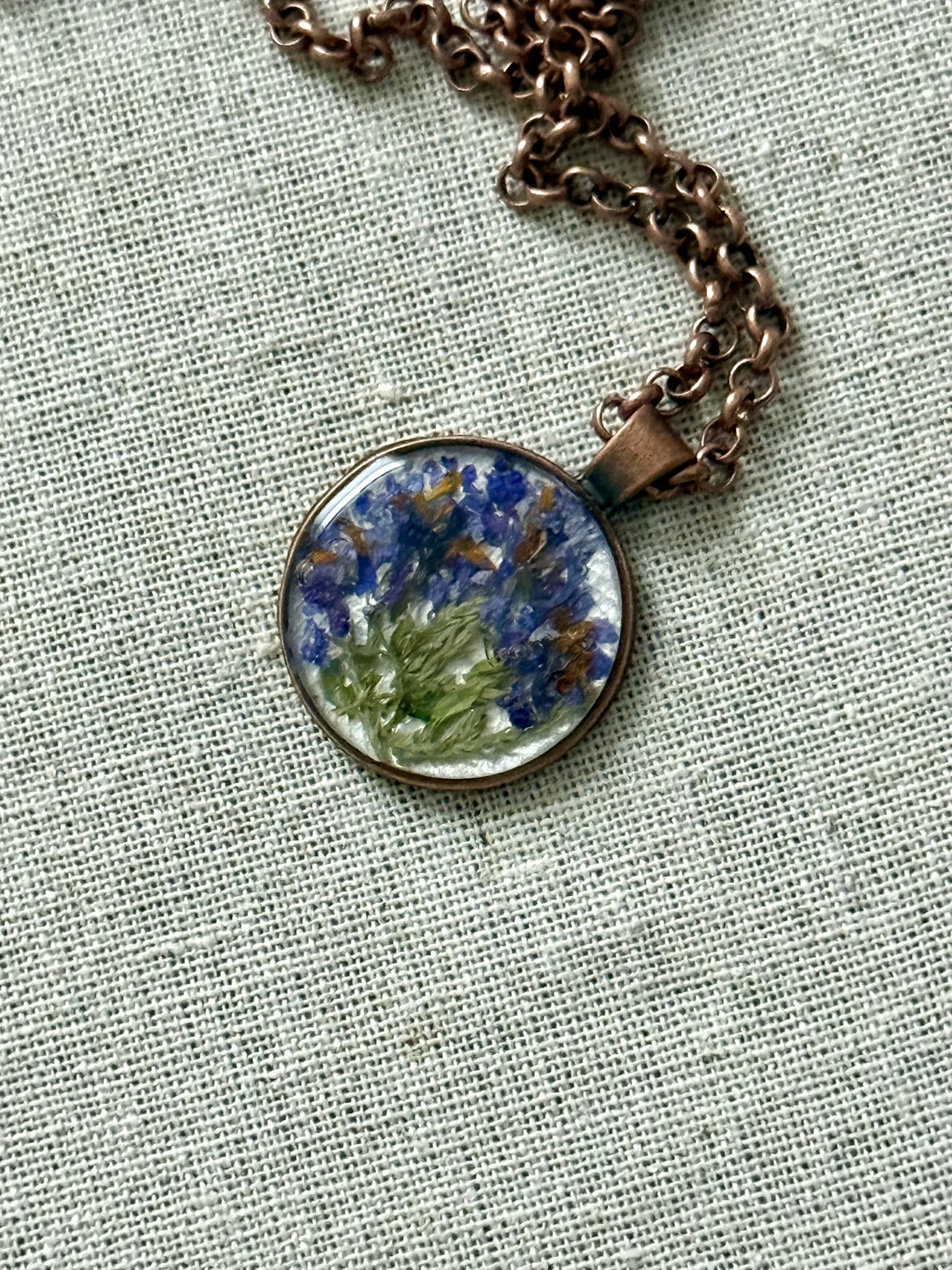
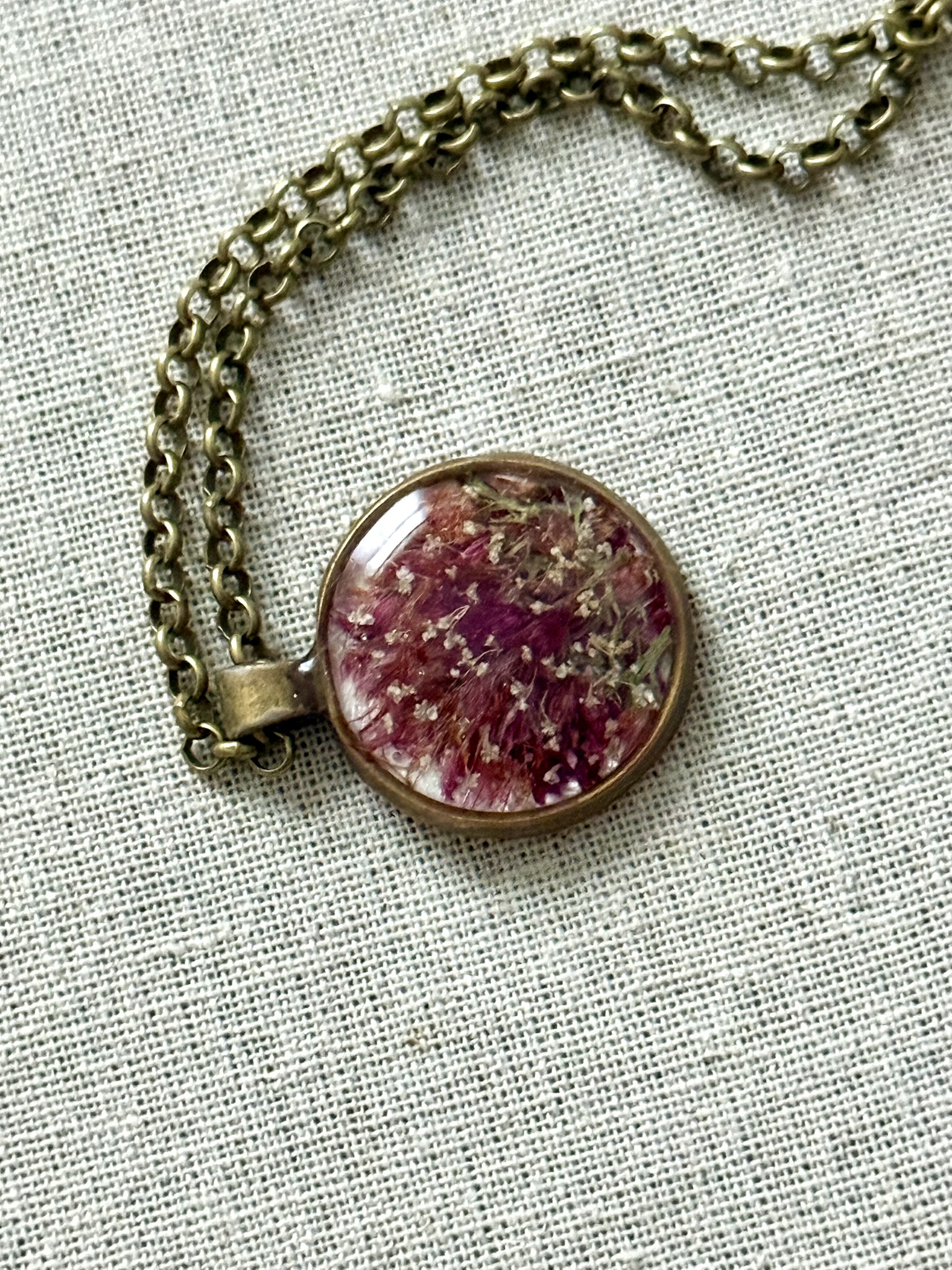
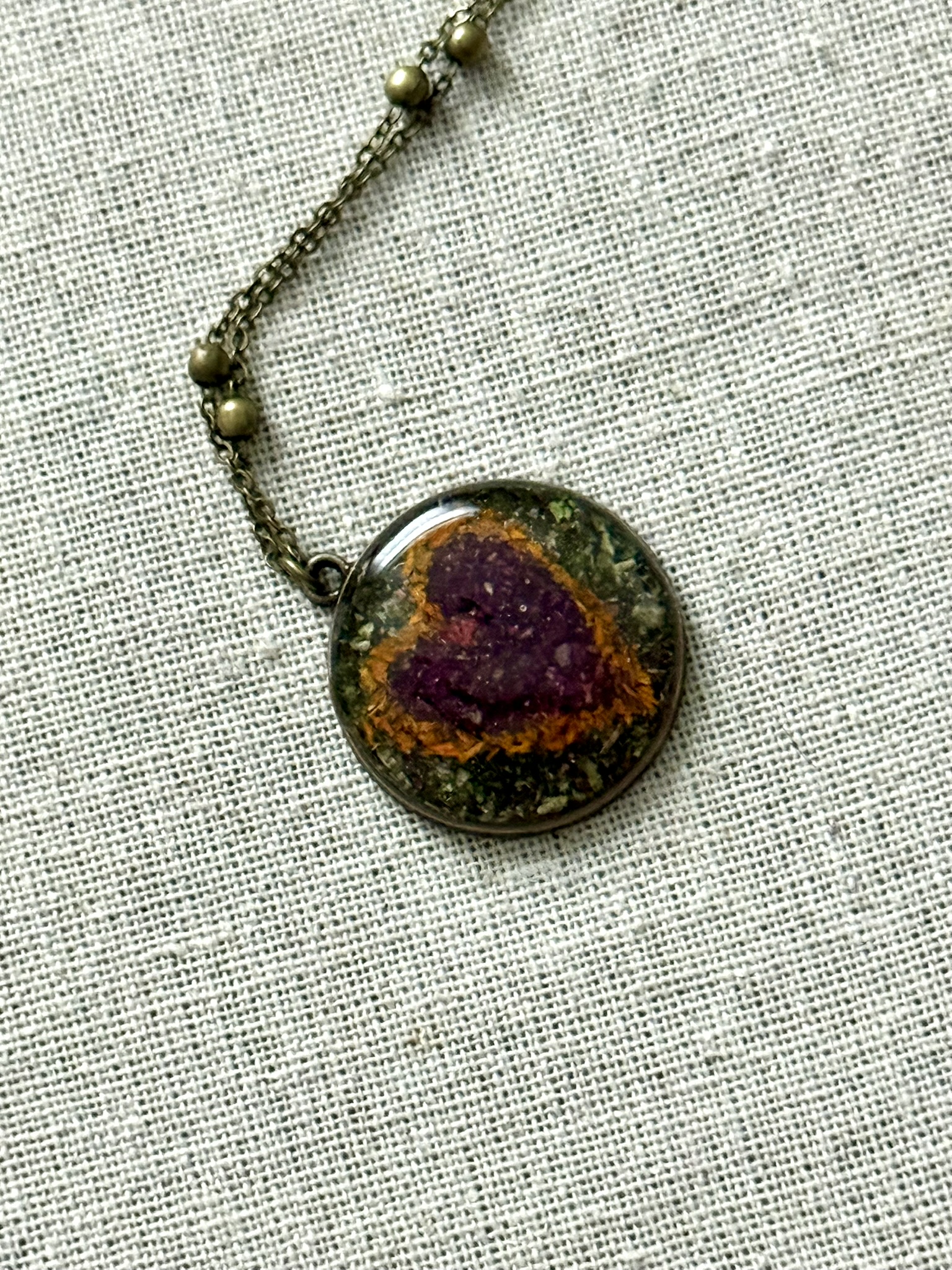
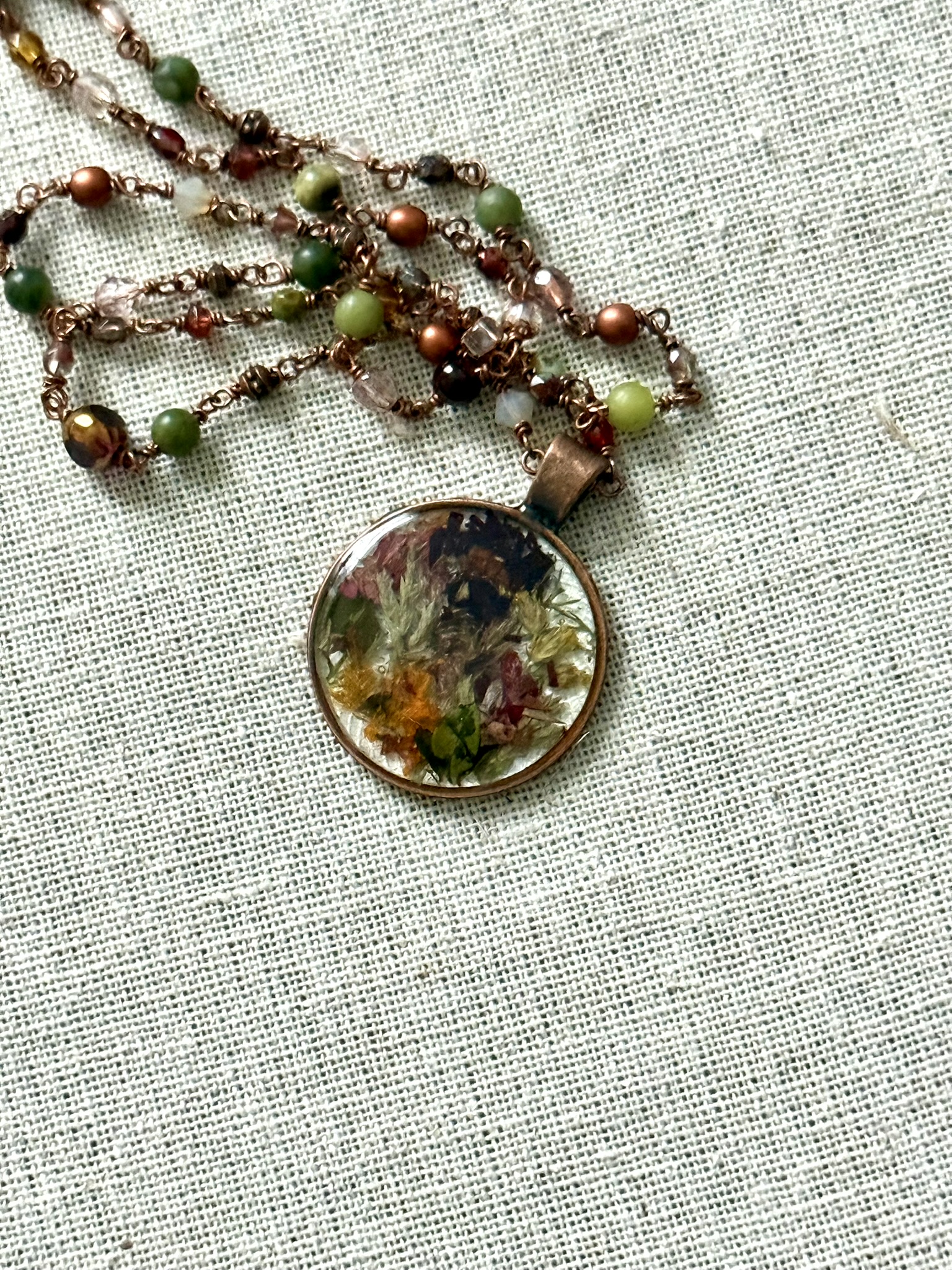
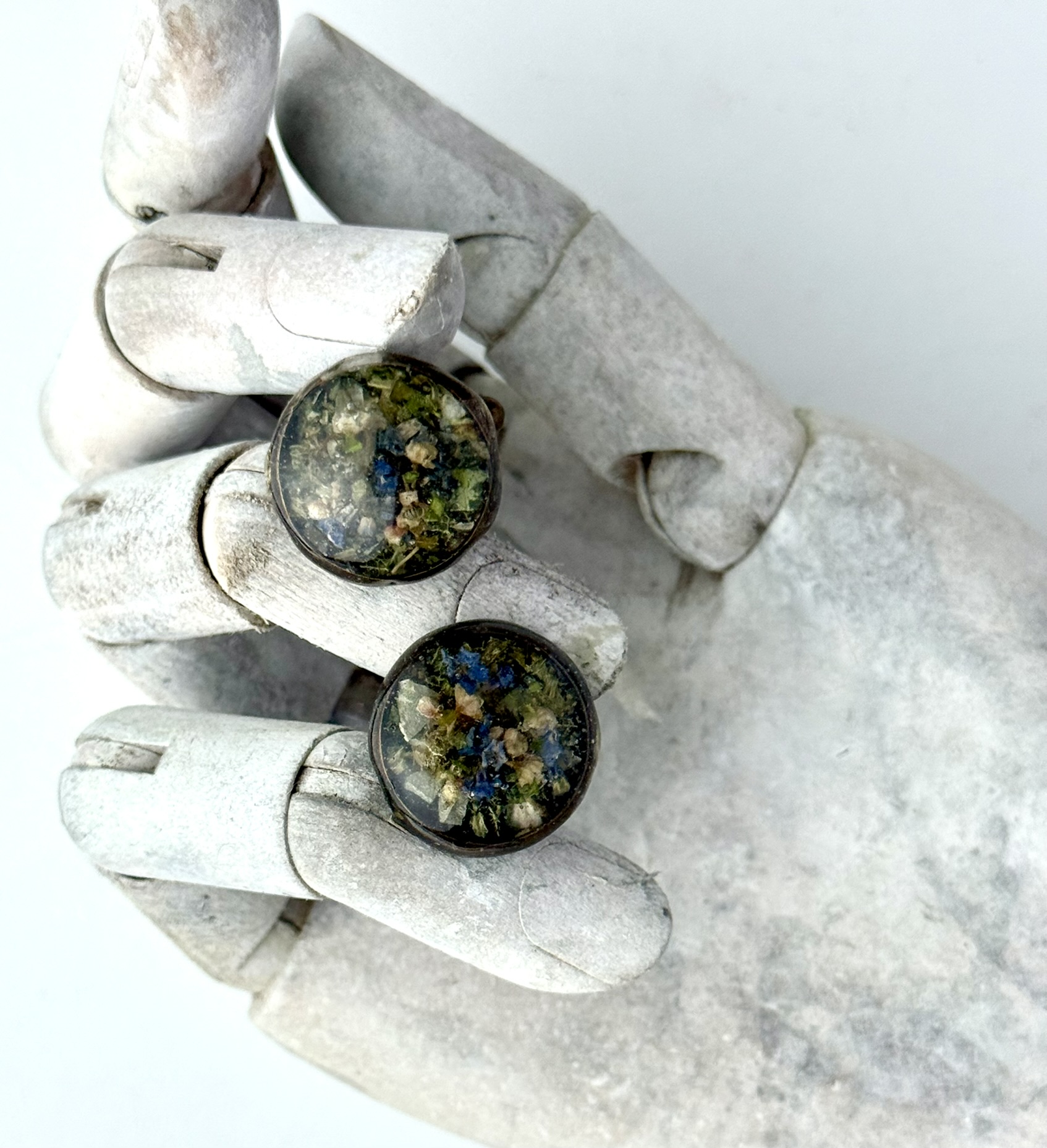
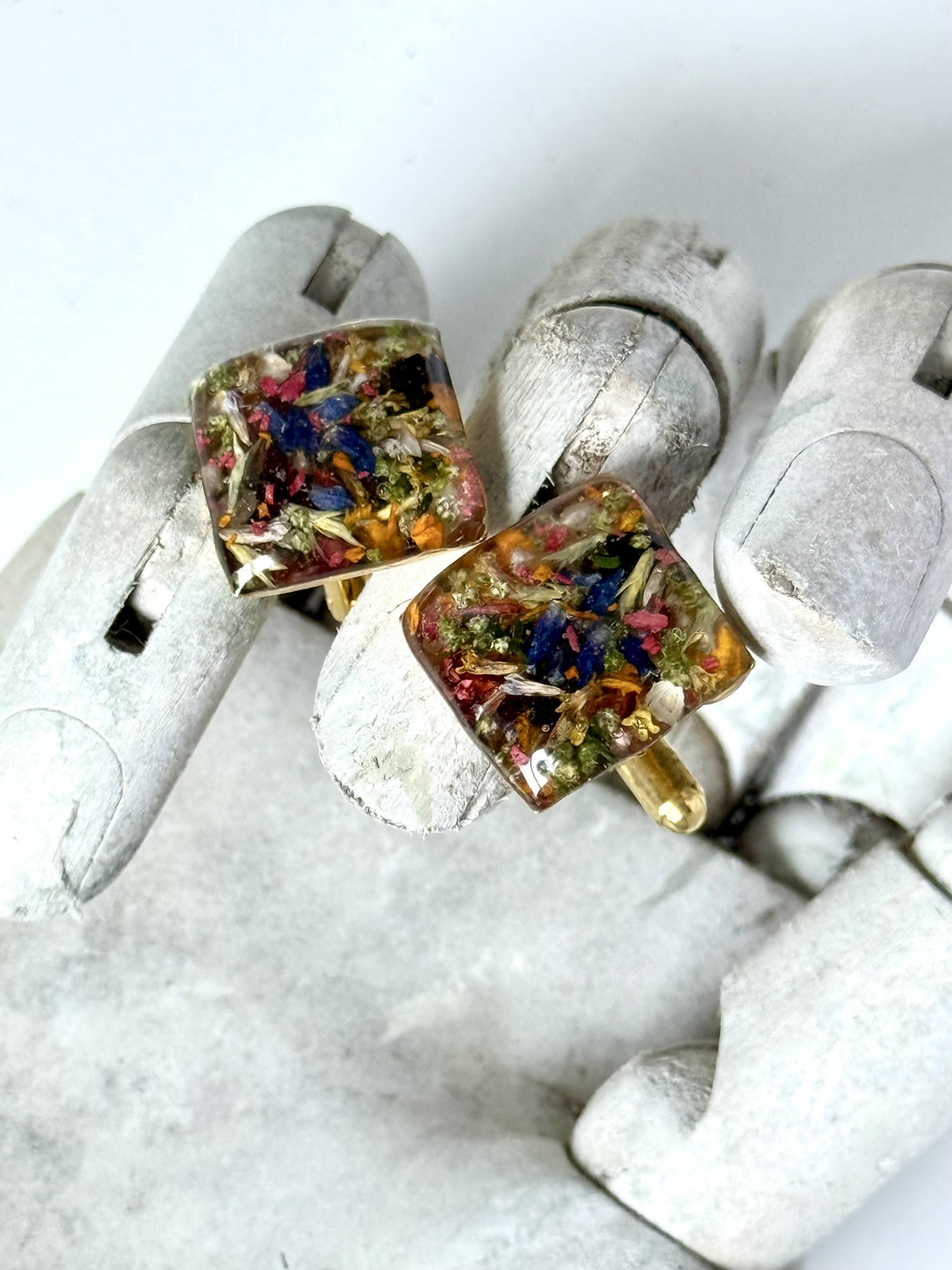
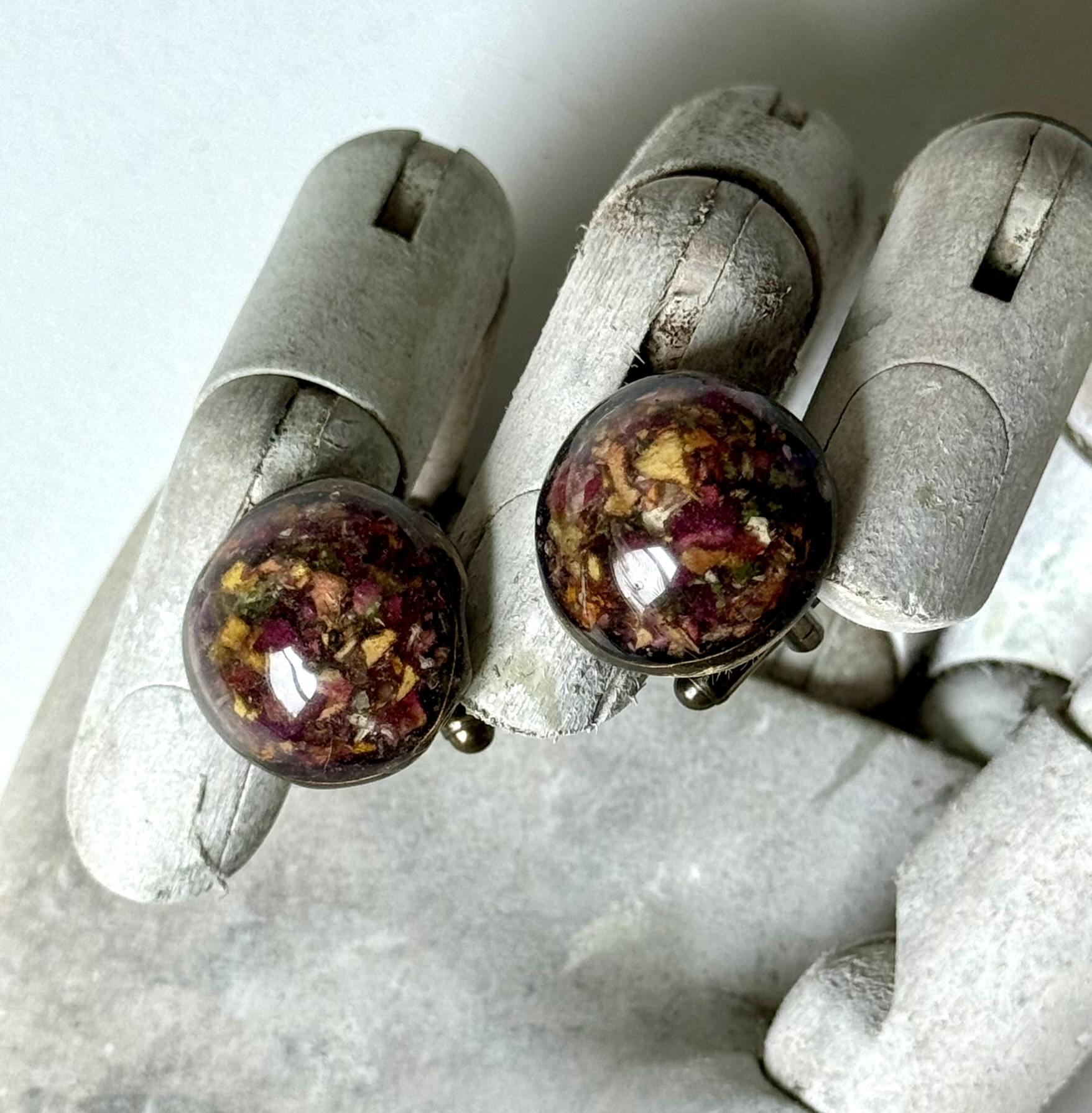
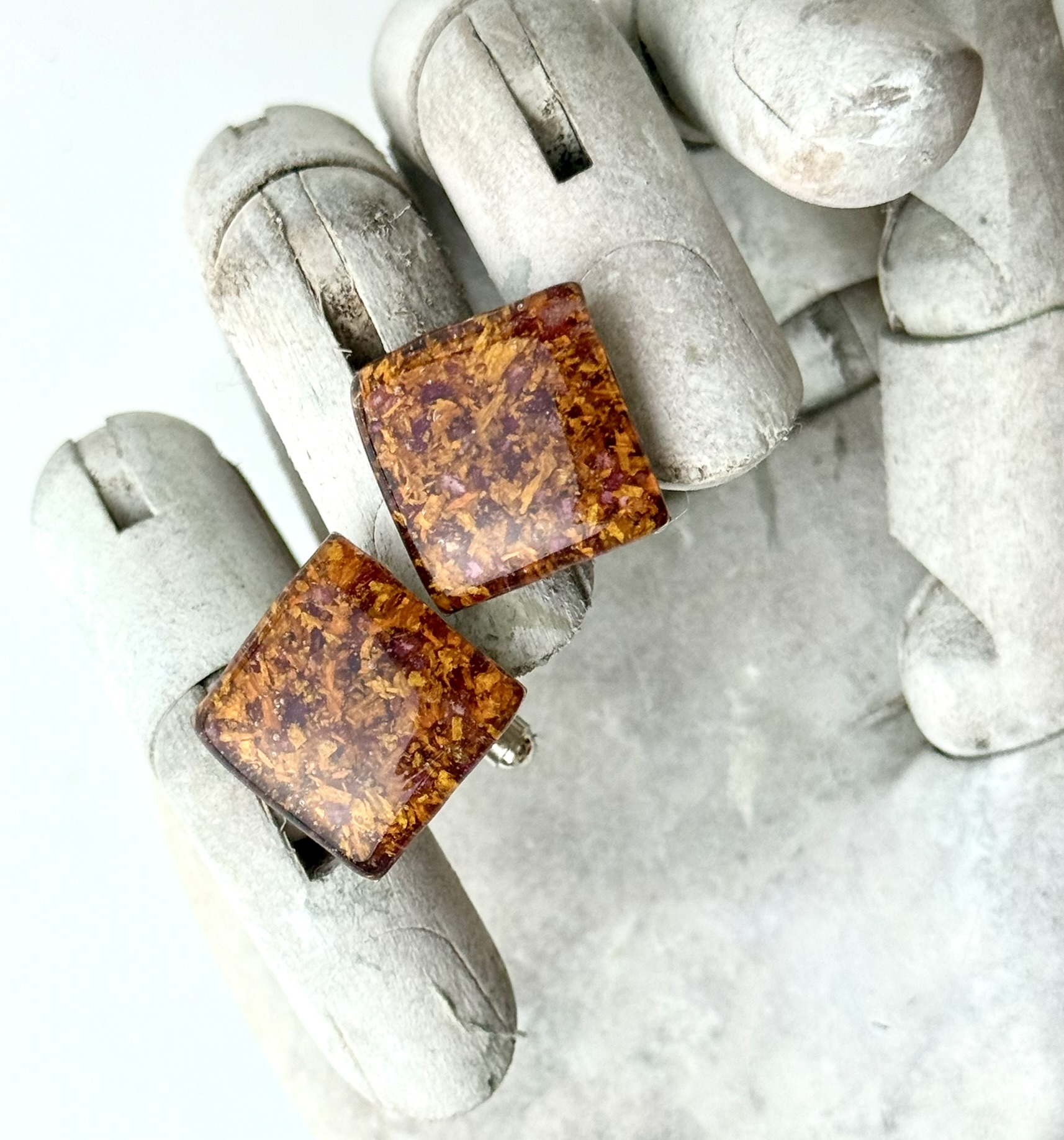
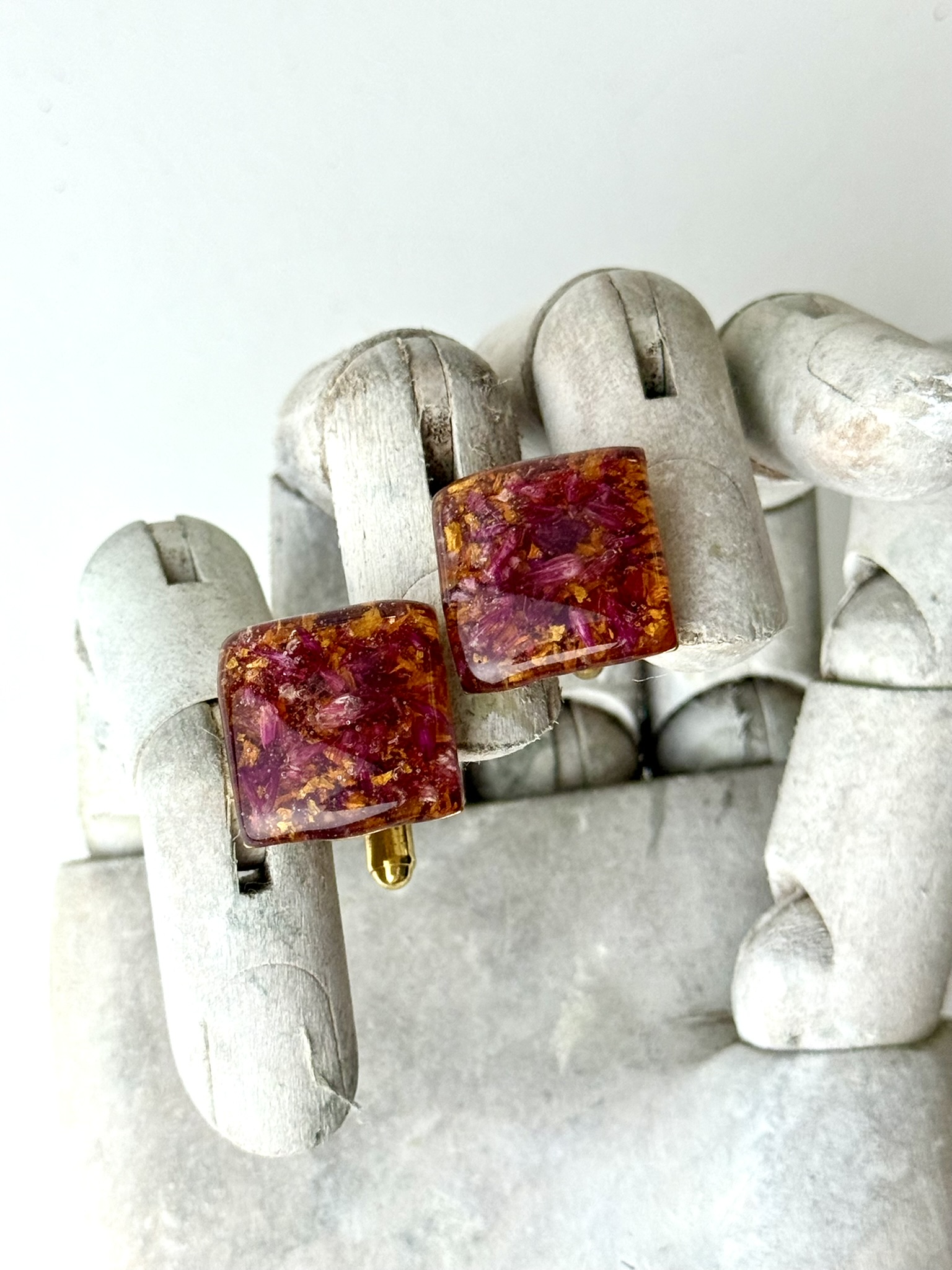
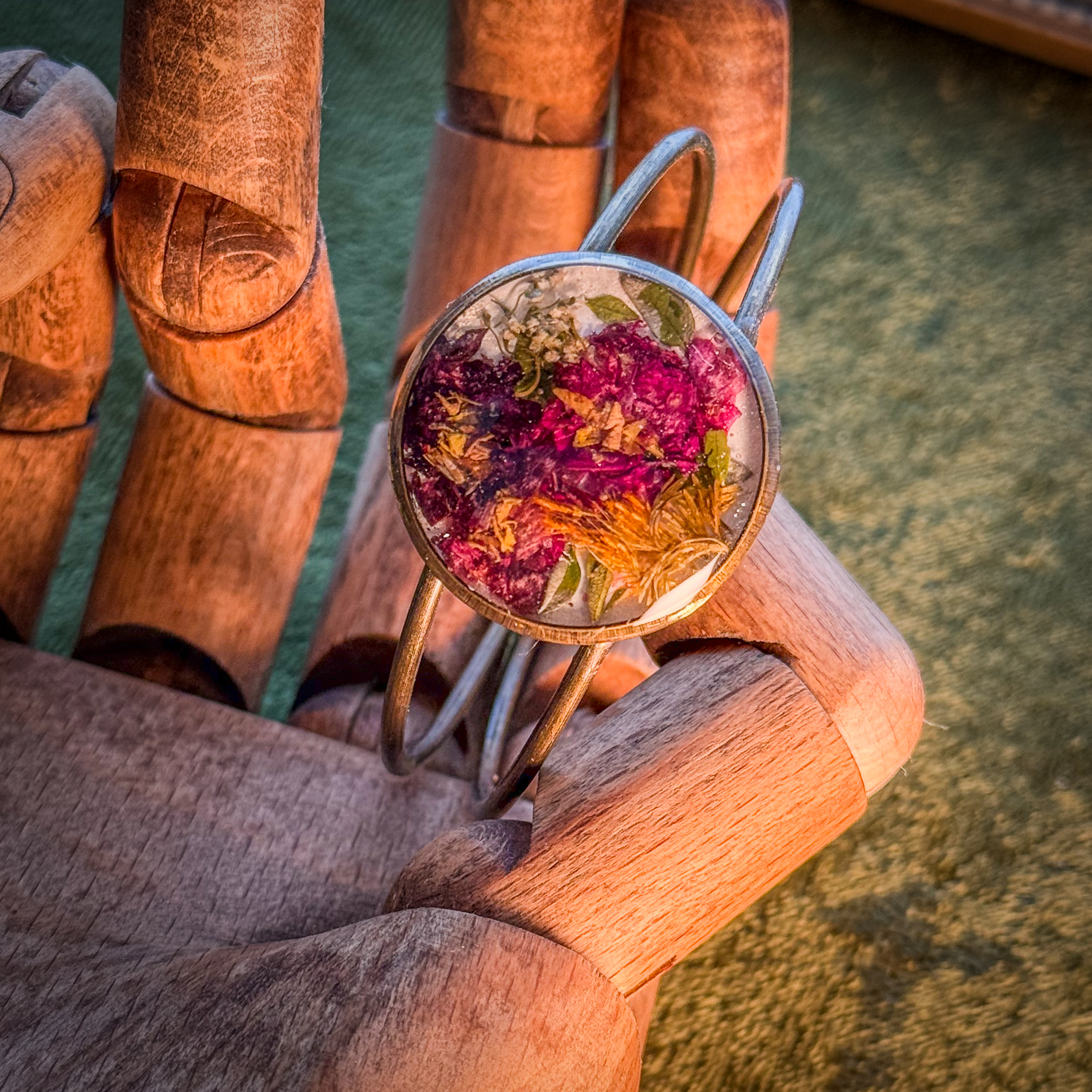
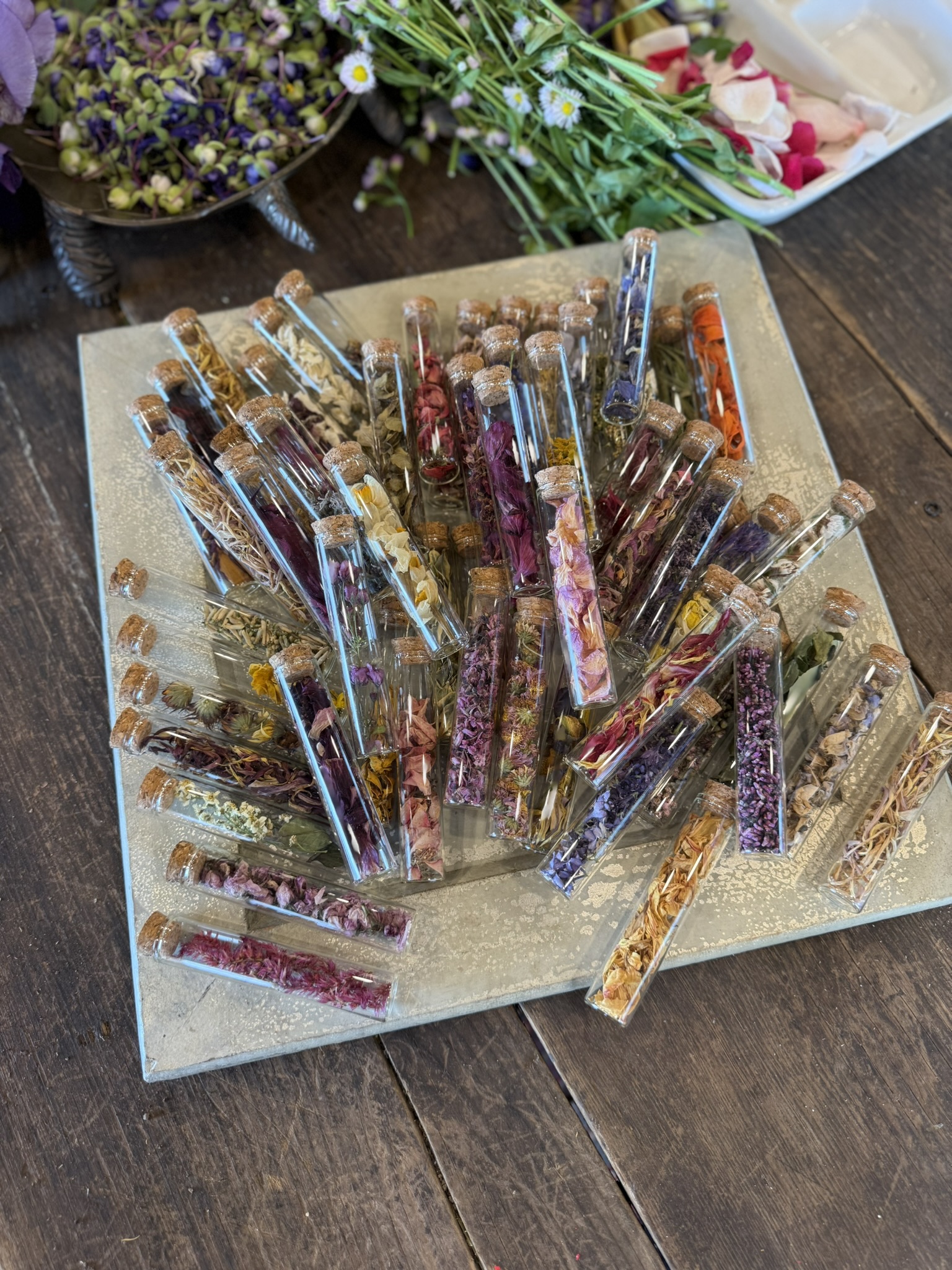
Some flowers are simply too large to work with whole. A dahlia, a sunflower, a calla lily, a full-faced rose — when you try to place one inside a miniature bezel, the scale overwhelms. But large doesn't mean excluded. It means transformed. Botanical pixelation is the practice of breaking oversized petals down into fragments — pressed, air-dried, dehydrated, silica-dried, and finally ground — and then reassembling those fragments like a painter building up color and shadow on a very small canvas. The petal doesn't disappear. It becomes something more flexible, more painterly, and, in many ways, more itself.
The candidates are everywhere: dahlias, rudbeckia, sunflowers, marigolds, zinnias, cosmos, peppermint balsam, calla lilies, ox-eyed daisies, roses (especially roses), day lilies, cup plant, crepe myrtle. Any flower where the bloom itself is too large to work with fully assembled is a pixelation candidate. Really any flower, any foliage with colored leaves, any gradient of green in any leaf anywhere. The palette is the whole garden.
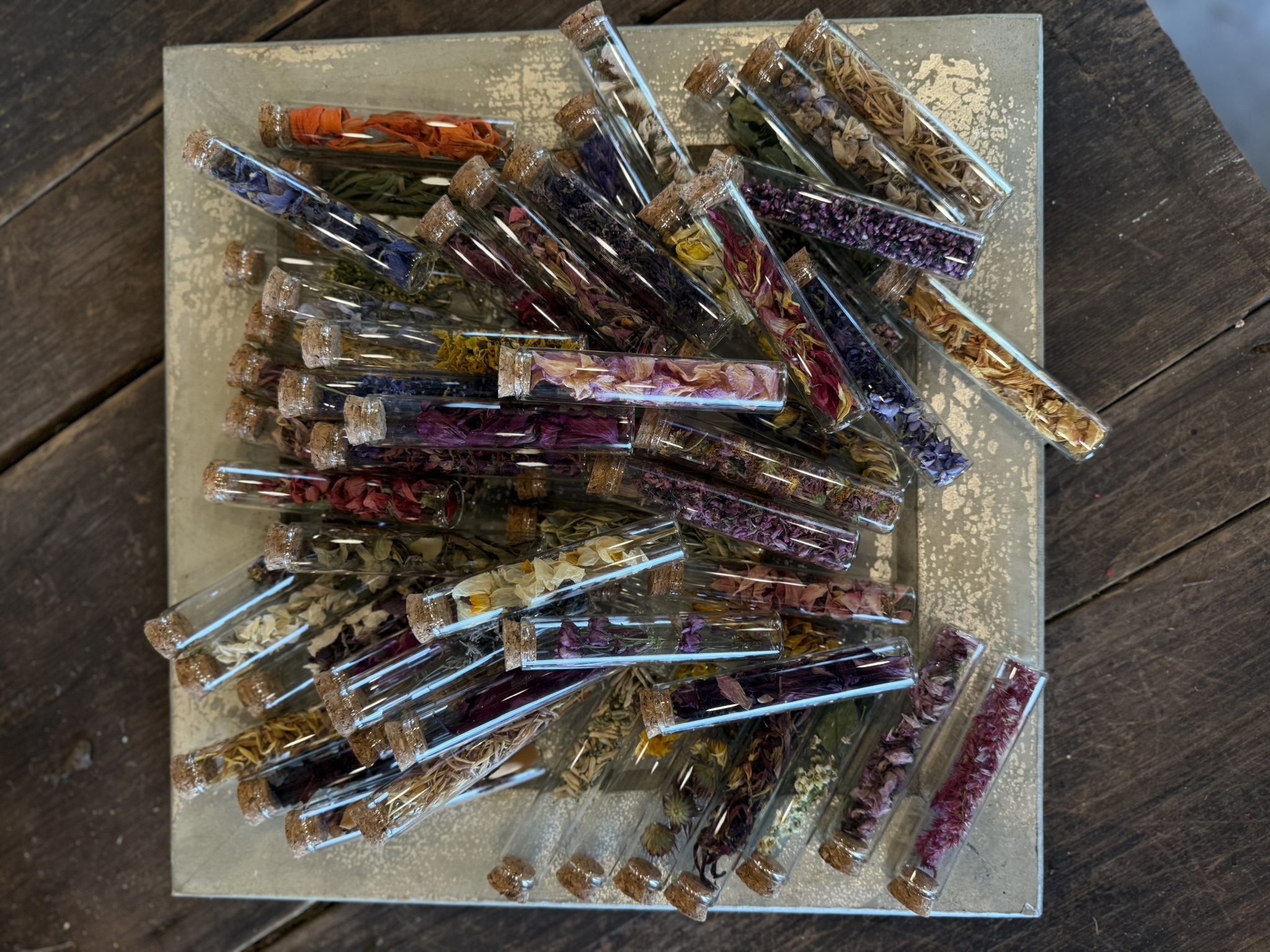
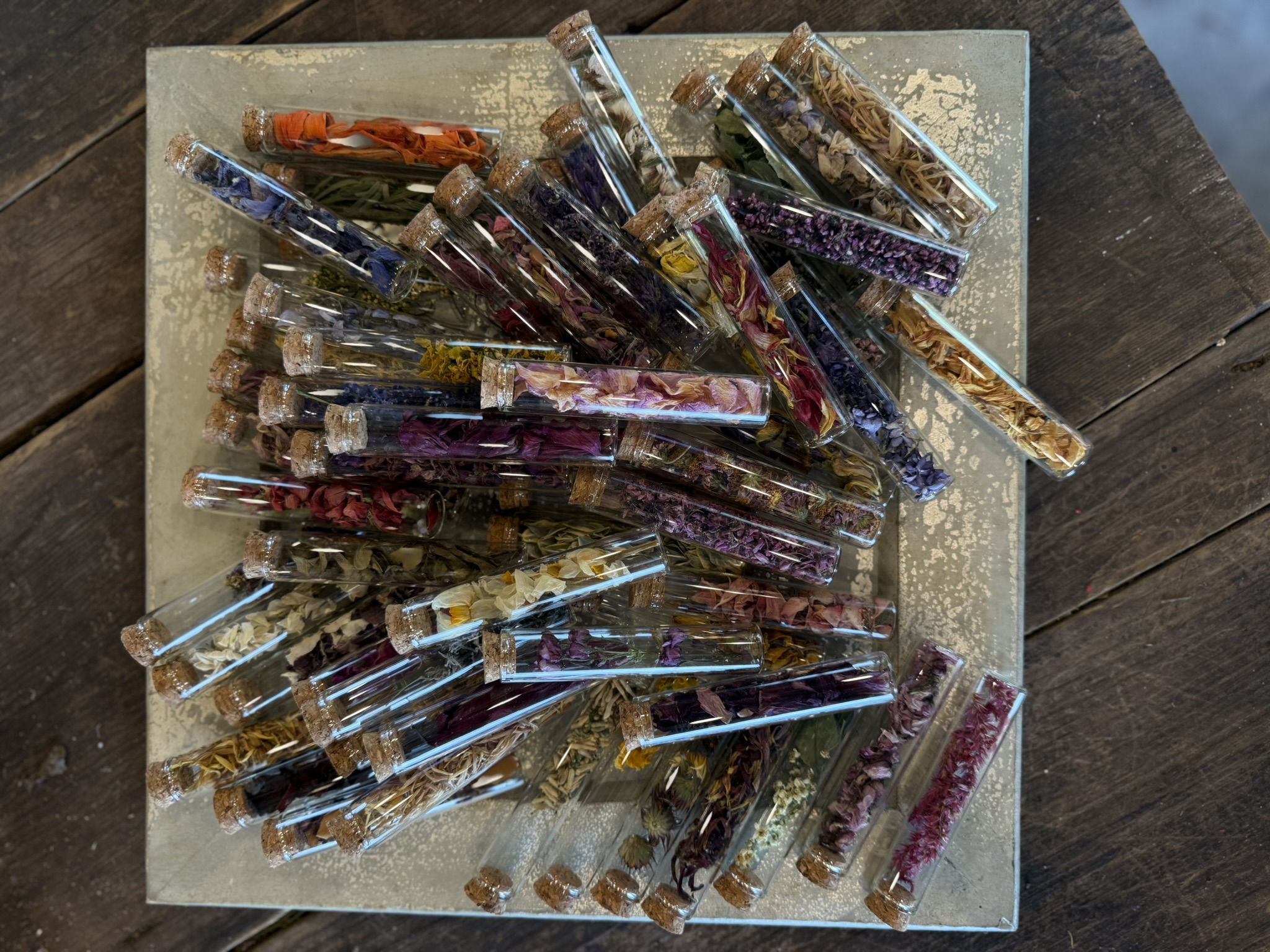
The drying method matters, and choosing it is part of the practice. Air drying preserves the surface. Pressing flattens and concentrates the color underneath. The dehydrator condenses and darkens — shrinking the surface area and deepening the pigment in ways nothing else does. Silica can dry a whole dahlia intact, and when silica drying breaks a petal, which it sometimes does, those petals go straight into the pixelation library. A silica-dried fragment retains a slight curve, a gentle twist — and that curvature is exactly what suggests the soft arc of a flower when you're building one from pieces. Once the petals are prepared, they meet the grinder. What comes out the other end is a collection of jagged color tiles: irregular, gradient-rich, already beginning to suggest the flower you haven't assembled yet.
"You would think there would be some cosmic damage
from putting them in a blender or grinder.
And yet it unlocks their superpower."
.JPEG)