Before photography, before the internet, before you could simply search for what a flower looked like — someone had to paint it. Draw it. Press it into a book and label it with Latin and love. Botanical art was never just illustration. It was argument: this plant exists, it matters, pay attention.
The Dutch Golden Age gave us the impossible bouquet — flowers from spring, summer, and autumn arranged together in a single vase that no single day could ever have produced. These paintings were acts of imagination as much as observation. They gathered the scattered, the seasonal, the rare, and placed them in permanent conversation. Tulips beside roses beside fritillaries beside the first anemone of spring. Nothing natural about it. Everything true about it.
What those painters understood — what Luli has always understood — is that arrangement is interpretation. Choosing which flower stands next to which is not decoration. It is meaning. The flower on the left changes what the flower on the right says. This is as true in a resin piece as it was in a seventeenth-century oil on canvas.
"Looking hard enough at something almost always reveals it to be beautiful."On the discipline of botanical illustration
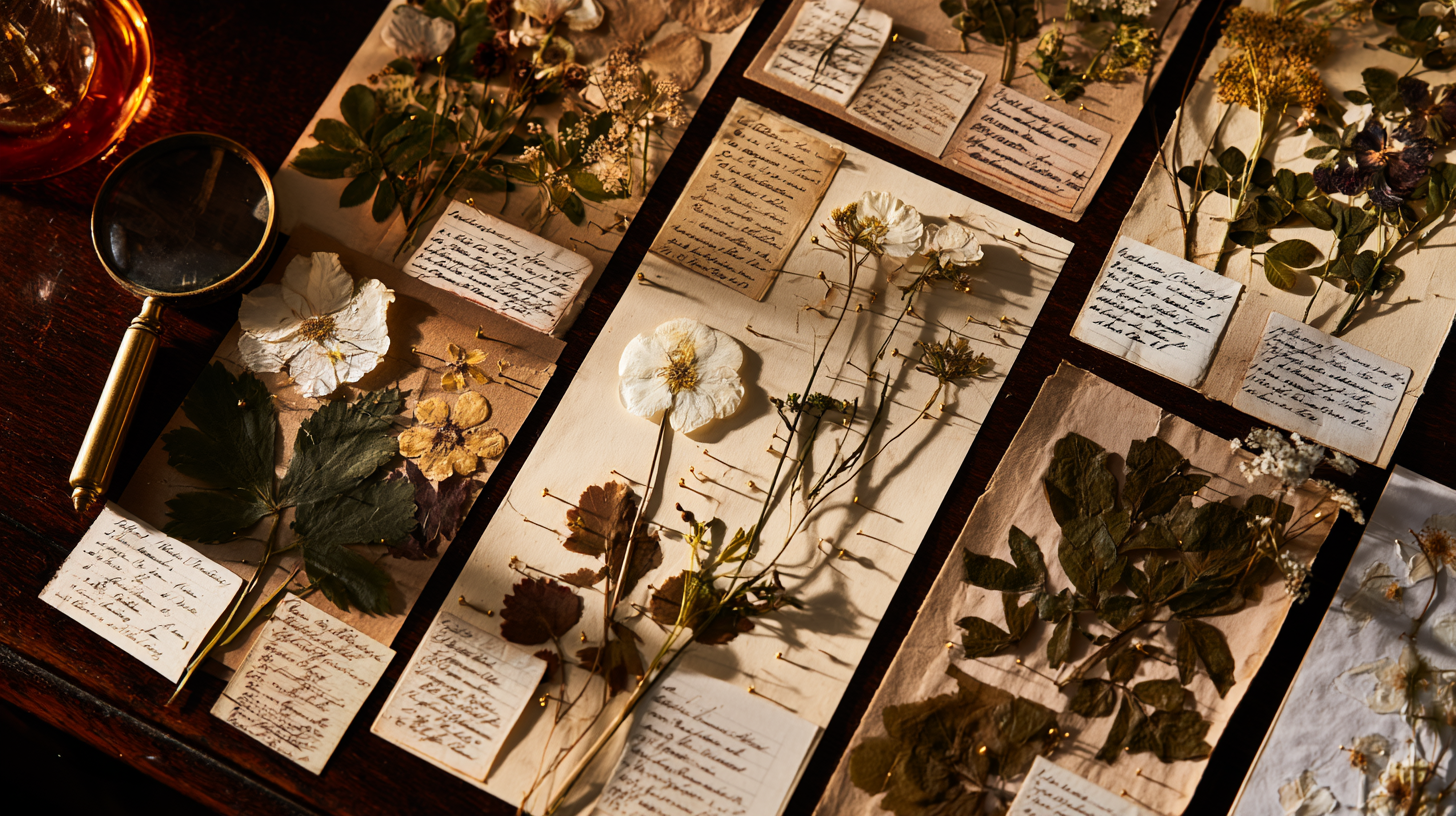 The Flemish tradition — light finding the specimen
The Illustration Tradition
Alongside painting, a parallel tradition developed: the scientific illustrator. Working for botanists, explorers, and natural historians, these artists had a different task — not beauty for beauty's sake but accurate description. The goal was to capture a specimen so precisely that someone who had never seen it could identify it by the drawing alone.
The great illustrators — Ehret, the Bauers, Redouté — found a way to do both. Their plates are accurate enough to serve as field guides and beautiful enough to hang on walls. They discovered that precision and grace are not opposites. That looking hard enough at something almost always reveals it to be beautiful.
Pierre-Joseph Redouté, court painter to Marie Antoinette and later Empress Joséphine, produced the most celebrated flower plates ever made. His Les Roses — published between 1817 and 1824 — remains the standard against which all botanical rose illustration is measured. Not because he was the most accurate, but because he understood that the rose had an emotional truth as well as a botanical one, and that a great plate had to capture both.
From the Redouté tradition — six specimens
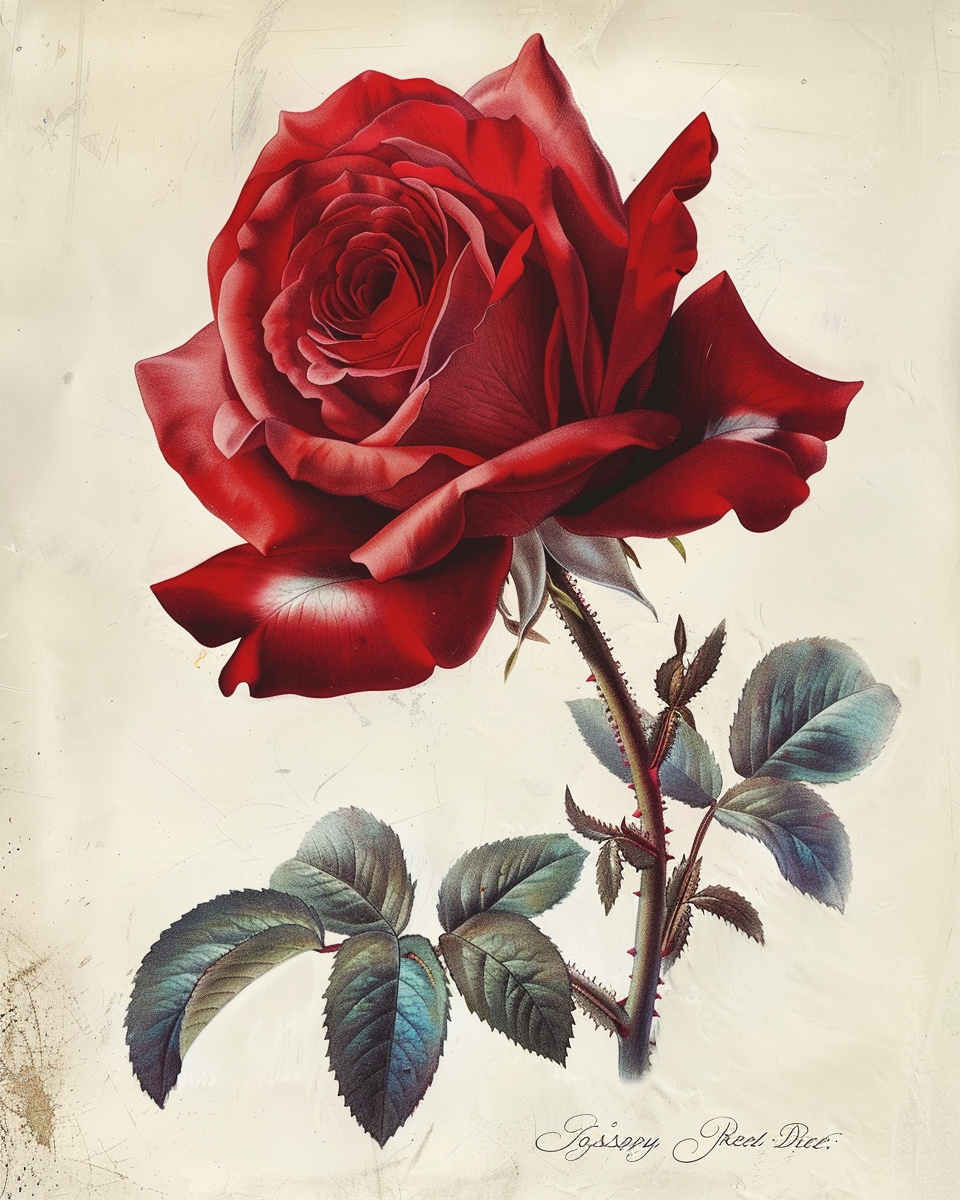
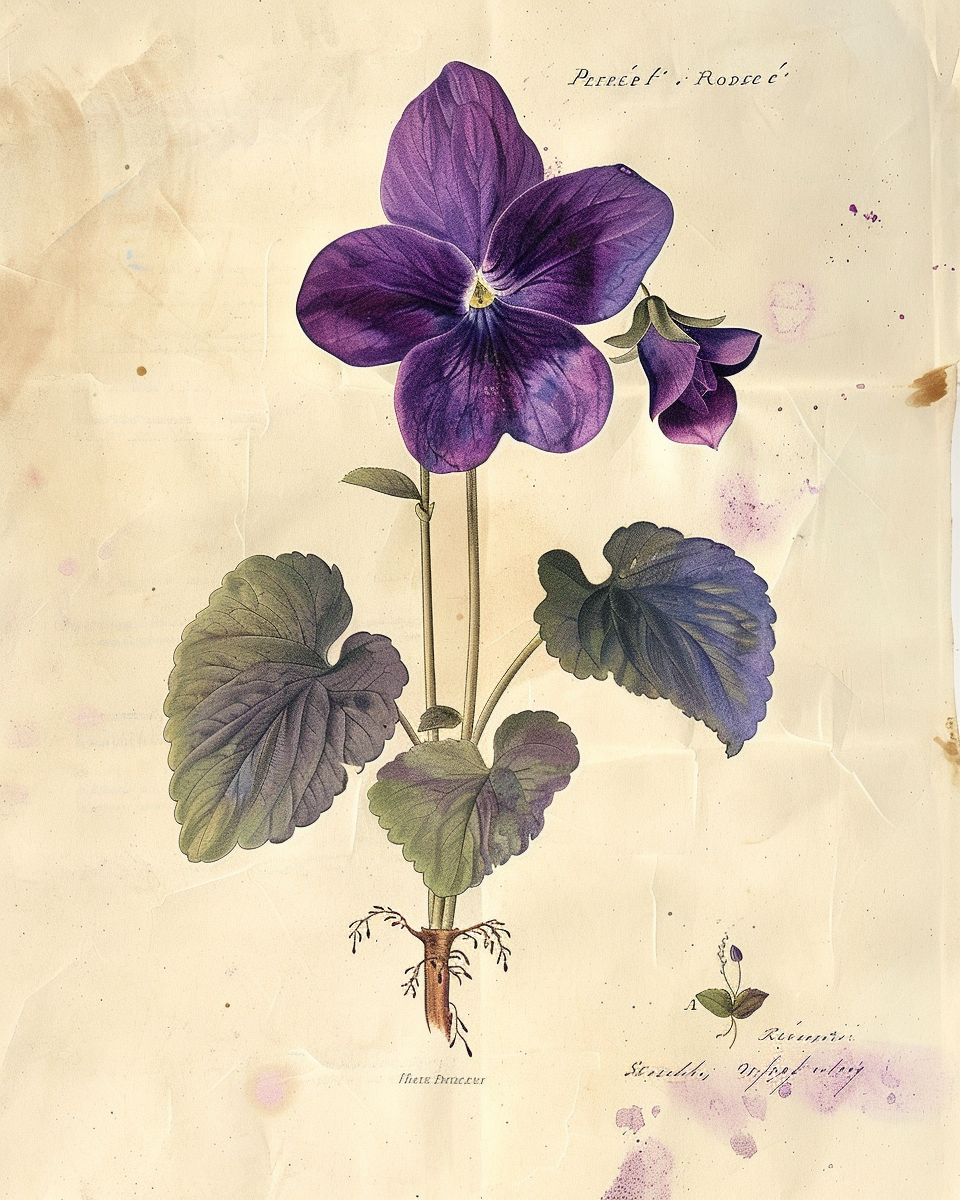
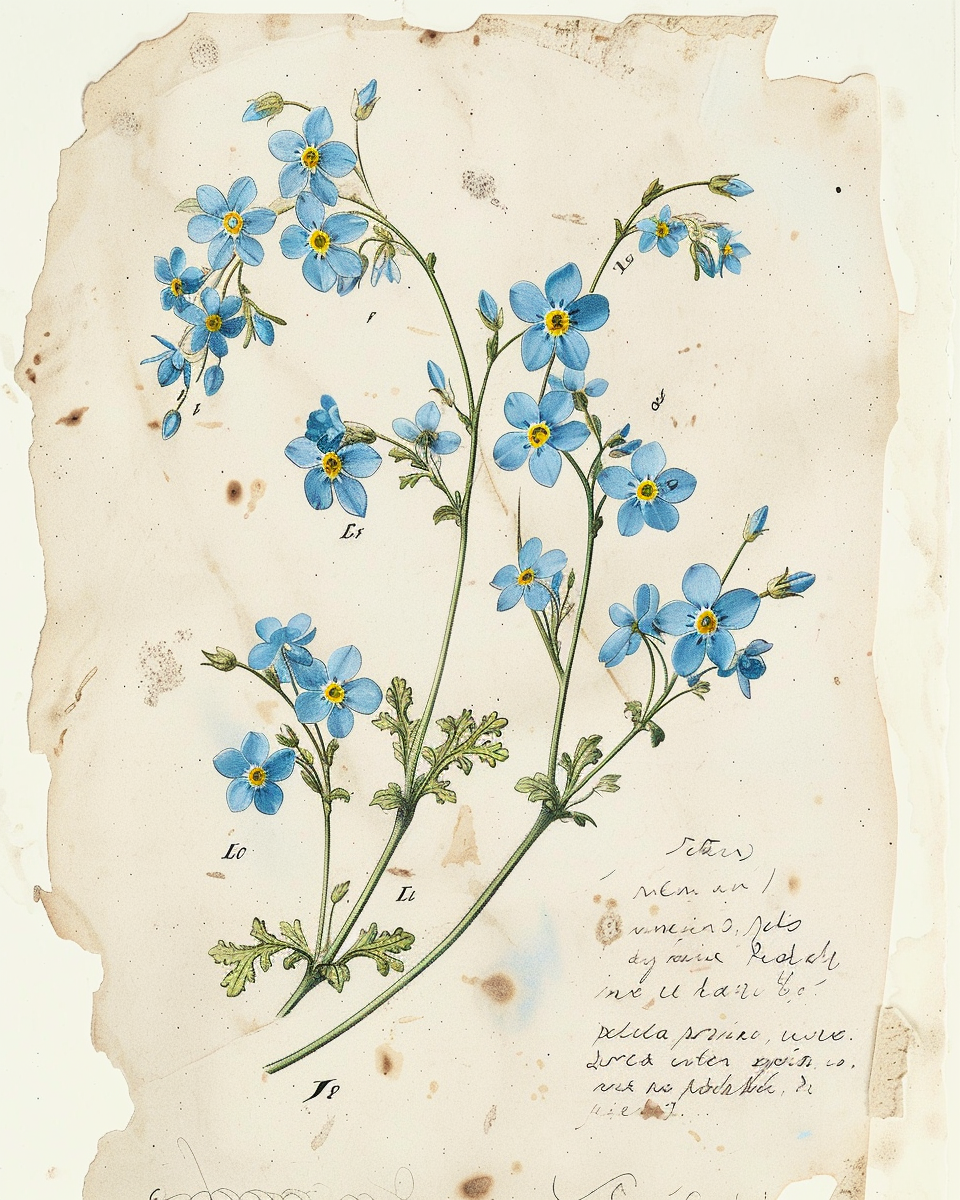
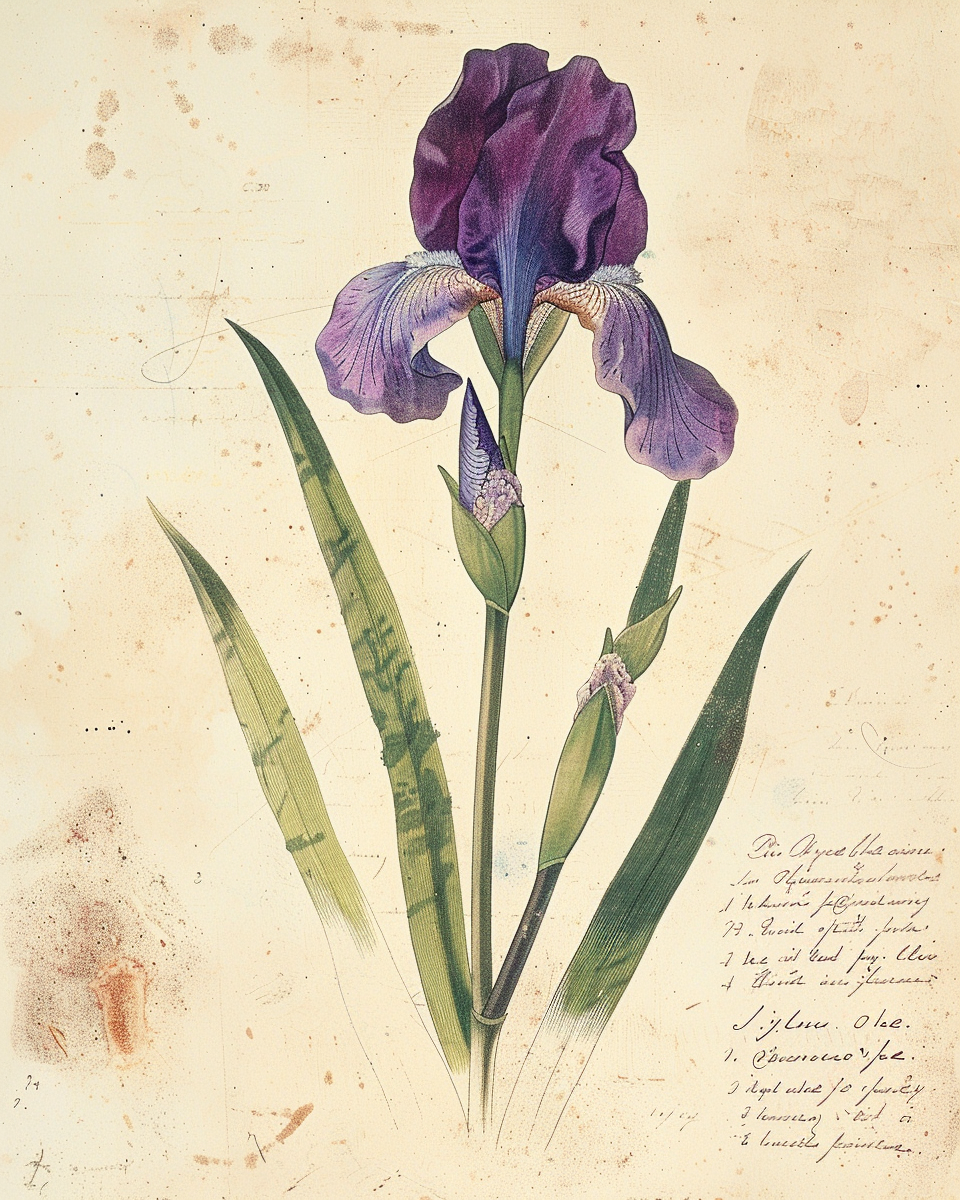
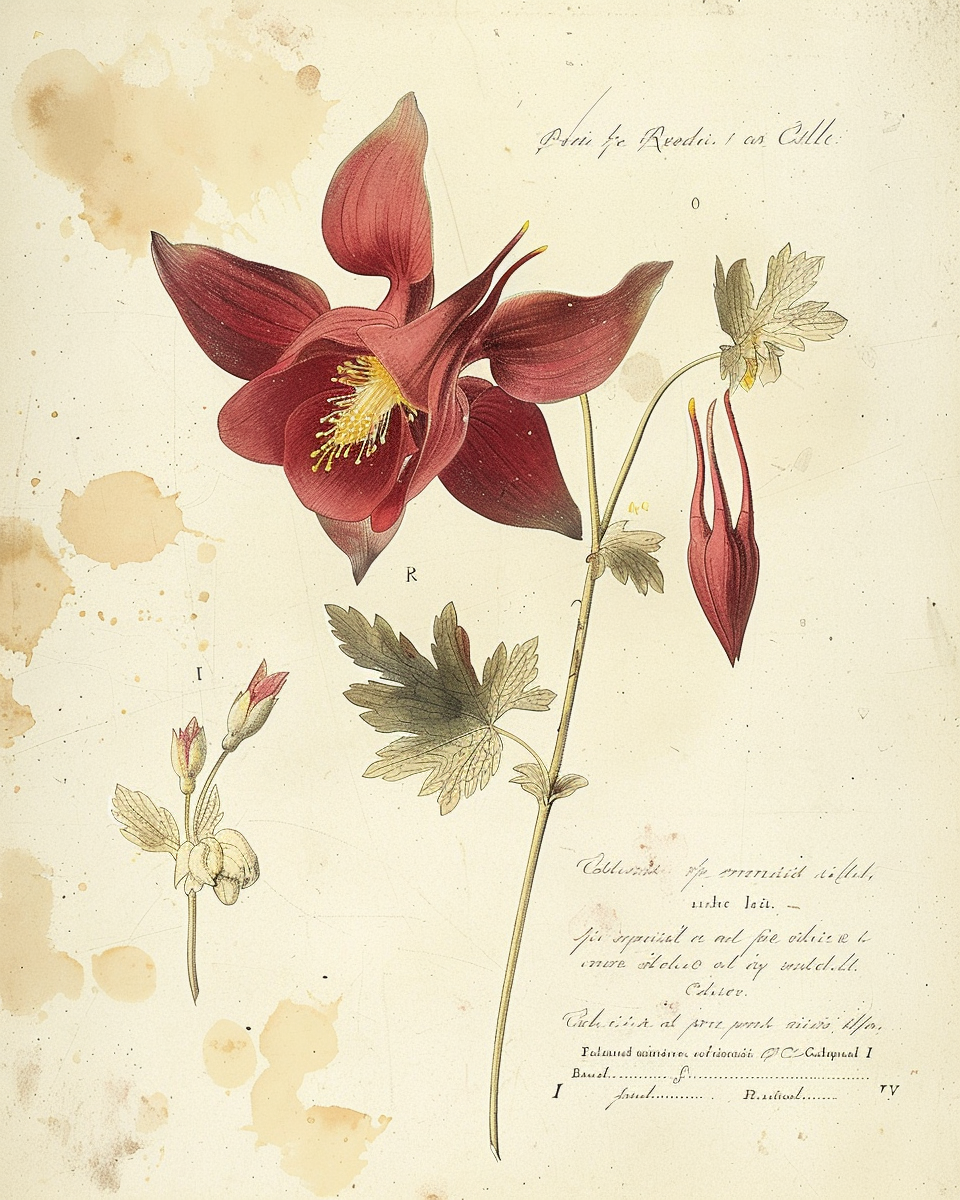
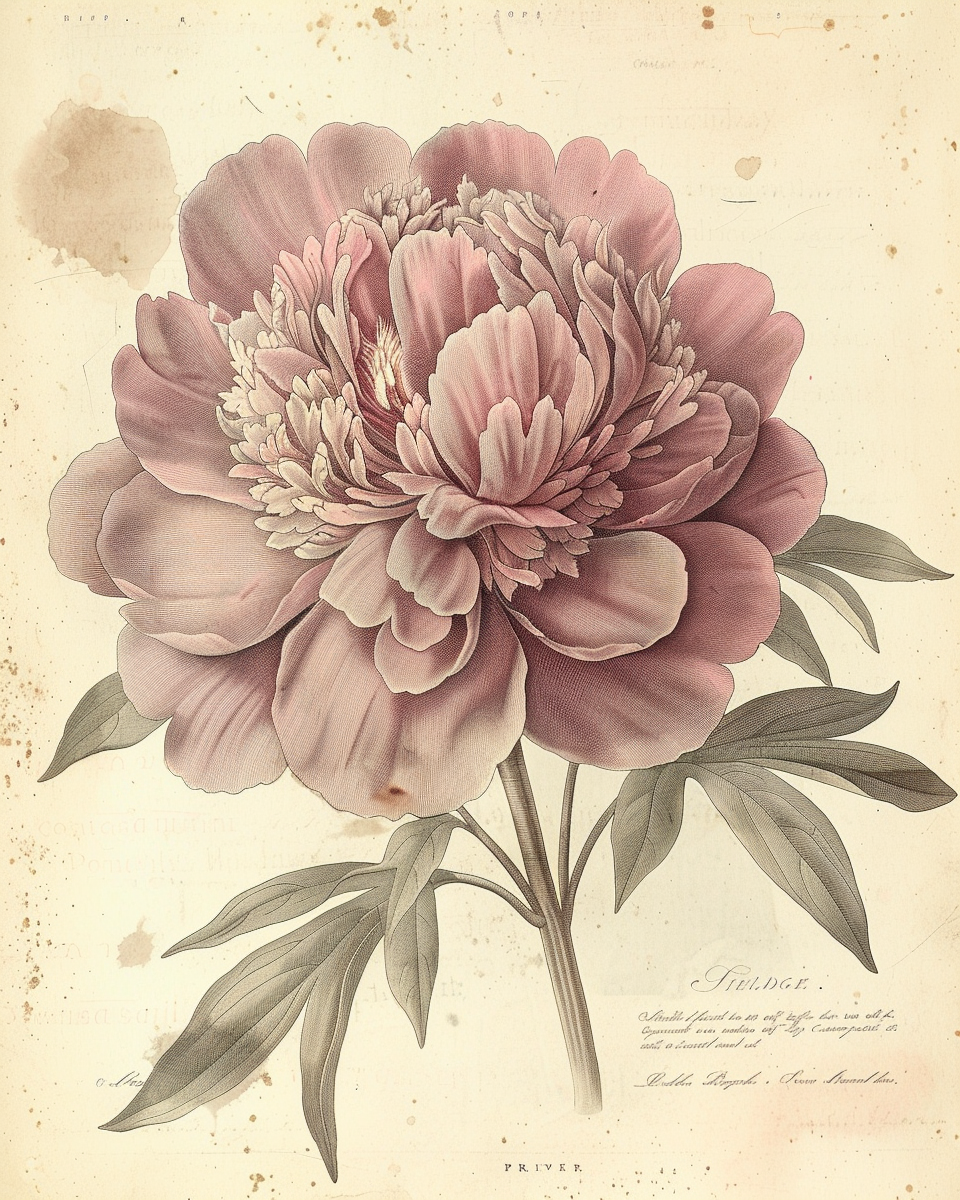
Rosa — Viola — Myosotis — Iris — Aquilegia — Paeonia
What the Illustrators Knew
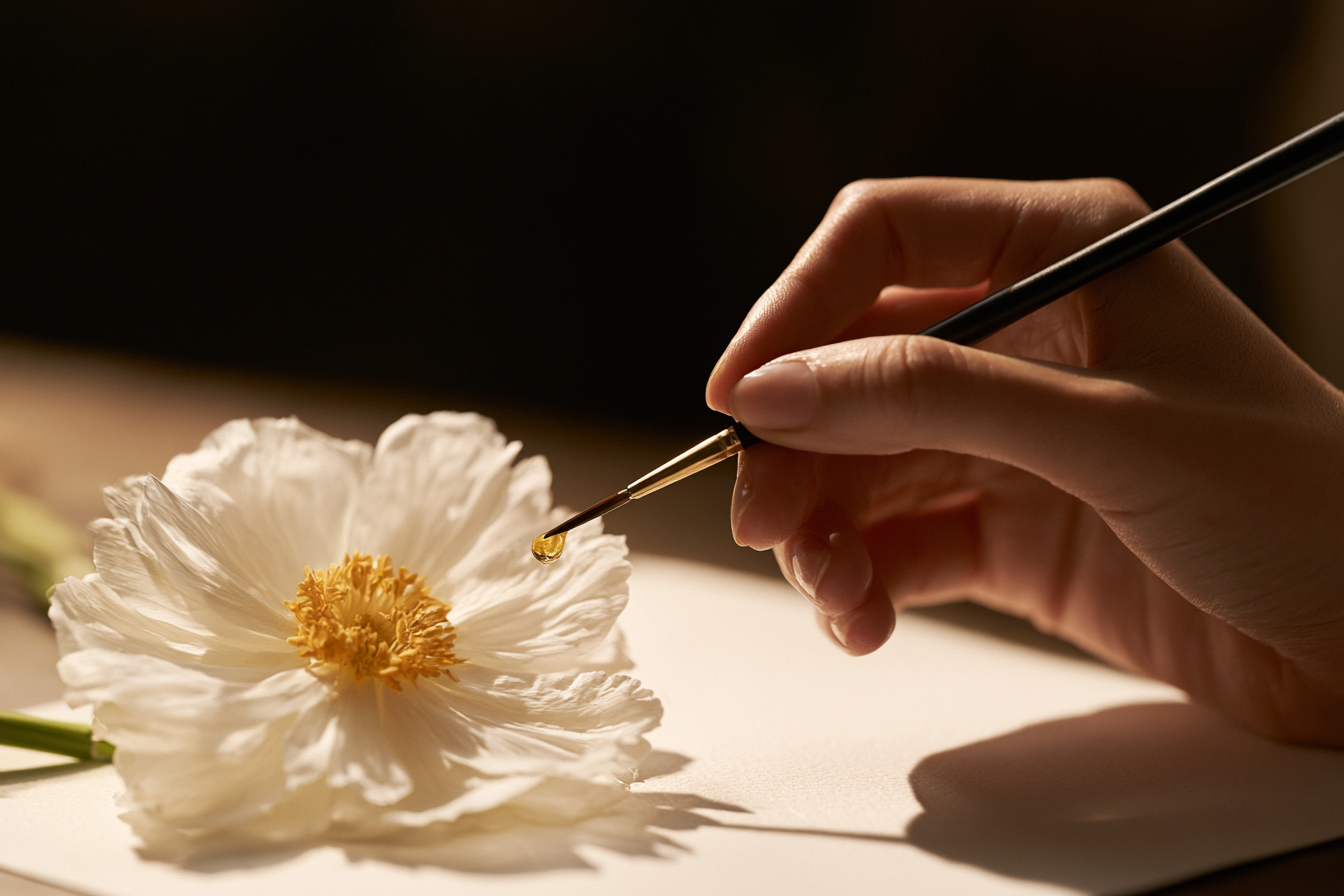
The botanical illustrators had to look at a flower longer than almost anyone else in history. A painter might spend an hour with a rose. An illustrator spent days — mapping the exact number of petals, the precise angle of each sepal, the particular way the stem thickened at the node.
This extended looking changed what they saw. Flowers that seem simple revealed themselves to be intricate. Flowers that seem familiar turned out to be strange. The act of drawing — of having to account for every line — was an act of genuine discovery.
This is the lesson Luli carries from botanical illustration into her practice. The discipline of looking — really looking, at the particular curl of a petal, the exact shade of a dried stem, the way light passes through pressed tissue — is where the work begins.
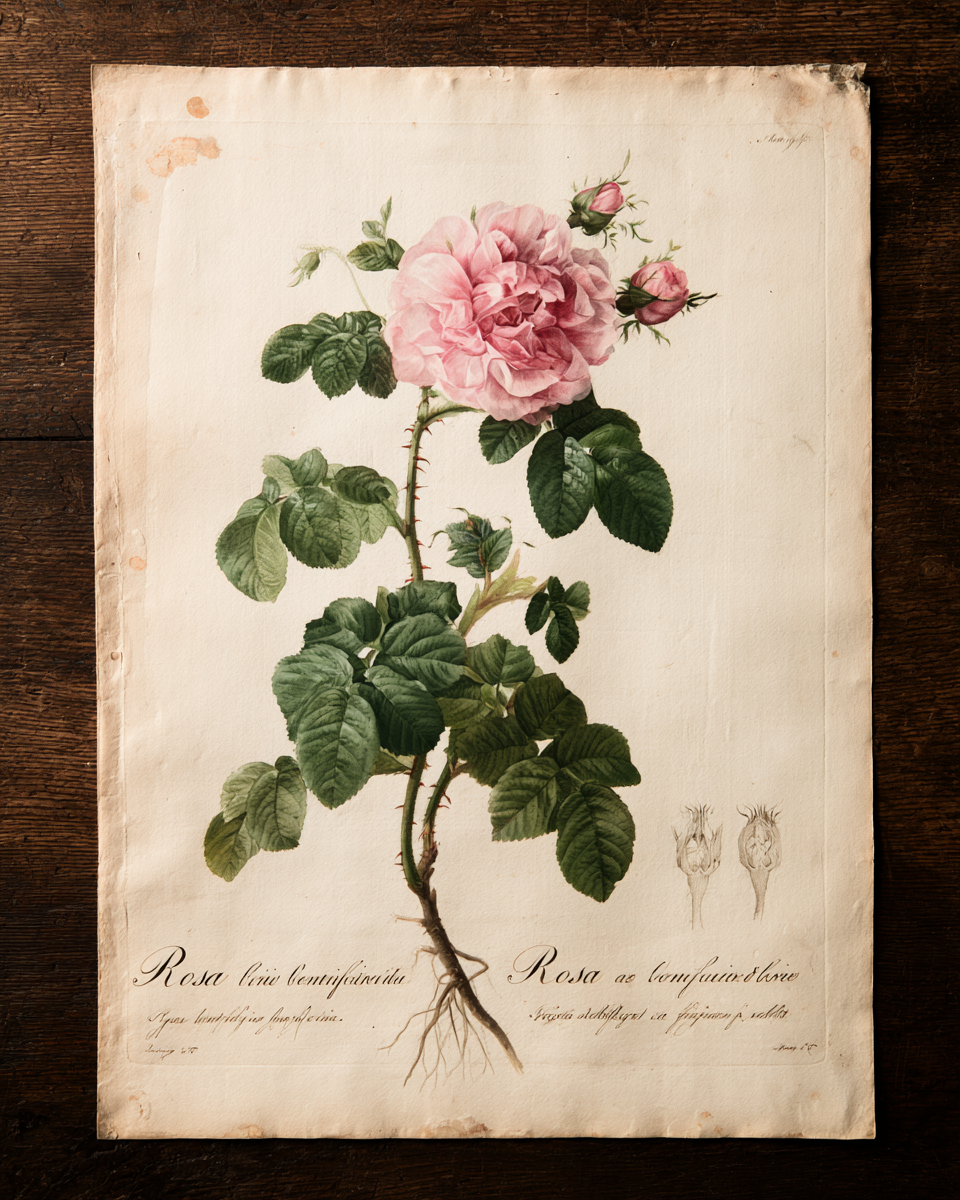
The great botanical books were themselves objects of beauty — large-format volumes with hand-colored plates, each one produced at enormous expense and distributed to subscribers who understood they were acquiring something irreplaceable.
Basilius Besler's Hortus Eystettensis (1613), Robert John Thornton's Temple of Flora (1799–1807), Redouté's Les Liliacées and Les Roses — these were not reference books. They were declarations that the plant world deserved the full resources of human art and attention.
That declaration still stands.
For your library — further reading
The Naming of Names: The Search for Order in the World of Plants
The story of how humans learned to see and name the plant world — from Aristotle to Linnaeus, told through the people who dedicated their lives to looking at plants with the intensity they deserved.
Find on Amazon →The Art of Botanical Illustration
The definitive history of botanical illustration from antiquity to the present. Comprehensive, gorgeous, the kind of book you return to for years.
Find on Amazon →Flower: Exploring the World in Bloom
Five hundred images spanning the history of flowers in art, from ancient Egyptian frescoes to contemporary photography. A book for browsing and returning to.
Find on Amazon →The Botanical Treasury
Forty of the world's most beautiful and botanically significant plants, illustrated with original plates from historic herbaria. For anyone who wants to understand what the great collectors were chasing.
Find on Amazon →