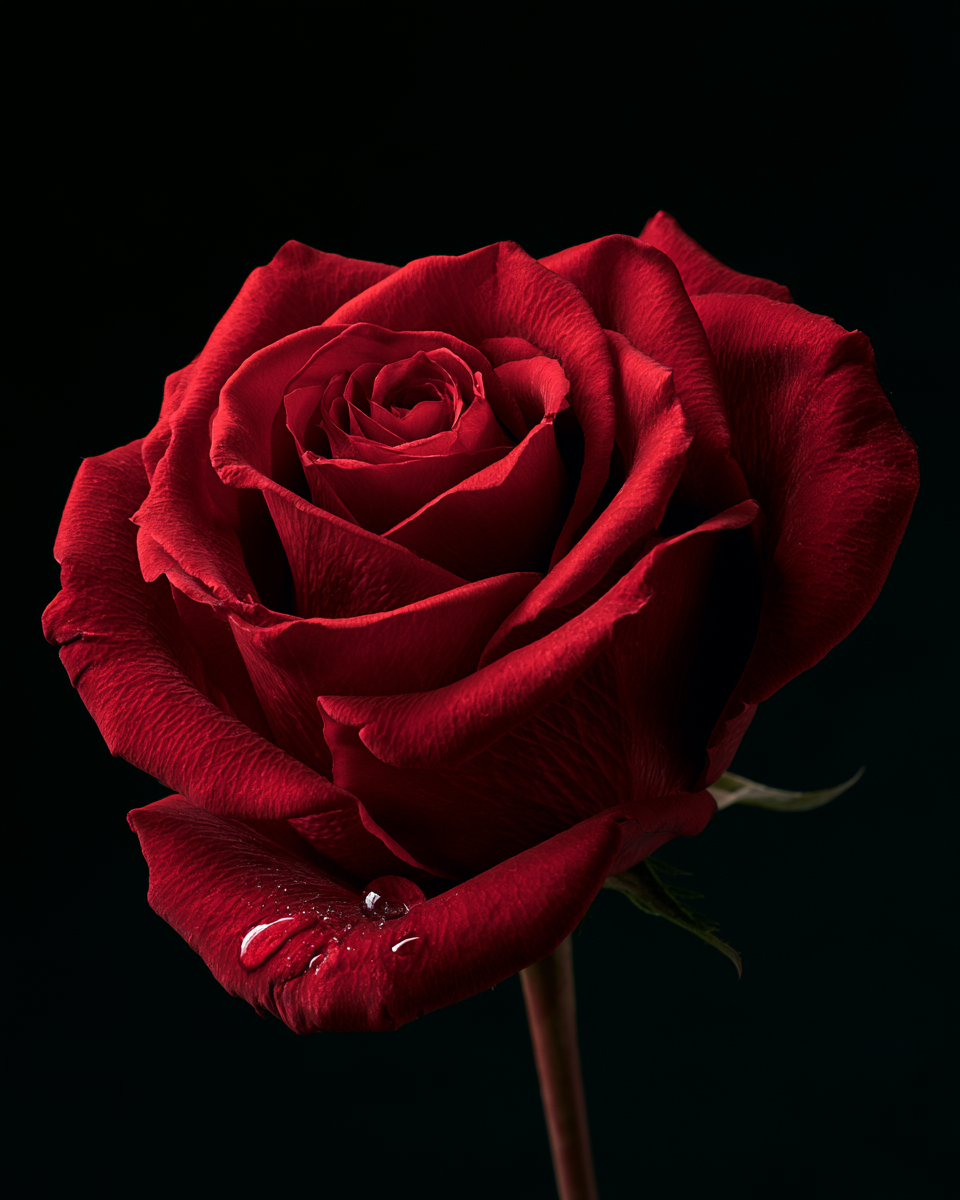
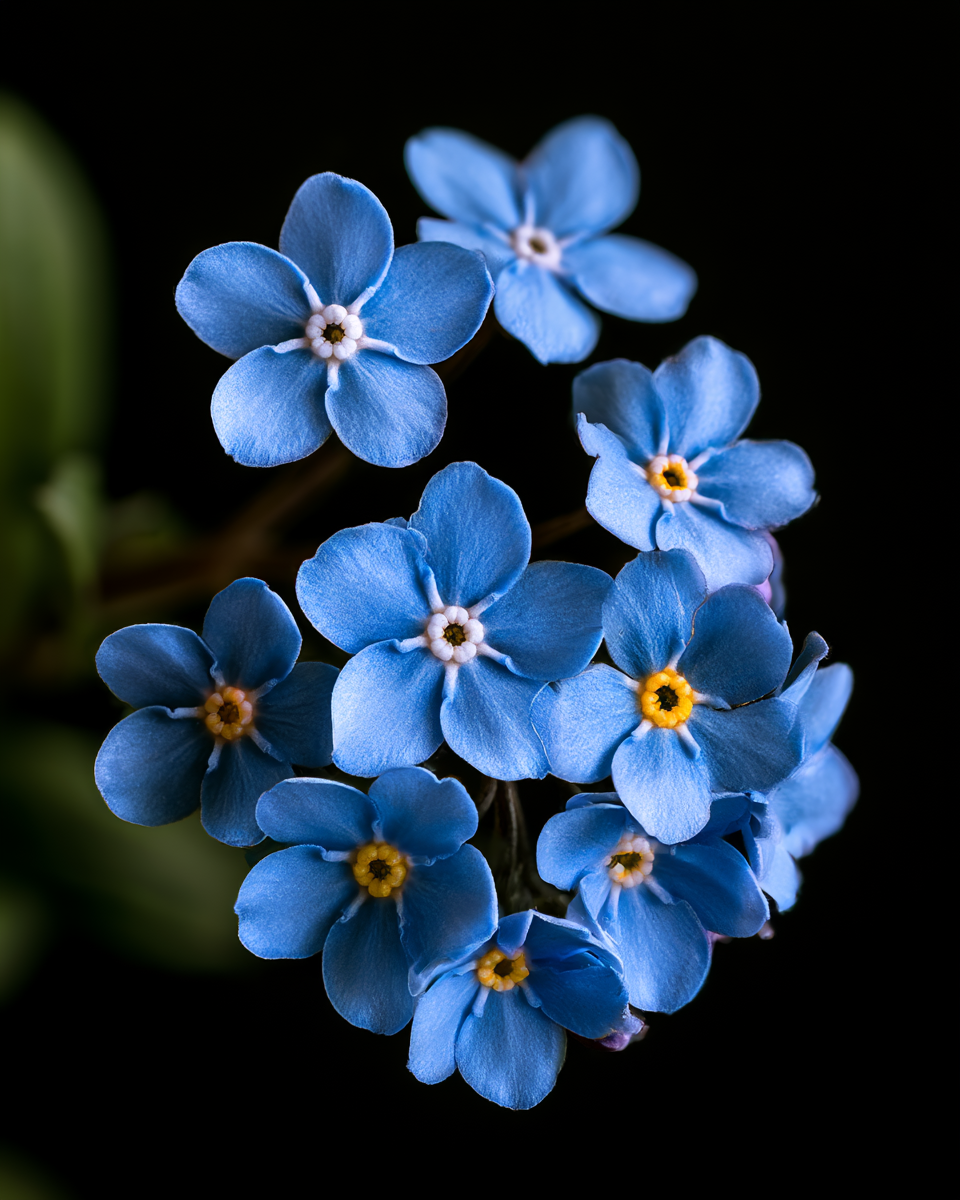
In the nineteenth century, a woman could say with flowers what she could never say aloud. A red rose meant love declared. A yellow rose meant love declined. A pansy meant you were in her thoughts. A forget-me-not was a plea not to be forgotten. This was not metaphor. This was a working code, shared across parlors and garden paths and gloved hands passing tussie-mussies at afternoon calls.
The Victorians did not invent the language of flowers — the impulse is much older, and the specific system they inherited arrived from the East. In the Ottoman Empire, a coded language of objects called the selam — the word means both "greeting" and "peace" — allowed communication through the exchange of items: flowers, fruits, spices, ribbons, each with an assigned meaning. Lady Mary Wortley Montagu, wife of the British Ambassador to Constantinople, encountered it in 1718 and wrote about it in her famous Turkish Embassy Letters. Her description of this "language without words" landed in England like a key looking for a lock.
What the Victorians did was systematize it, publish it, argue over it, and carry it into every corner of polite life. Floriography was the name they gave it: the grammar of the garden made social instrument.
"Say it with flowers" was not a florist's slogan. It was a survival strategy for anyone who needed to speak the unspeakable in a world that watched every word.On Victorian Floriography
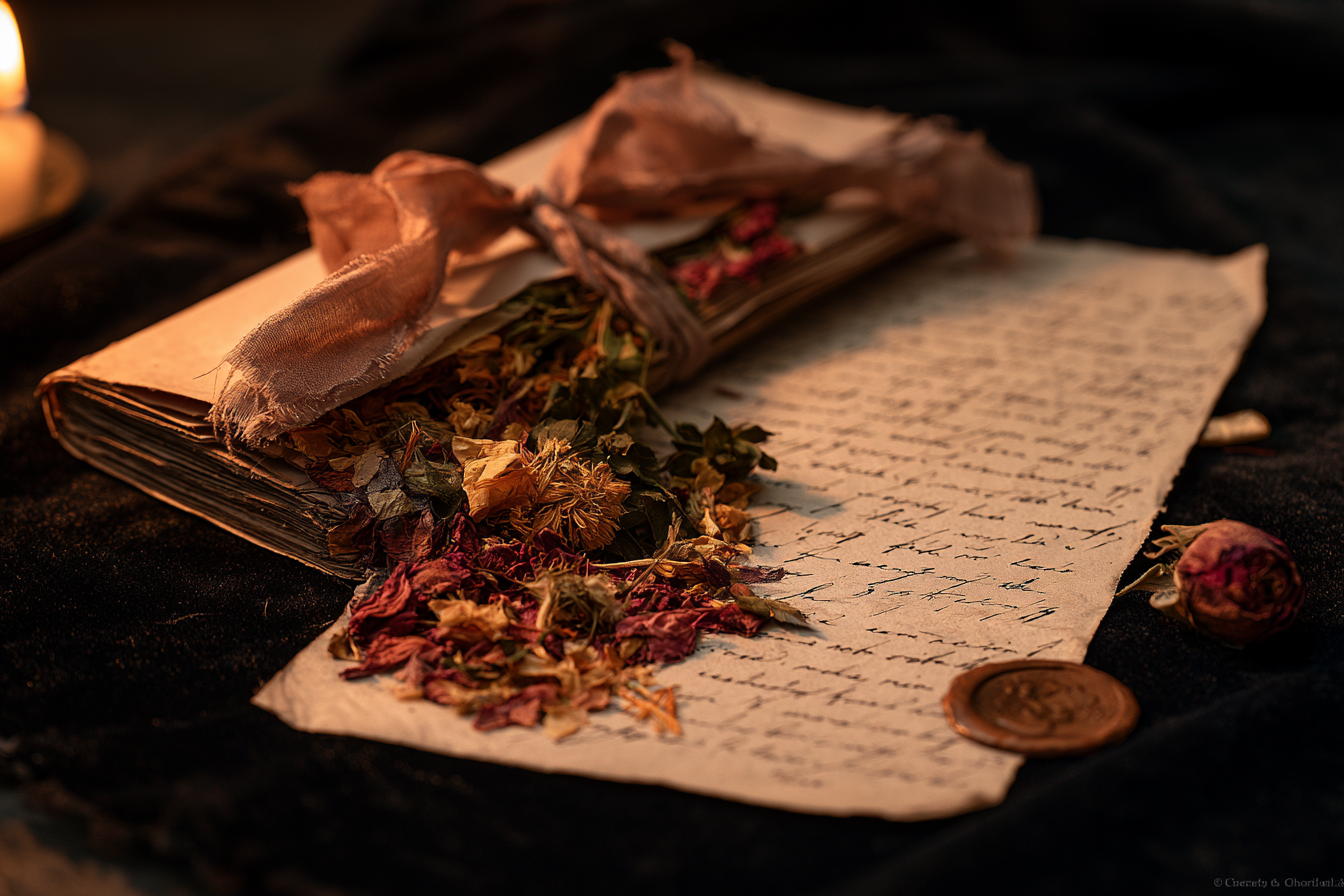 A letter that says more than its words
The Dictionary of Petals
The first major English floriography dictionary appeared in 1819 — Le Language des Fleurs by Charlotte de la Tour — and it sparked decades of competing editions, each with slightly different meanings for the same flower. The rose might mean love in one volume and discretion in another. The snowdrop: hope, or consolation, depending on which dictionary you trusted.
By the mid-Victorian period — the 1840s through the 1870s — flower dictionaries were standard household items in educated homes. They were given as gifts, kept in drawing rooms alongside dictionaries and atlases. A young woman of a certain class was expected to know the primary vocabulary the way she was expected to know French.
This ambiguity was not a flaw. It was part of the pleasure. Because different books assigned different meanings to the same flower, a sender and recipient needed to agree — explicitly or implicitly — on which dictionary they were using. The flowers couldn't be the first message. They were, always, part of an ongoing conversation. The flowers were a pretext for intimacy.
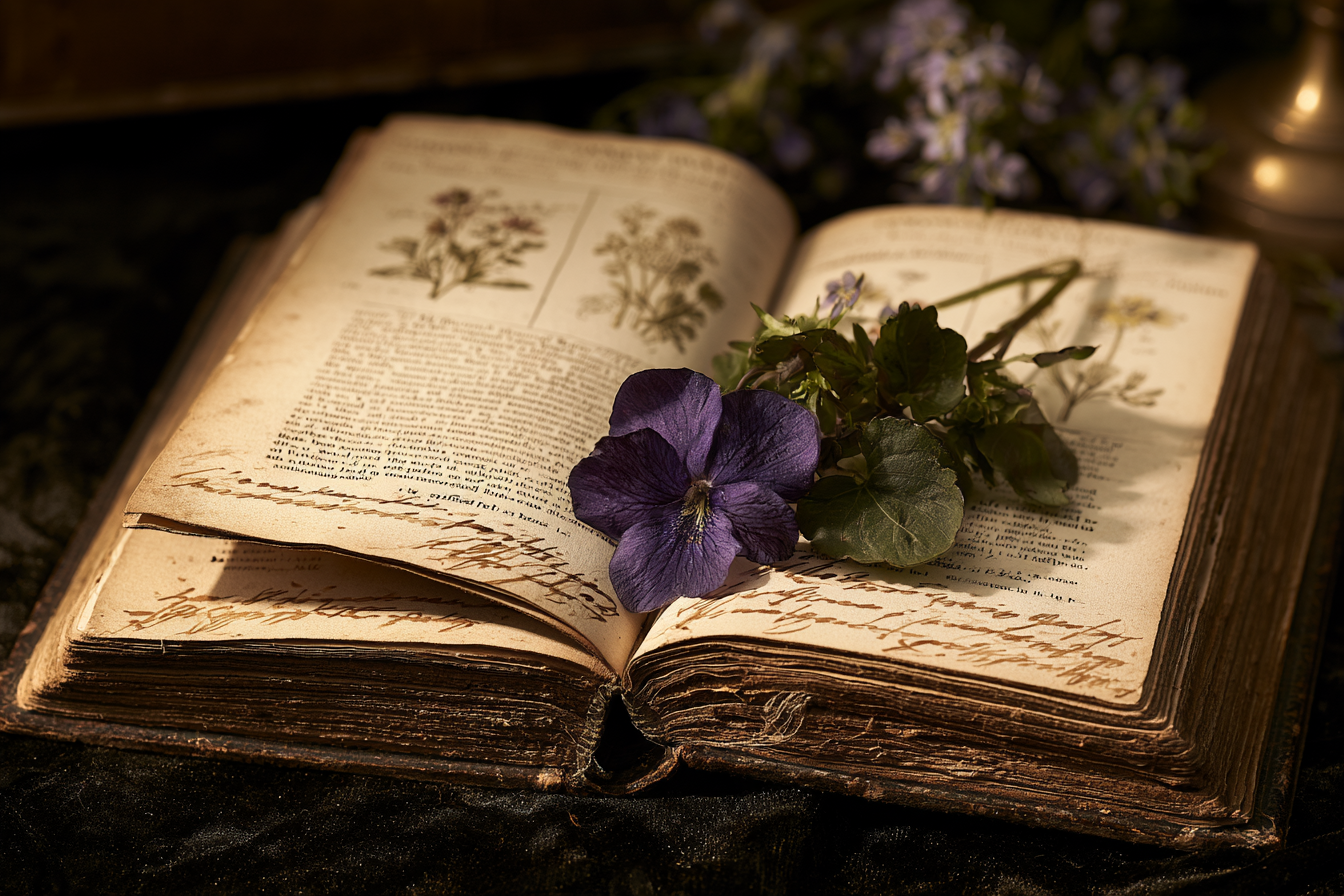
More than thirty competing dictionaries circulated in Victorian England alone. Charlotte de la Tour's original French edition. Thomas Miller's The Poetical Language of Flowers. Frederic Shoberl's translations. Each claimed authority. None agreed on everything.
What they agreed on was the project itself: that the flower world could be mapped, indexed, cross-referenced. That there was a system underneath the beauty, and that knowing it gave you power — the power to say exactly what you meant to exactly one person, in a room full of people who heard nothing at all.
The Tussie-Mussie
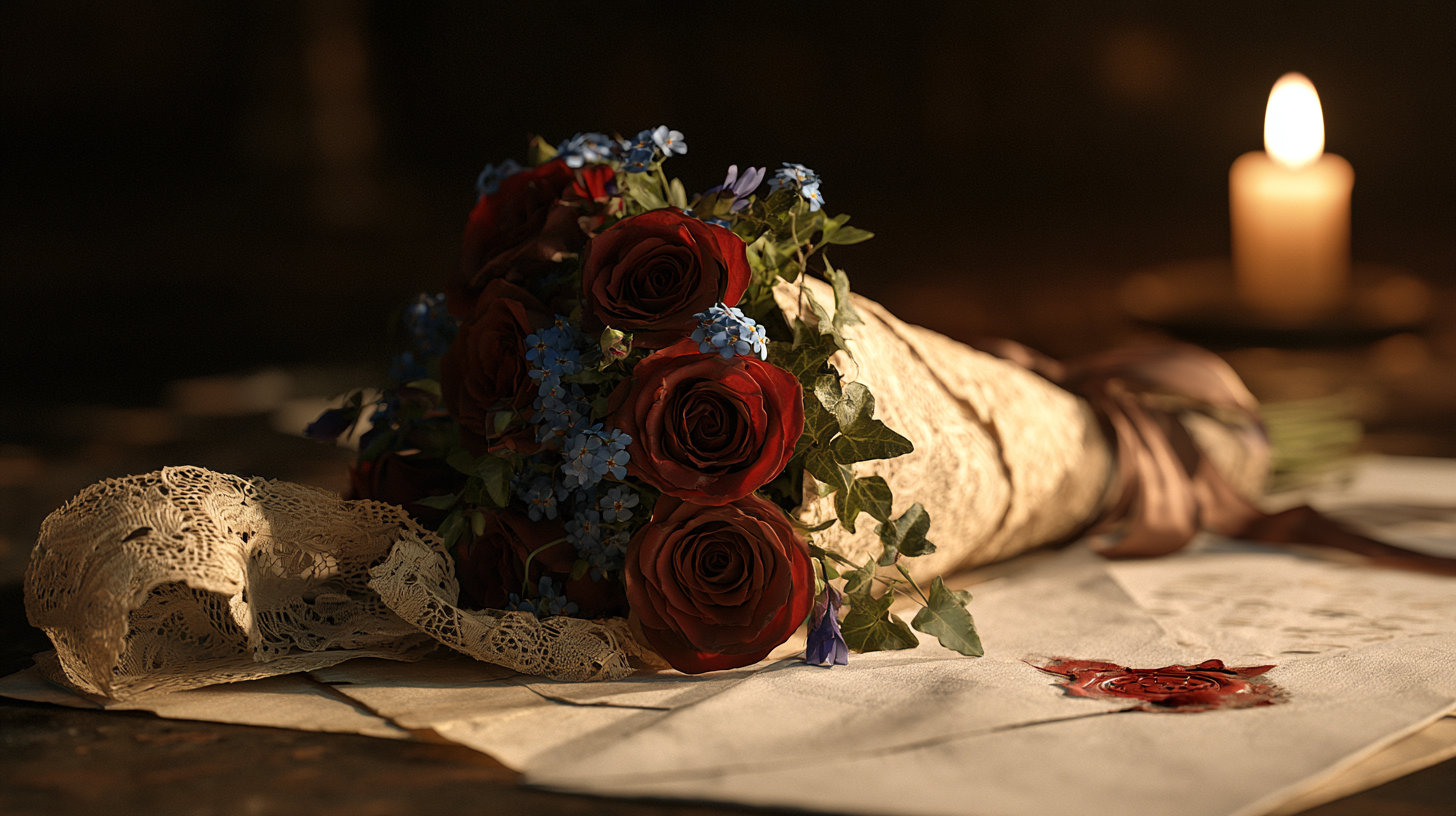
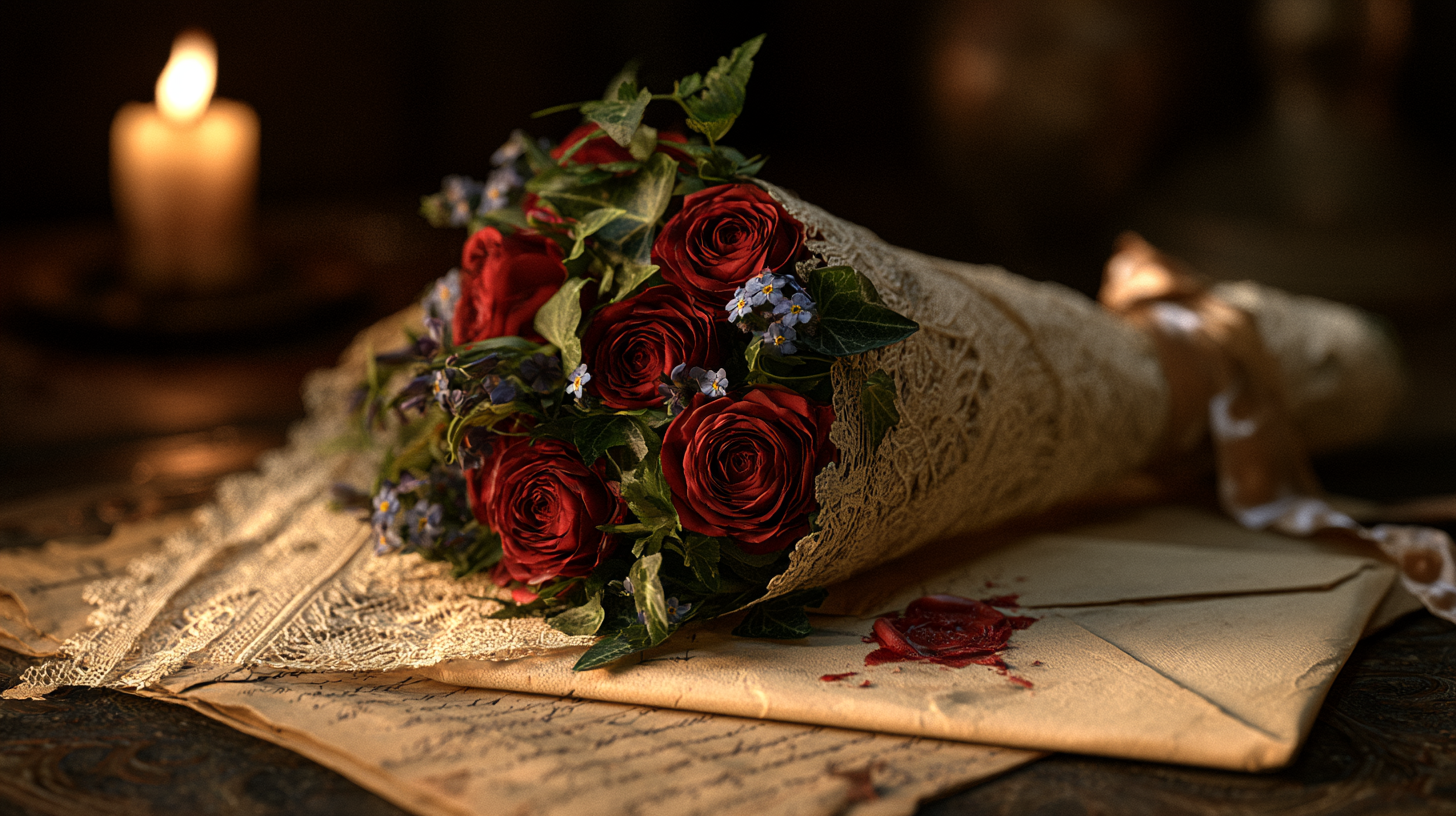
The primary vehicle for this language was the tussie-mussie: a small, tight nosegay, typically circular, with a central flower surrounded by concentric rings of other blooms and foliage, often held in a small silver or brass posy holder, which functioned as both a vase and a handle. They were everywhere in Victorian life: carried at weddings, presented at arrivals, held by ladies walking through the city.
The carrying was practical as well as decorative — Victorian cities smelled of coal smoke, horse dung, and open sewers, and flowers held to the nose were genuinely useful. But the selection of those flowers was never casual. The center flower was the subject. The surrounding flowers were modifiers. Even the way the bouquet was presented mattered: held upright, it meant what it said; held upside-down, it inverted every meaning. The language had grammar.
Reading a tussie-mussie correctly was a skill. Presenting one was a declaration of serious feeling. To receive one was to be seen — truly, privately, specifically seen — in a world that rarely permitted such directness.
The Vocabulary
The meanings were not arbitrary — most had roots in mythology, in older herbalist traditions, in the visual qualities of the flowers themselves. Red for love because red has always meant heat, urgency, blood, the body. White for silence because white is the color of nothing said. Forget-me-not for memory because its name is its meaning. The vocabulary was built on associations so deep they predate the language in which they're named.
A partial dictionary — what the flowers said
But you didn't send a single flower. You sent a combination. Red rose plus forget-me-not plus ivy: love, remember me, I am faithful. Striped carnation plus yellow rose: I refuse you and I know what you've done. The meaning wasn't in the flower — it was in the grammar, the syntax of the arrangement. You were composing a sentence. The flowers were the words.
Why It Still Matters
Floriography fell out of fashion with the turn of the century. The elaborate social codes of the Victorian era relaxed; women gained other languages; the tussie-mussie gave way to the telephone and eventually to the text message. Flowers became decoration again, not communication.
But something was lost in that translation. The language of flowers didn't die — it went underground, the way all the best languages do, the way things that carry genuine human feeling always survive the fashions that gave them form. We still send red roses. We still know — without being told, without consulting a dictionary — that some flowers are for mourning and some are for celebration. The knowledge is older than the Victorians. It lives in us at a level beneath learning, in the place where beauty and meaning became the same thing and have never fully separated since.
When you wear a pressed flower, you are participating in this. The flower has a history. It has a name. In another century it would have had a meaning in a code that every educated person around you knew how to read. The code changed, but the impulse behind it — to carry something living, to say something in beauty that can't quite be said in words — is the same impulse that arranged the first tussie-mussie in a Victorian gloved hand.
Luli listens. Every piece in the Floral Alchemy collection carries this inheritance — not as Victorian revival, but as acknowledgment that flowers speak, that choosing which ones to place beside which others is a kind of language, and that the person who receives the work receives the sentence, whether they know it or not.
The flower chose you, too. There is a reason it is the one that called to you across the room.Luli
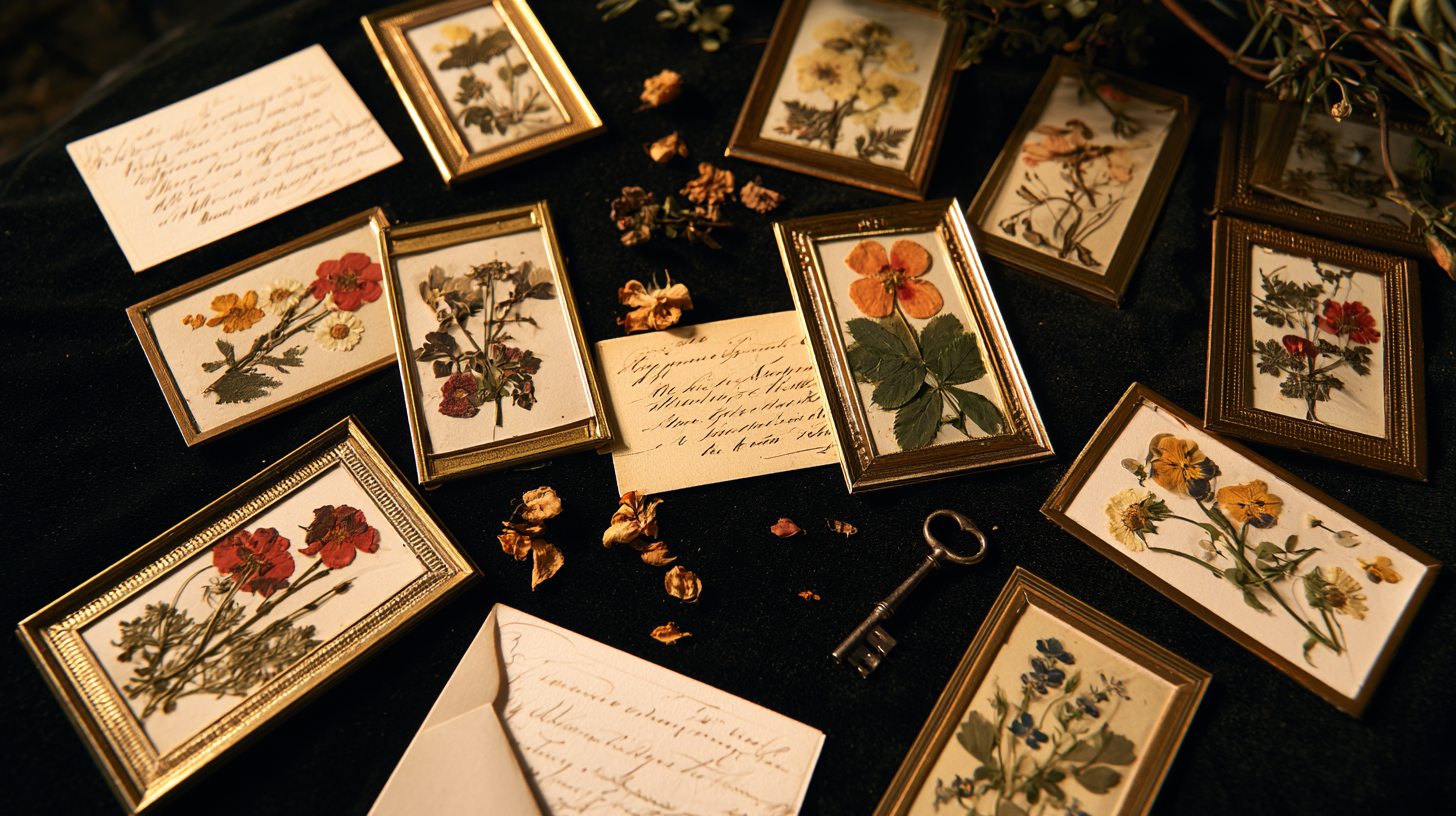 Calling cards and floral tokens, a Victorian practice
Phenology — The Science of Timing
Where floriography is poetic, phenology is scientific — though no less beautiful for being so. Phenology is the study of cyclic and seasonal natural phenomena: when the first crocus appears, when the swallows return, when the goldenrod blooms. It is the discipline of noticing and recording the calendar of the natural world.
Henry David Thoreau kept phenological records at Walden for years. Gilbert White noted when the cuckoo arrived at Selborne in the eighteenth century. These records, now digitized and compared, reveal how dramatically our seasons are shifting. The flowers remember what we forget. They keep the record of the world's change in their own timing.
In the practice of Floral Alchemy, phenology matters because pressed flowers are always a record of a moment. This particular goldenrod bloomed at this particular time in this particular place. When you press a flower, you also press the season it came from. The piece you wear is not just botanical — it is temporal. A clock that stopped, beautifully, the moment the flower was gathered.
For your library — further reading
The Language of Flowers
A novel built entirely around Victorian floriography — a woman who communicates only through the flowers she arranges. The best introduction to the emotional logic of the language, disguised as fiction.
Find on Amazon →Flora's Dictionary: The Victorian Language of Flowers
The most usable modern floriography dictionary, drawn from original Victorian sources. Organized beautifully, accurate to the era, and a pleasure to simply browse.
Find on Amazon →The Meaning of Flowers
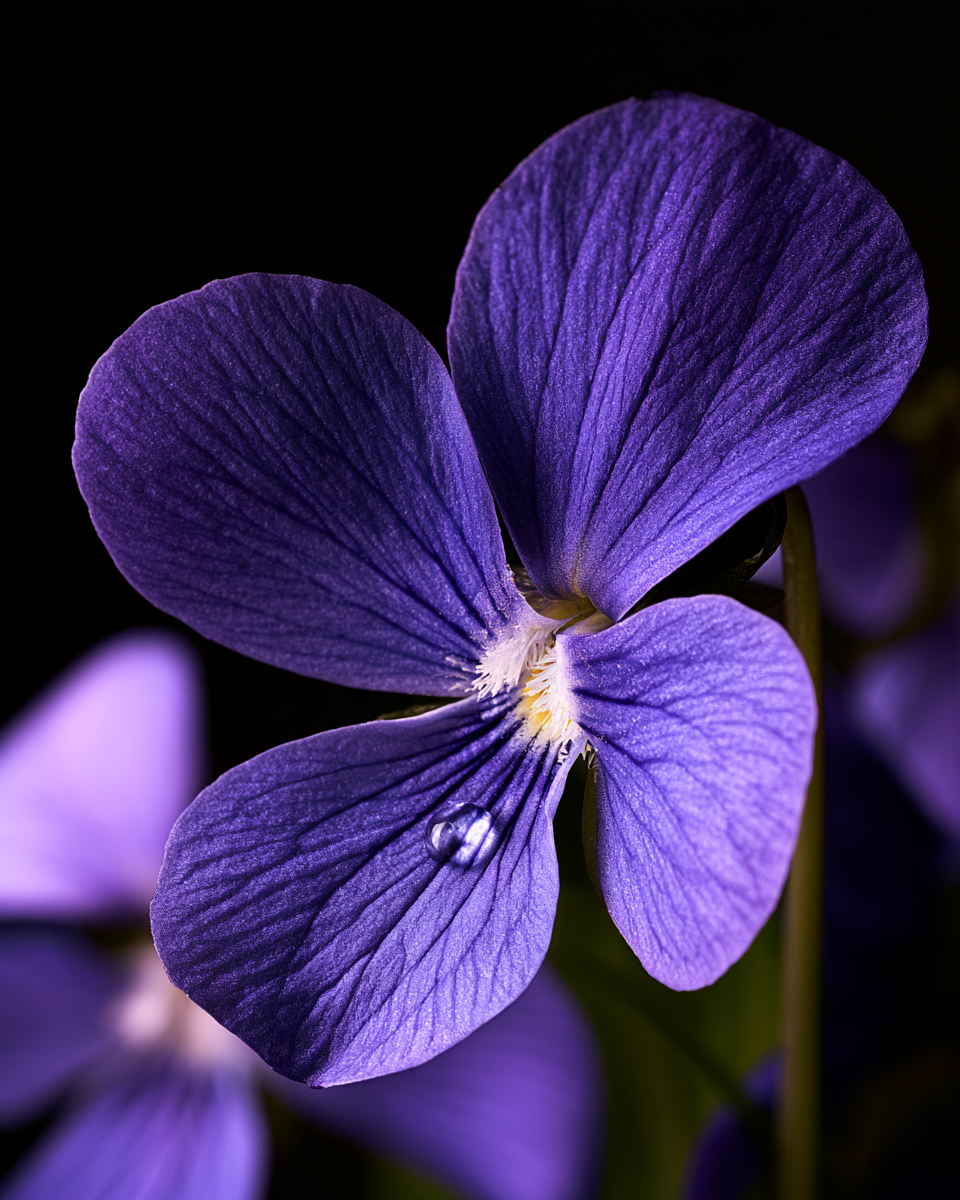
Myth, legend, and custom behind the most familiar flowers. Less strictly Victorian, more broadly cultural — what roses and violets and lilies have meant across centuries and civilizations.
Find on Amazon →Tussie-Mussies: The Victorian Art of Expressing Yourself in Flowers
The definitive book on the tussie-mussie itself — its history, its construction, what every flower in the bouquet was saying. Includes instructions for making your own.
Find on Amazon →The Language of Flowers: A Miscellany
A beautiful and comprehensive guide to Victorian floriography. Illustrated, evocative, and genuinely useful if you want to know what you're saying when you choose a bouquet.
Find on Amazon →Flowers and Their Histories
A classic exploration of the history, mythology, and symbolism of garden flowers. Coats writes with wit and scholarship, and the stories she tells will change how you look at ordinary flowers.
Find on Amazon →Braiding Sweetgrass
A botanist who is also a member of the Citizen Potawatomi Nation weaves together Western science and indigenous plant knowledge into a meditation on what it means to live in reciprocity with the plant world. One of the most important books about plants written in recent memory.
Find on Amazon →Remarkable Plants That Shape Our World
Fifty plants that changed history — through trade, medicine, food, and culture. Each entry reveals how deeply plants have shaped human civilization, often invisibly.
Find on Amazon →