The Wonder Table  ·  The Fresh Daylilies


The
Greenhouse

Built in the 1920s to keep the most temporary things alive. Lost. Reclaimed.

Before the Greenhouse — The Sunken Garden

To understand why a greenhouse was built here, you first have to understand what it was built to serve. This was not a private garden. It was a destination.

Starting from what was once an unsightly ravine, a man spent seven years — with no plans, no architect, no blueprint — transforming the land by the force of his own vision. Stone by stone, terrace by terrace, he carved a sunken amphitheater into the hillside: concentric stone retaining walls descending thirty feet below grade, a circular lily pond at the center, a goldfish pond fed by a waterfall cascade, cedar trees flanking a grand stone staircase leading down from the house. The flowers and shrubs that filled every terrace — cannas, water lilies, ferns, hundreds of tropical varieties — came from the hothouse located on another part of the estate. That hothouse is the greenhouse you're looking at on this page.
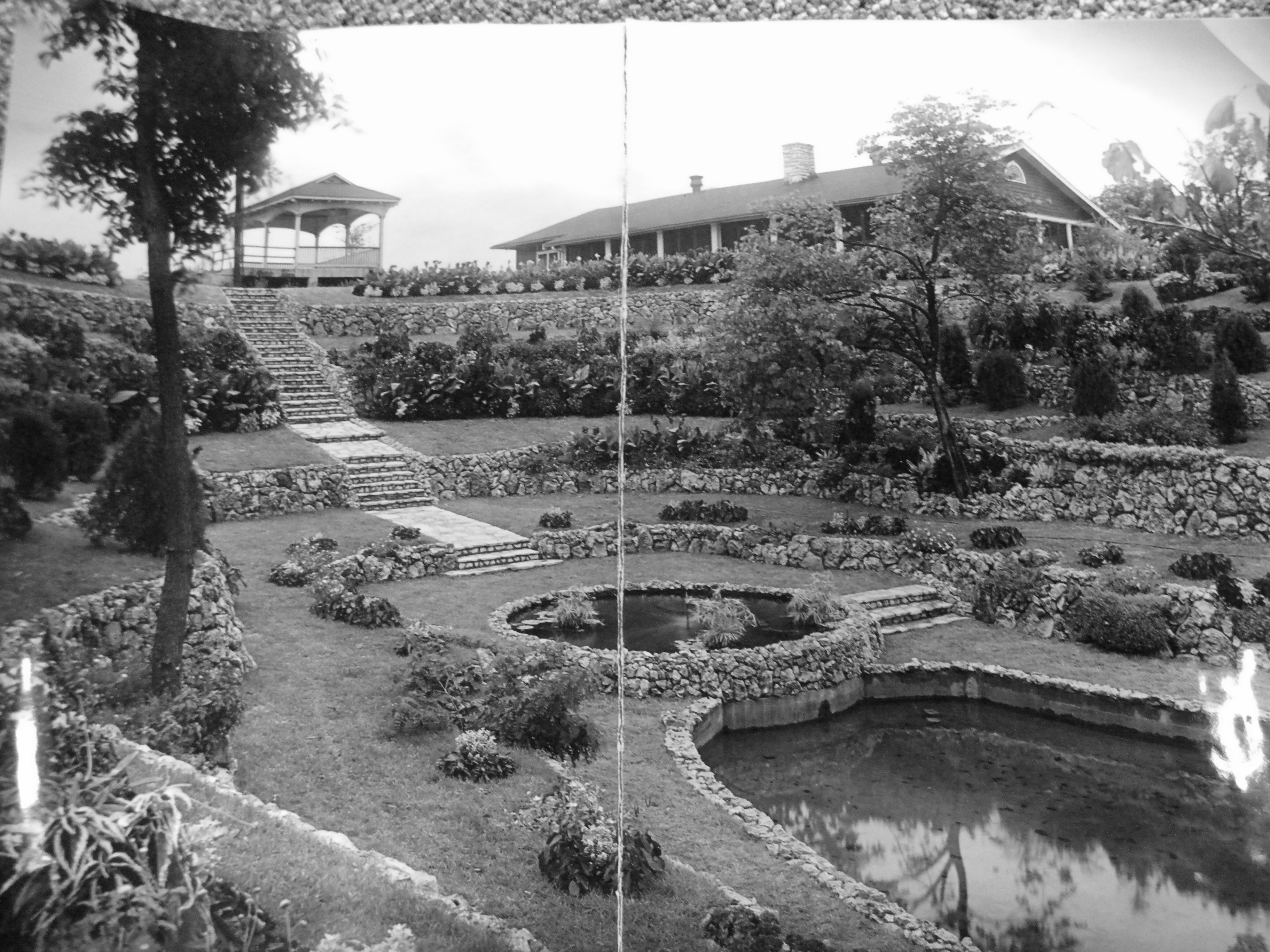
The Sunken Garden in its prime — the full panorama: gazebo upper left, main house on the ridge, grand stone staircase descending to the lily pond, concentric stone terraced beds on every level
The Sunken Garden · at its height Carved by hand from a ravine. No plans. Seven years.
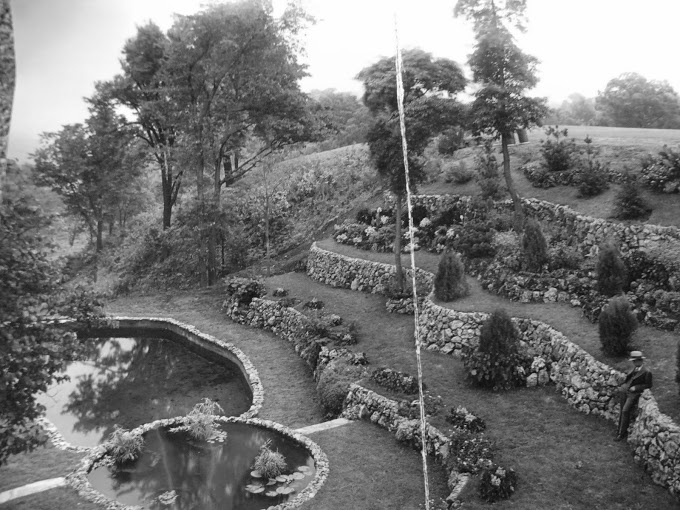
Aerial view of the Sunken Garden — stone terracing descending to the lily pond, one figure visible to show the scale of what was built
1927 The scale of it — one person standing for reference
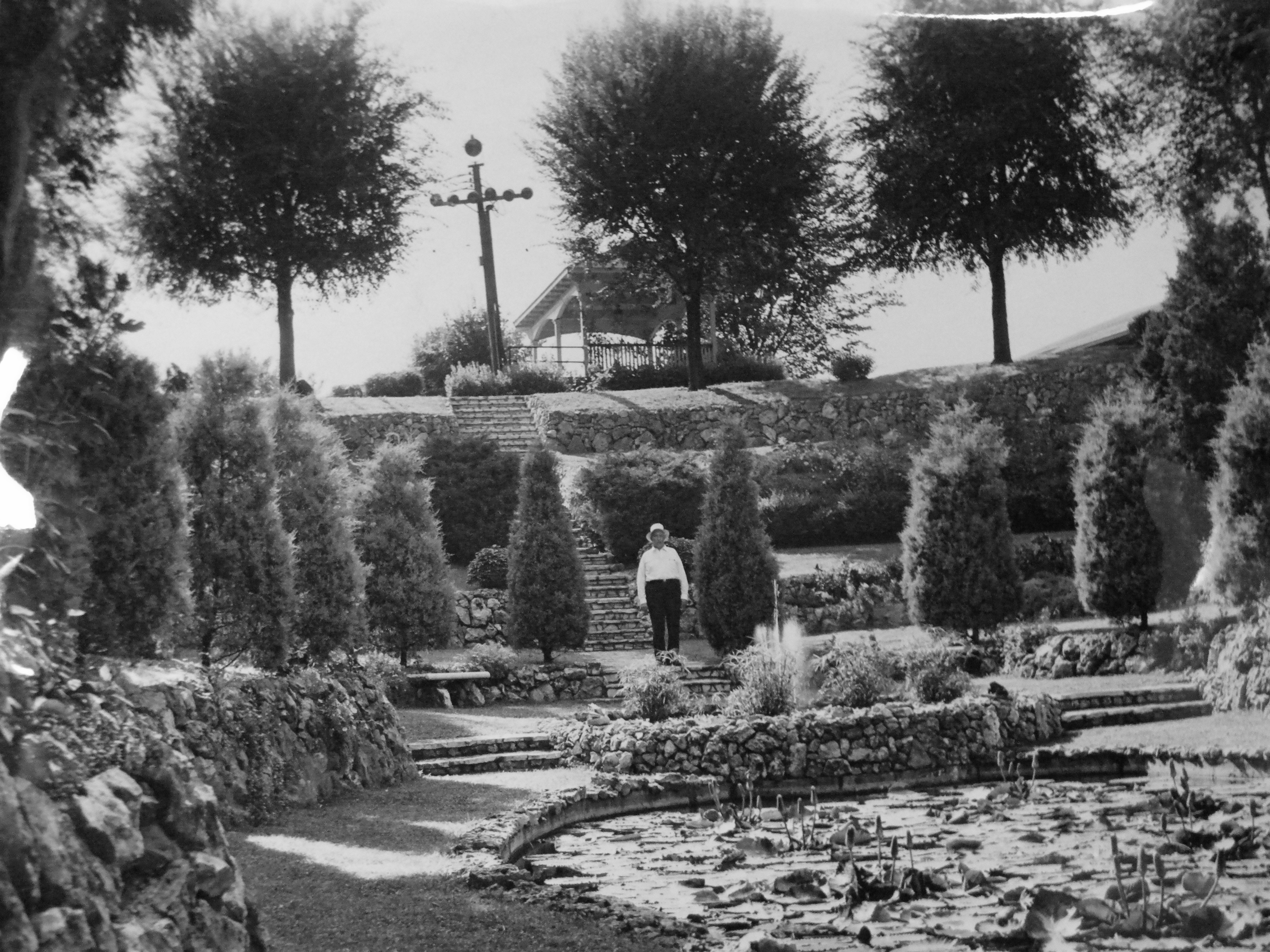
The man who built the Sunken Garden, standing on the stone stairs above the lily pond — cedar trees on both sides, water lilies floating in the foreground
The builder Standing in what he made. No plans. Just the eye for it.

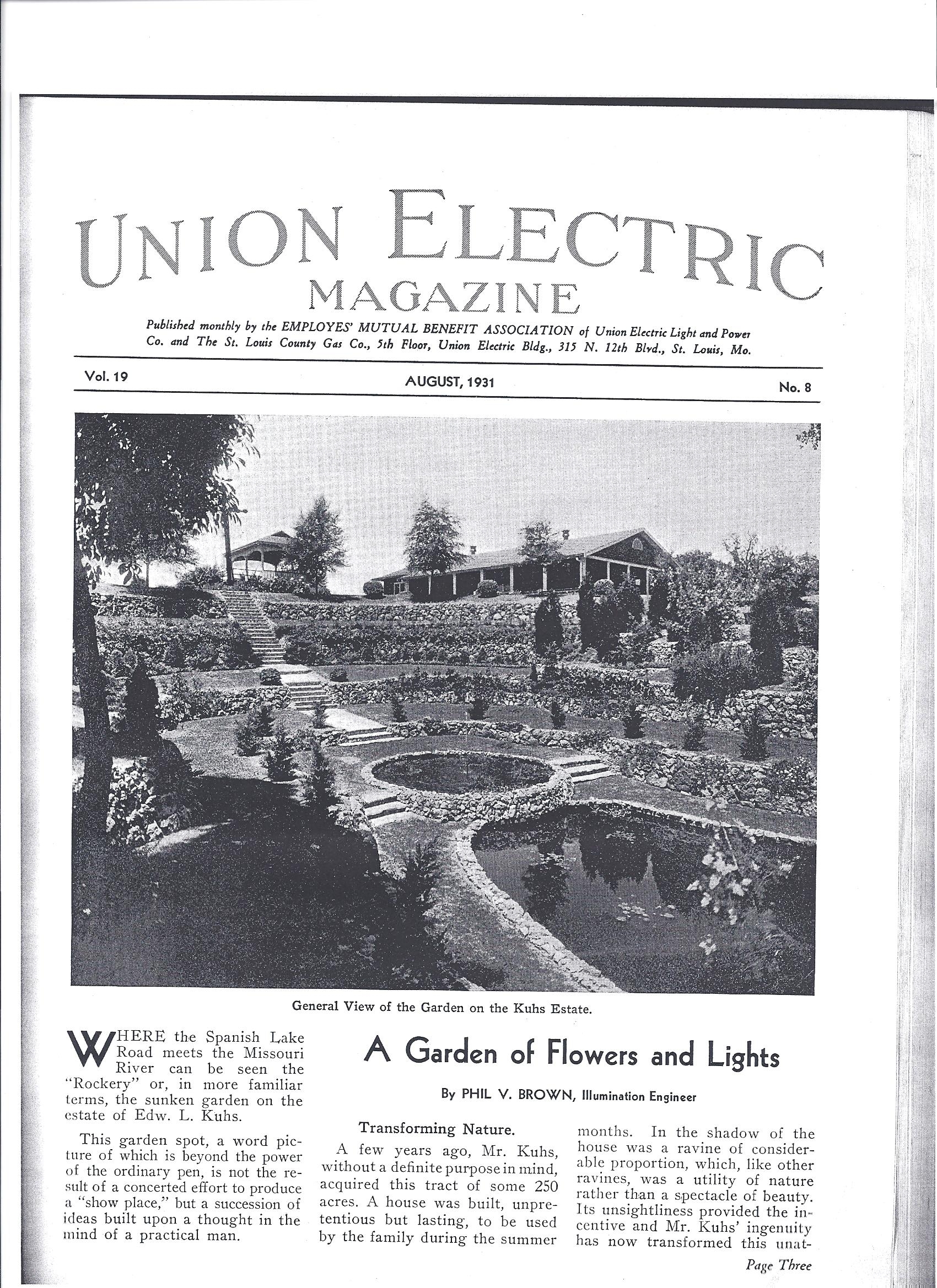
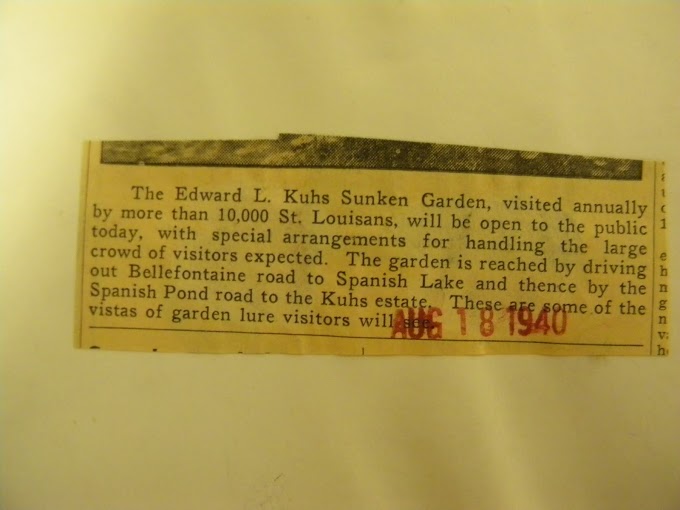
By 1931, the Union Electric Magazine ran it as a cover story — "A Garden of Flowers and Lights." The waterfall was illuminated at night with a color-cycling system of green, blue, and red lights, automated to complete one full cycle every two minutes. By 1940, the St. Louis newspapers were announcing public open days: "The Sunken Garden, visited annually by more than 10,000 St. Louisans, will be open to the public today." People drove out from the city specifically to see it.
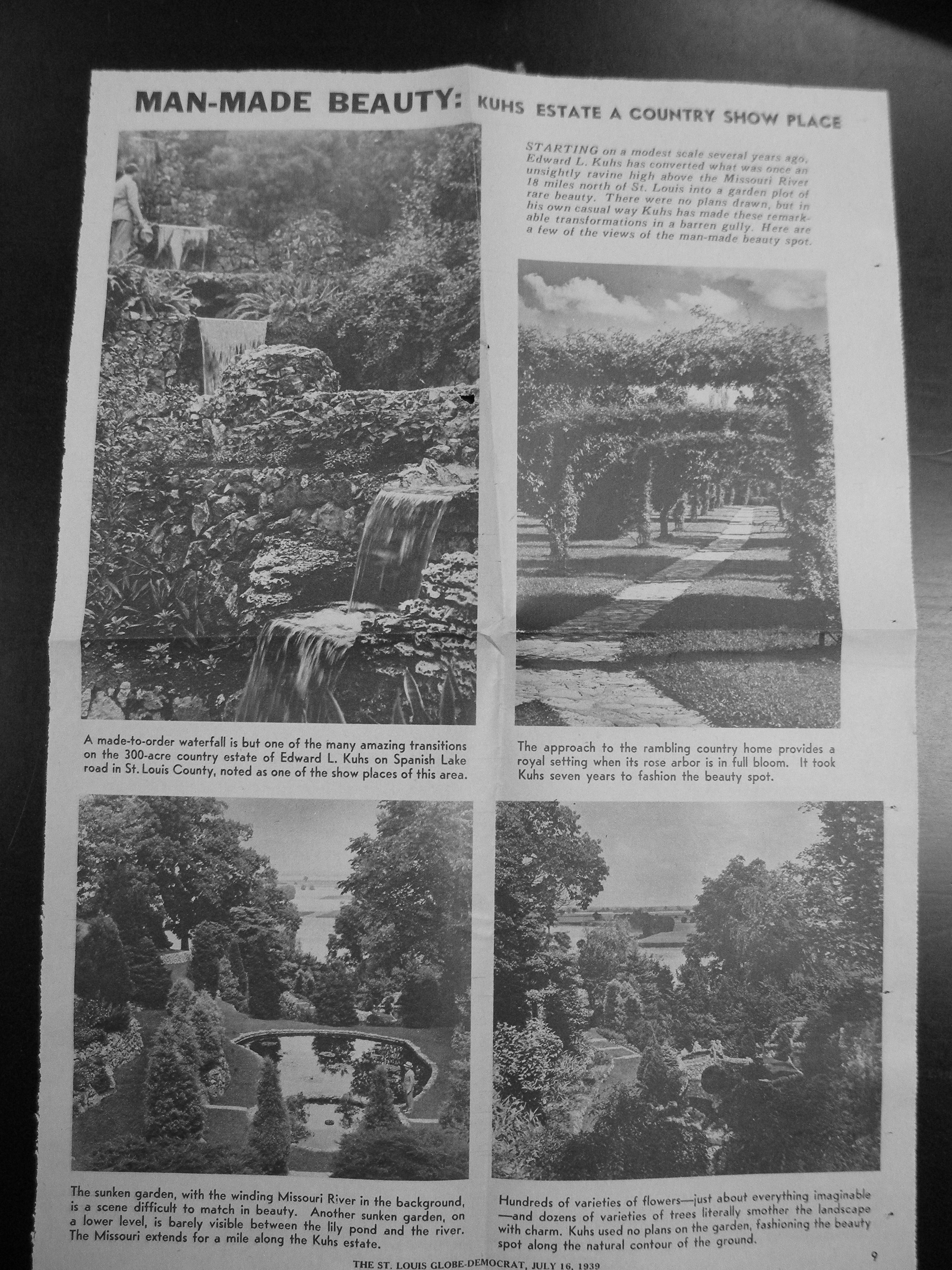
The St. Louis Globe-Democrat, 1939 — 'Man-Made Beauty: Kuhs Estate a Country Show Place,' with photos of the waterfall, the sunken garden, the rose arbor
1939 · St. Louis Globe-Democrat "A country show place" — they drove from the city to see it
Newspaper clipping, August 1940 — 'The Sunken Garden, visited annually by more than 10,000 St. Louisans, will be open to the public today'
August 1940 10,000 visitors a year. Open to the public.
Union Electric Magazine, August 1931 — the Sunken Garden on the cover, with the headline 'A Garden of Flowers and Lights'
Union Electric Magazine · August 1931 Cover story. "A garden spot beyond the power of the ordinary pen."
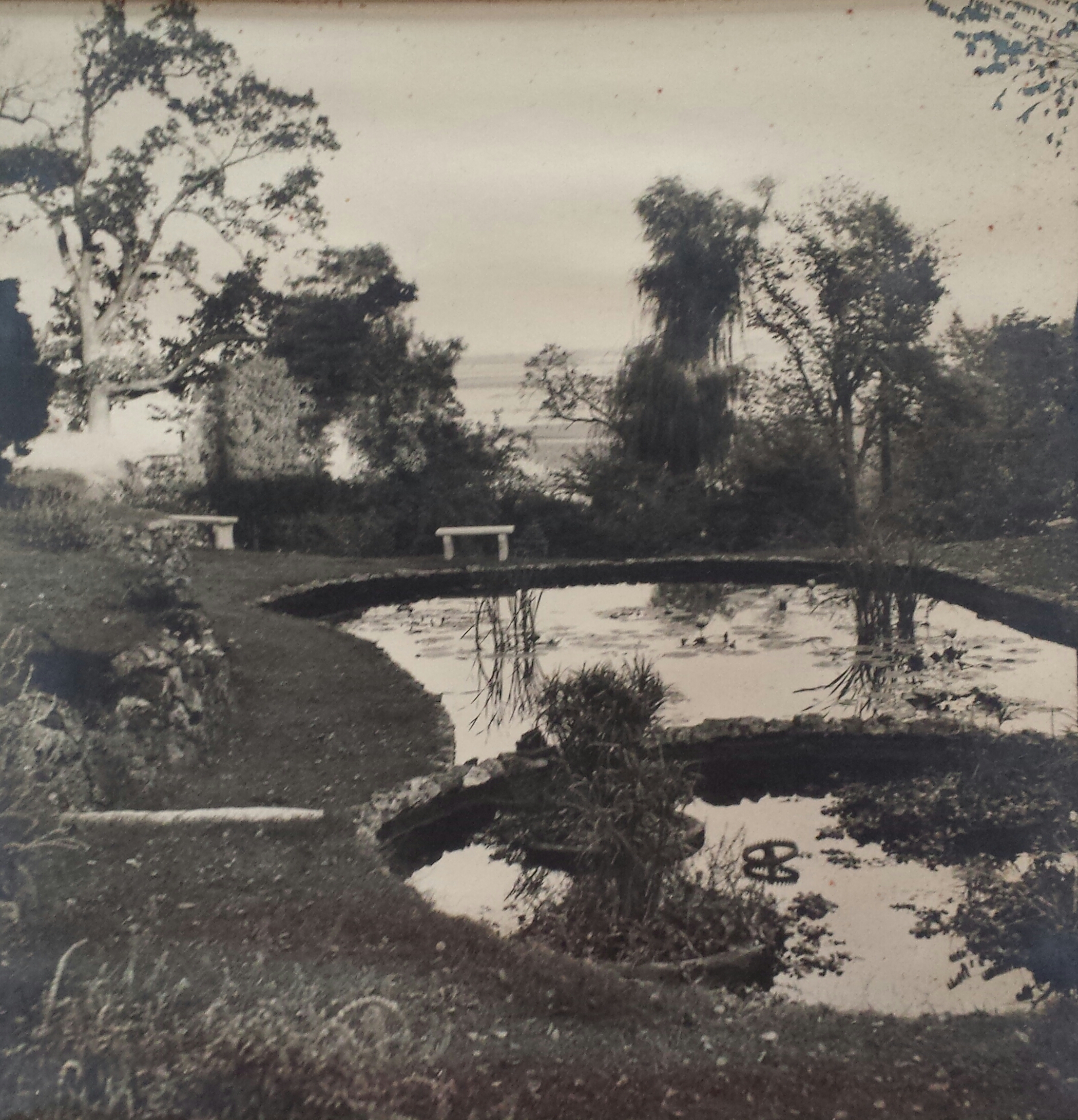
The circular lily pond up close — water lilies floating, a palm tree reflected in the still water, the Missouri River visible through the trees in the background
The lily pond Water lilies, a palm reflection, the river behind. Every plant here came from the greenhouse.

The greenhouse was the engine behind all of it. Every tropical that bloomed in those terraced beds had overwintered in that heated structure — cannas, water lilies, ferns, cactus, all the beautiful delicates that couldn't survive the season outside. Two rooms, heated by steam pipes in the ground from a boiler in the basement. Every spring they went back into their beds as soon as the temperature would allow. The greenhouse was built to keep the most temporary things alive long enough to bloom again — in a garden that 10,000 people came every year to see.
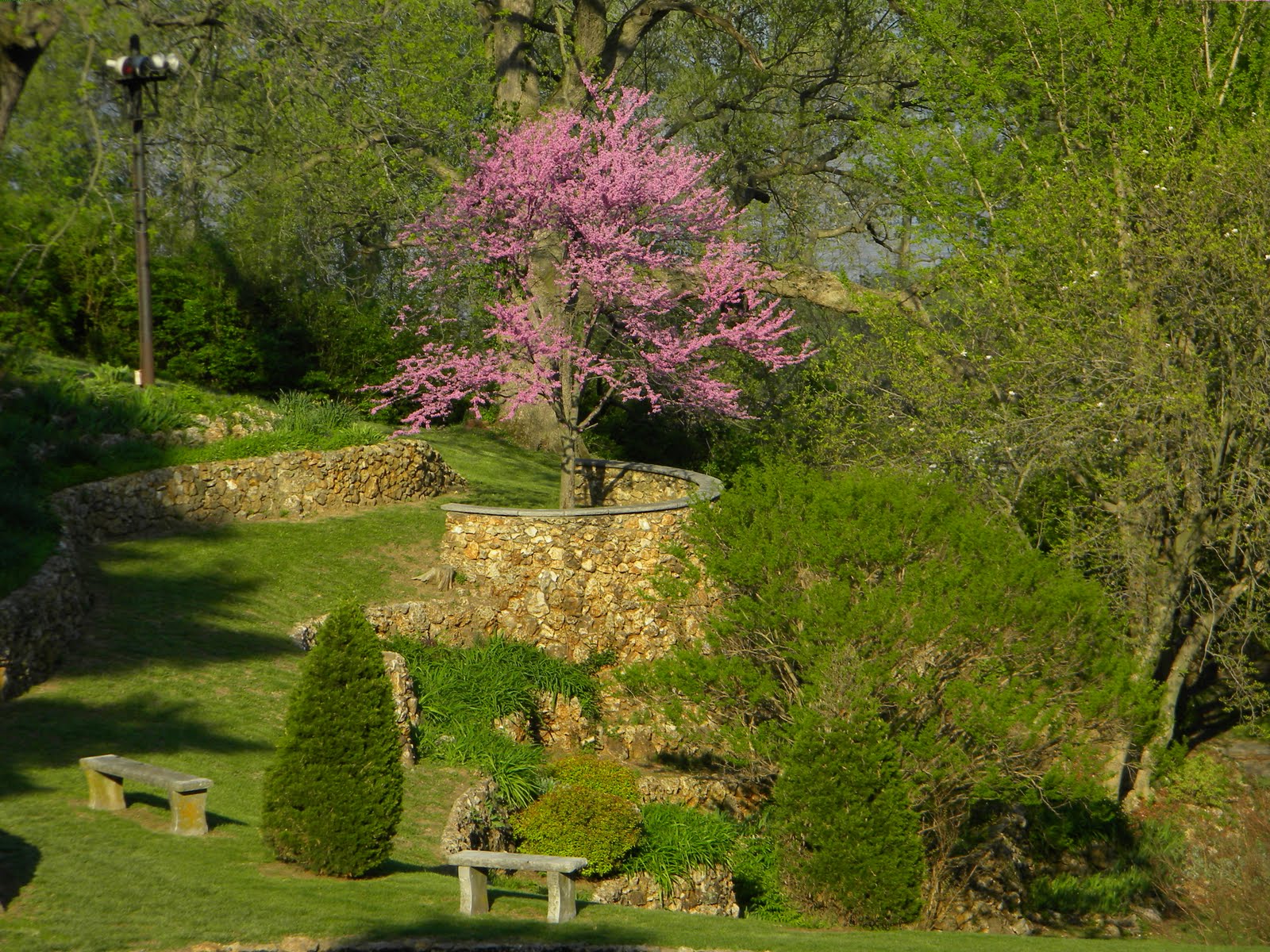
The Sunken Garden today in spring — a redbud tree blooming pink against the stone terracing, stone benches, the structure still intact after a century
Today · The garden still stands The stone held. The bones are all still here.

The Greenhouse · The First Life

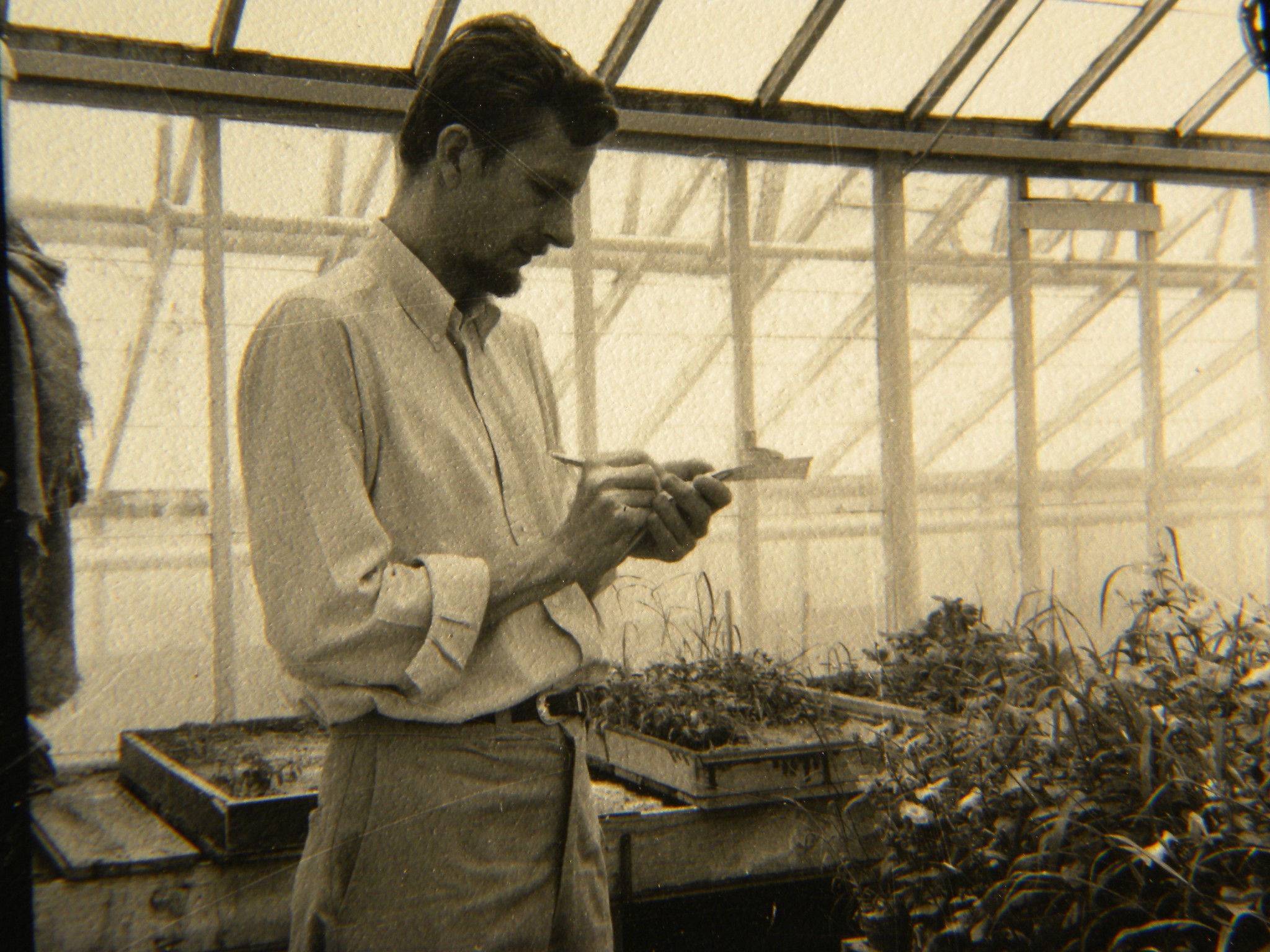
A man at the growing benches — the greenhouse fully glazed above, examining a seedling in his hands
Before Someone who knew exactly what he was doing, doing it carefully

1949 · The Tornado

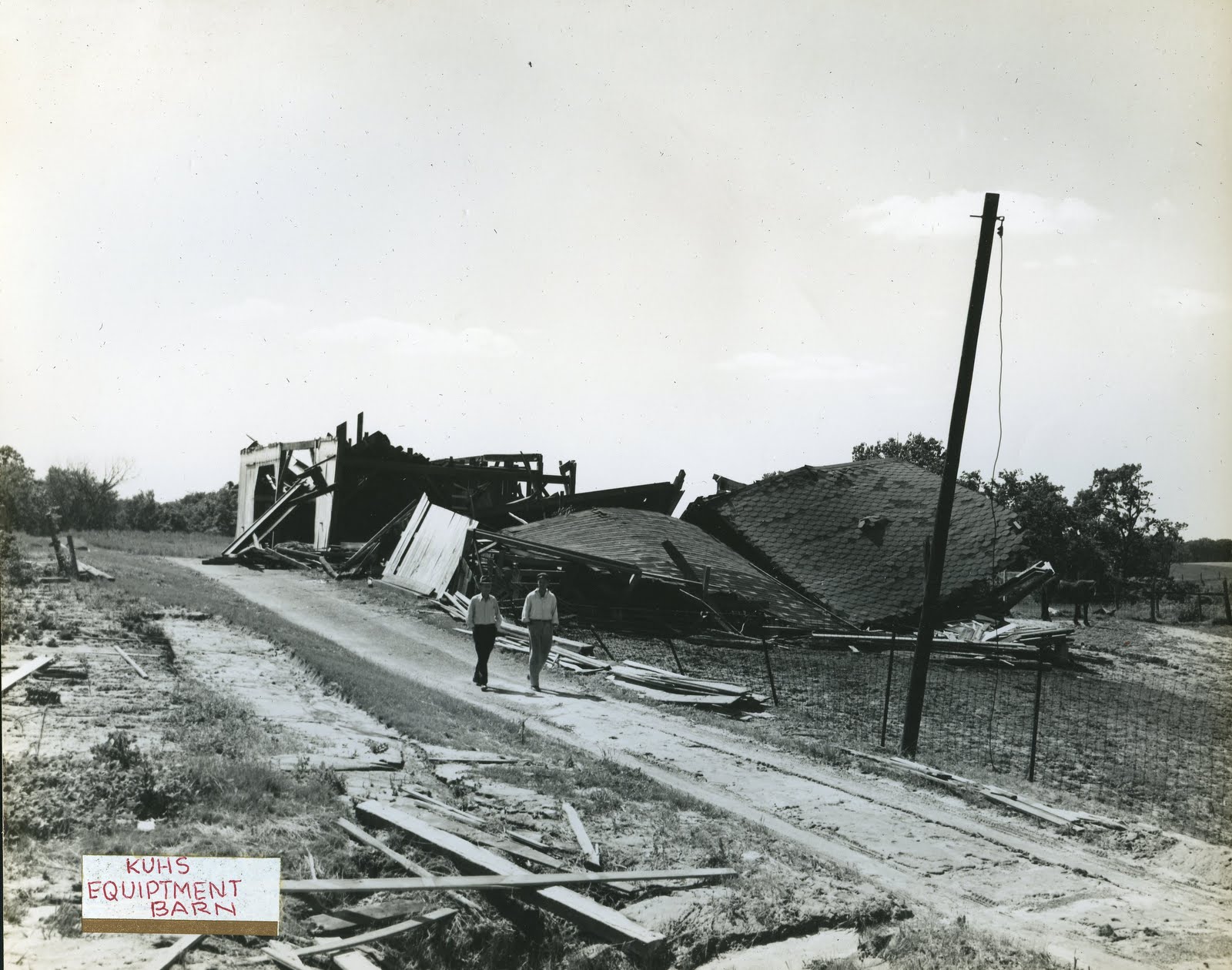
The tornado came from the west. Century-old trees in the rock garden came down completely, burying the stone terracing under canopy. The equipment barn — built to withstand decades of hard use — was reduced to rubble. Everything the storm touched directly either came down or came apart.
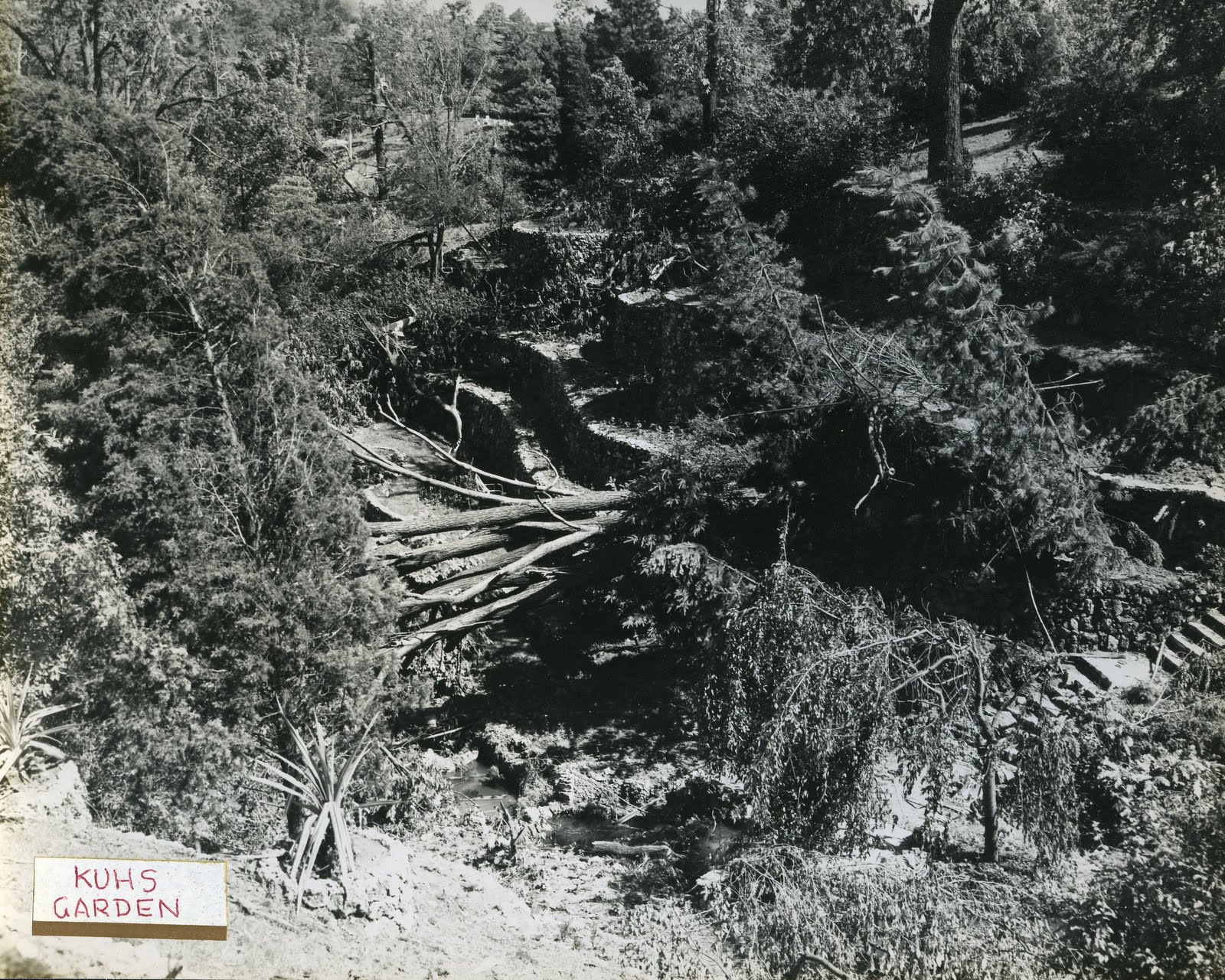
The rock garden after the 1949 tornado — century-old trees down across the stone terracing, the garden buried under fallen canopy
The rock garden Trees that were here before the garden — gone in one night
The equipment barn after the 1949 tornado — completely destroyed, flattened, two men walking past the rubble
The equipment barn Flat on the ground. Nothing left standing.

The greenhouse took the initial approach from the west. Some glass came out. The frame took the hit. And then — something held. The structure stayed. Inside, the plants were undisturbed.
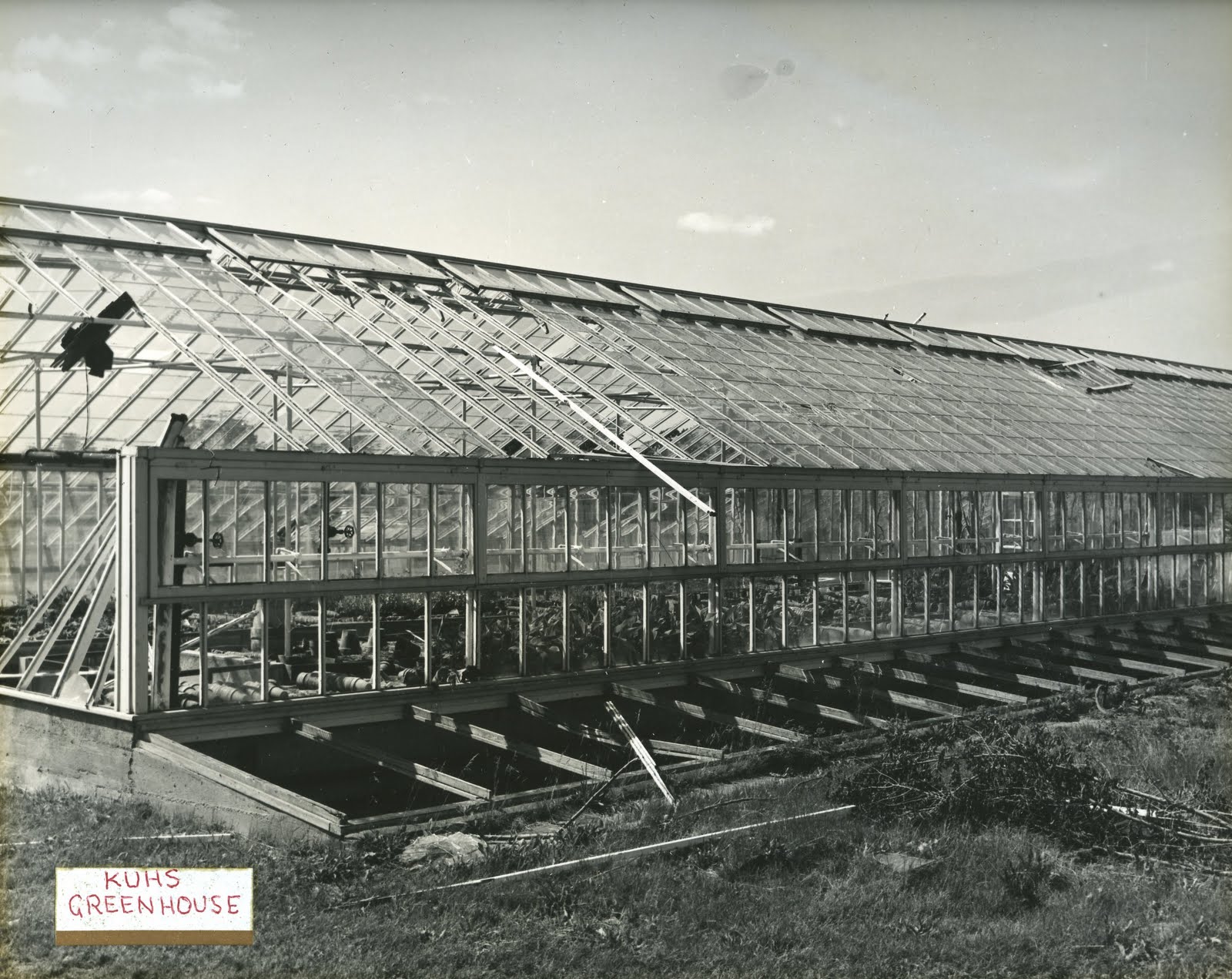
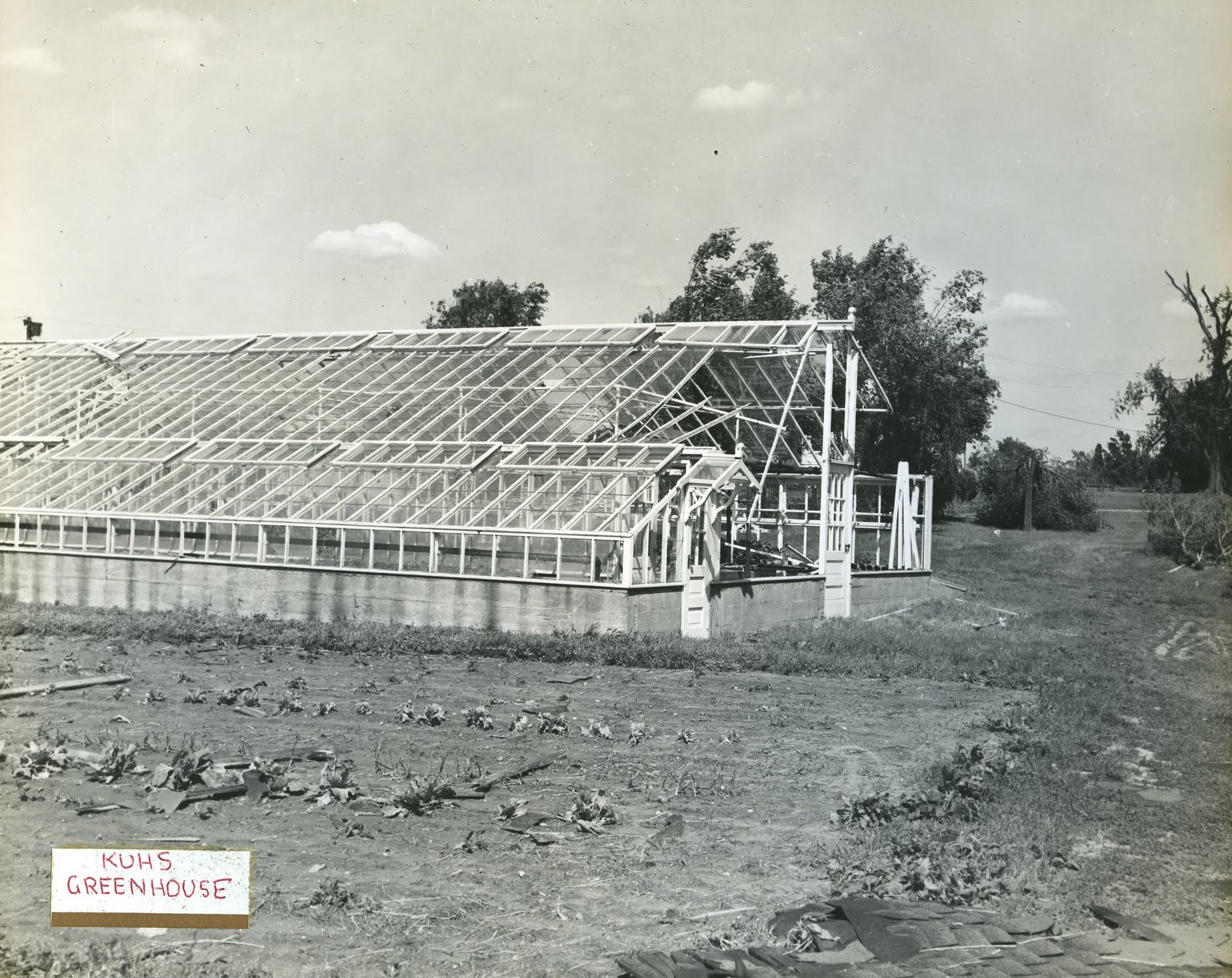
The greenhouse after the 1949 tornado — the full length still standing, glass lost from the west end, the structure intact
The greenhouse — after Still standing. Glass out in places. Plants untouched.
The greenhouse corner view after the tornado — debris on the ground, the entrance damaged, but the body of the building intact
The west approach Where it first hit. The greenhouse did not go down.

The specific ground the greenhouse stands on — the terraced area that surrounds it — was the part of the farm the tornado moved through and left. Whether that is geology or luck or something older than either, I can't say with certainty. I know the plants were undisturbed. The ground held what mattered.

The 1970s
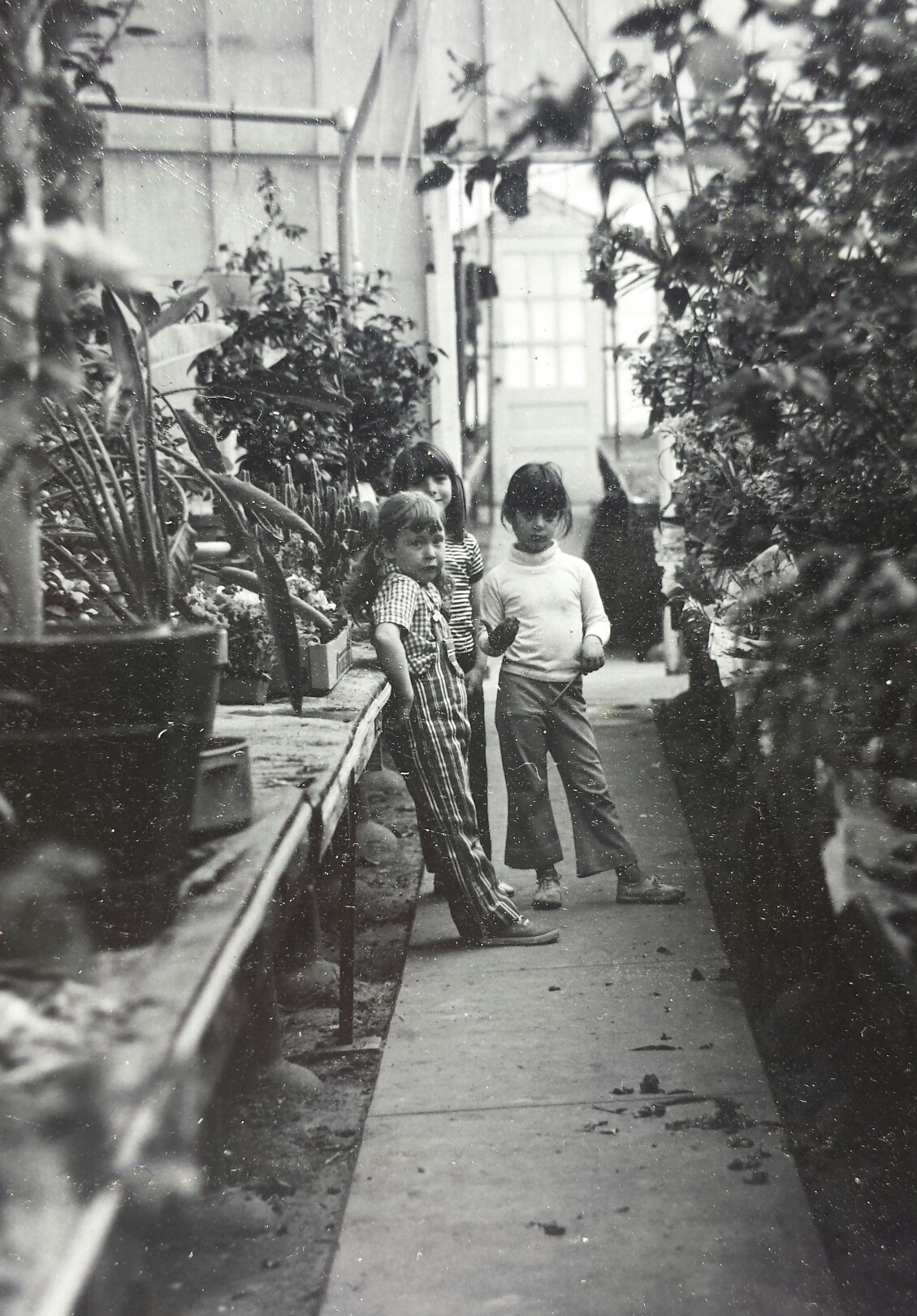
The greenhouse in the 1970s — children among the tropical plants, the building still in its original use
1970s Twenty years after the tornado. Still here. Still growing.

2011 — 2012

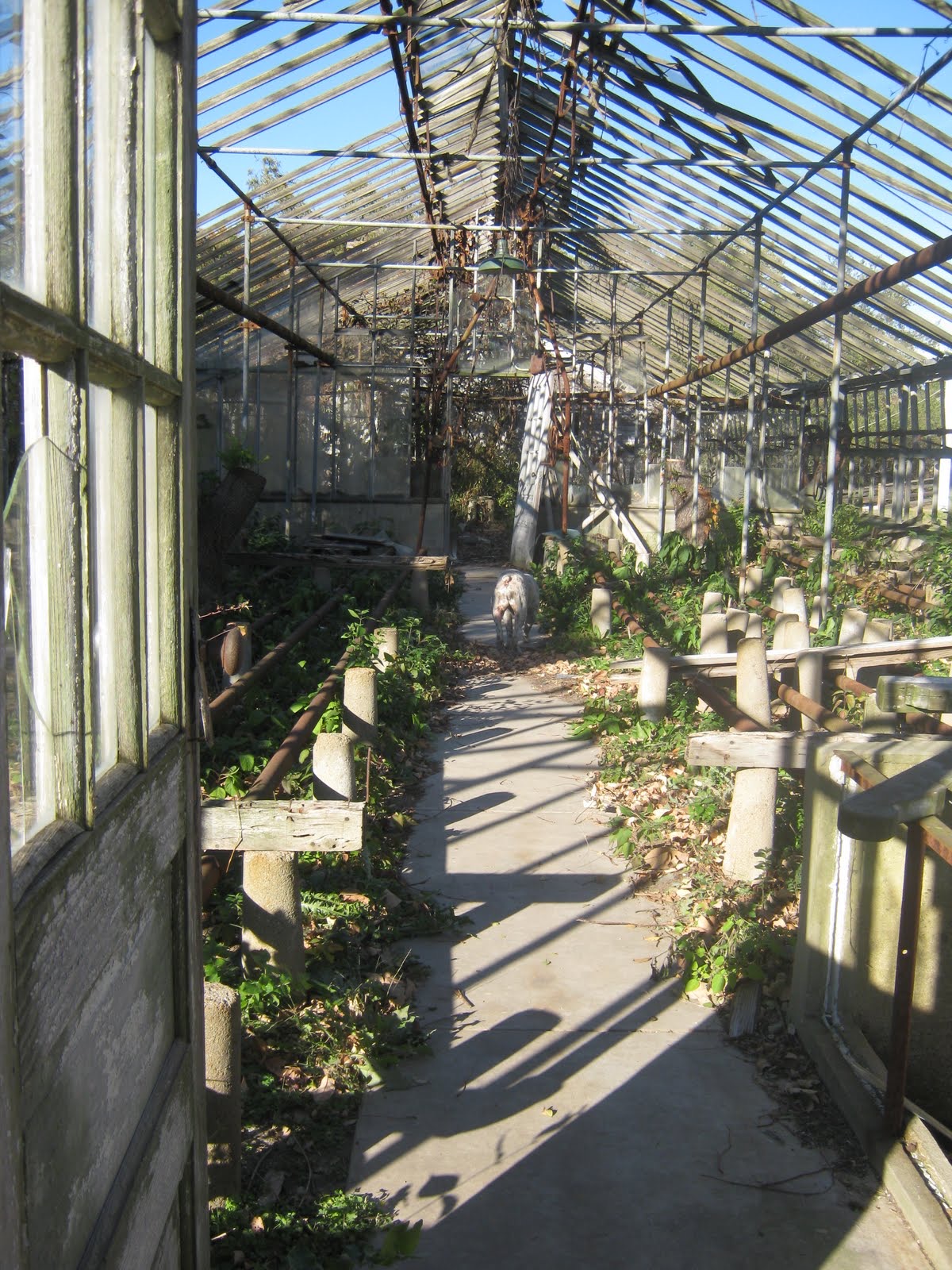
The greenhouse in abandonment — broken glass, weeds, trees where the benches had been
2011 Trees where the heated tables had been
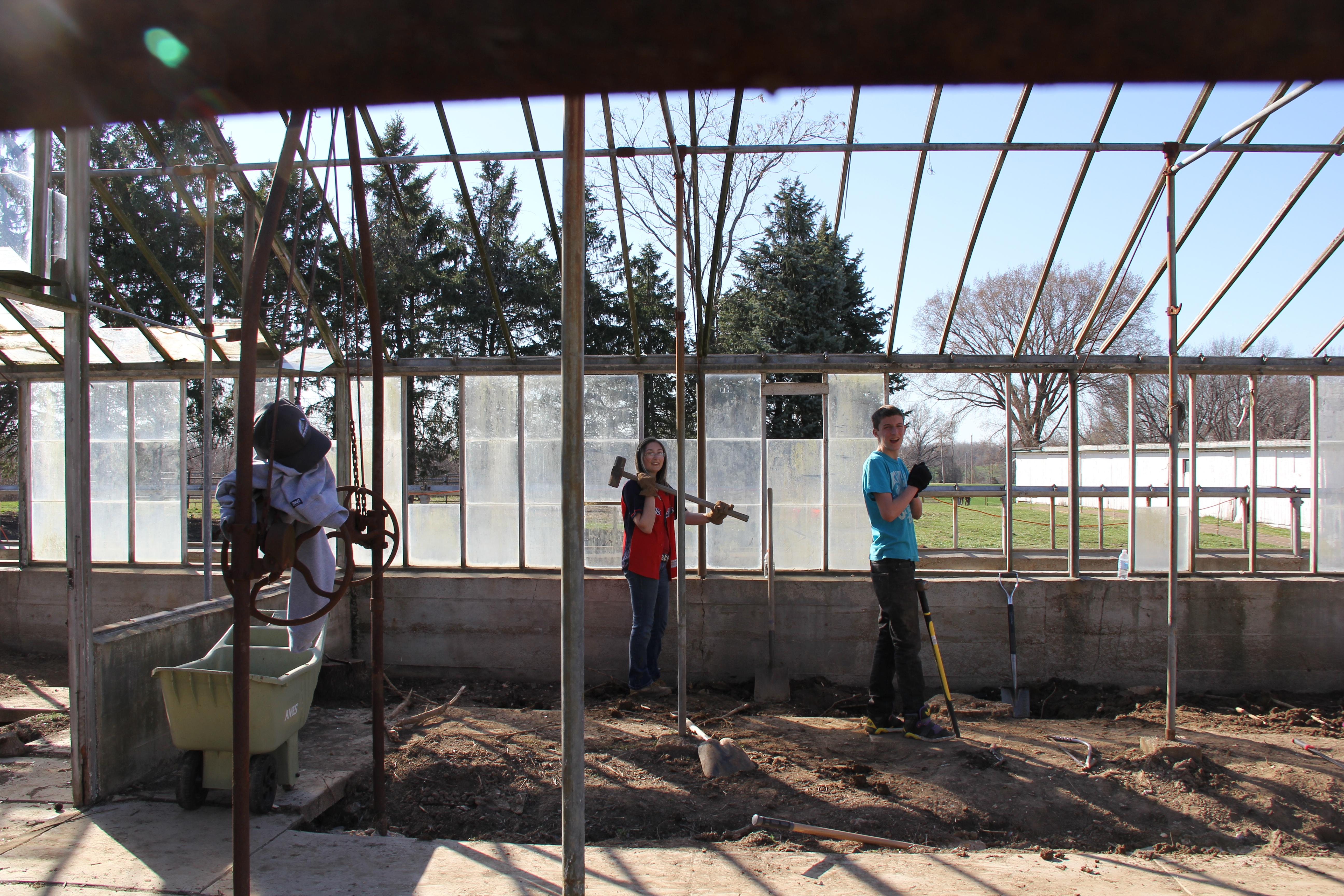
The beginning of the restoration — friends with sledgehammers and rakes working inside the stripped frame
March 2012 Friends came out to help
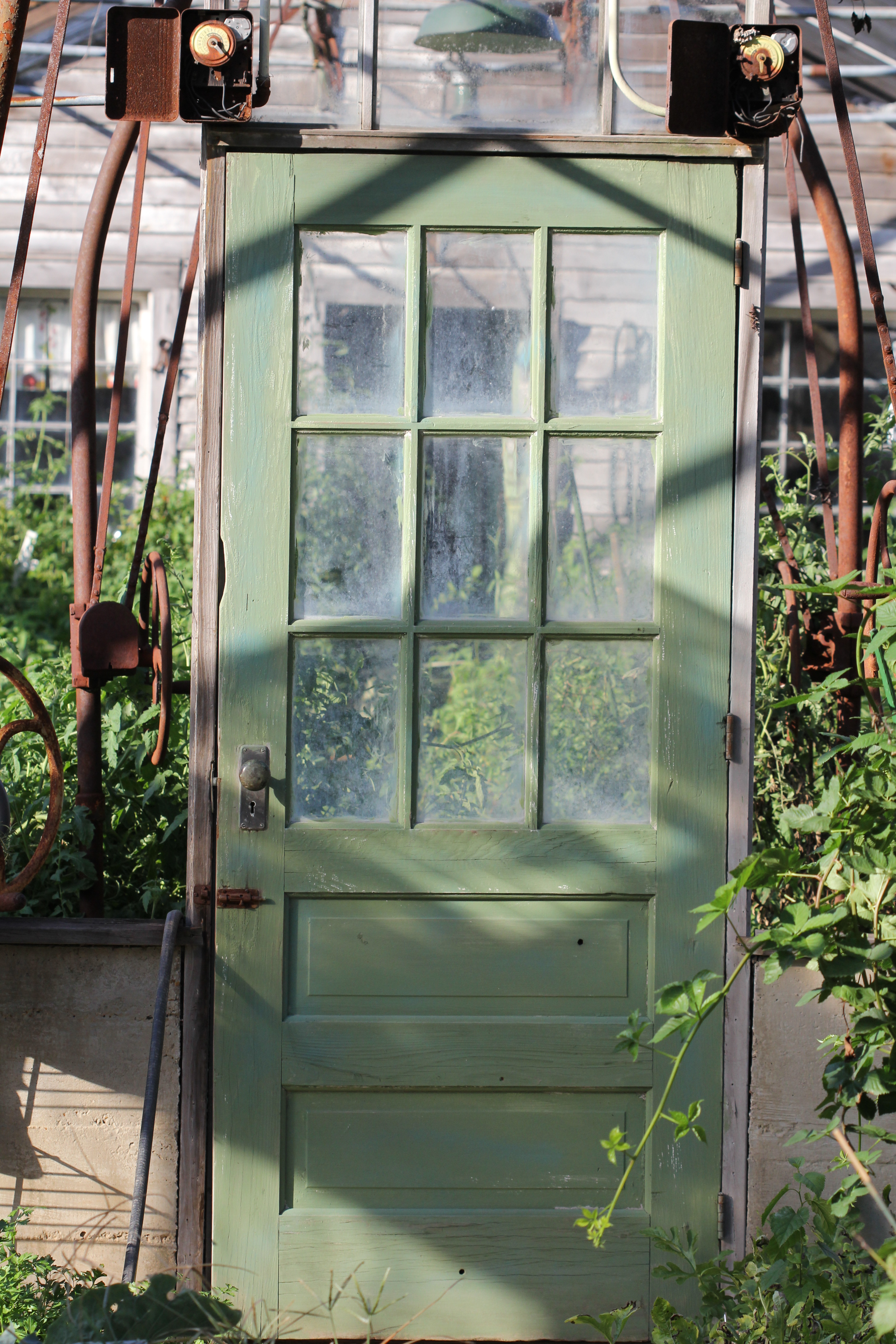
The sage green door — the first deliberate thing built, the first sign of what this was becoming
September 2012 The first thing built with intention

2018

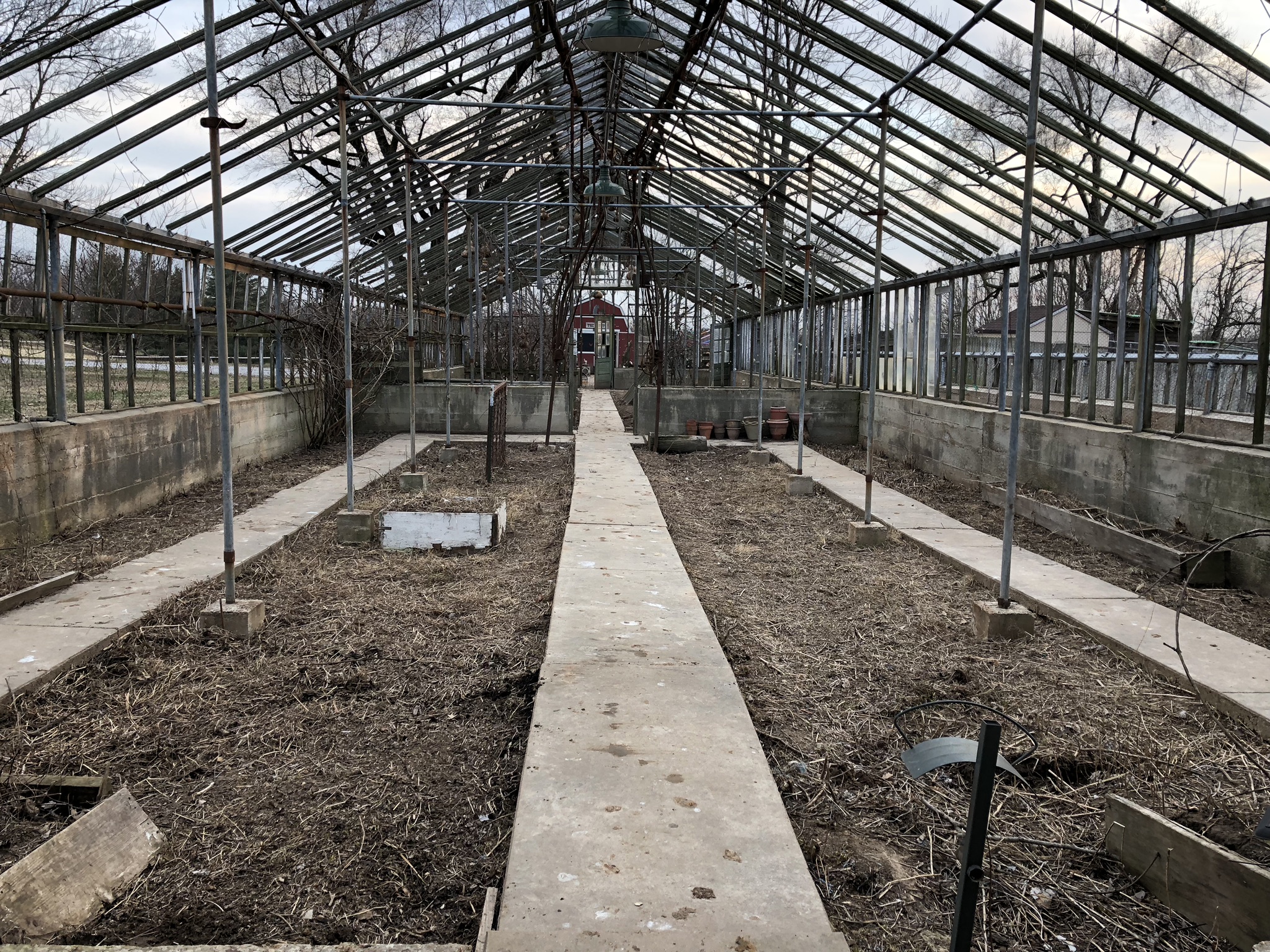
The greenhouse fully glazed — the long interior view restored, the structure whole again
2018 Whole again — empty, waiting

2022

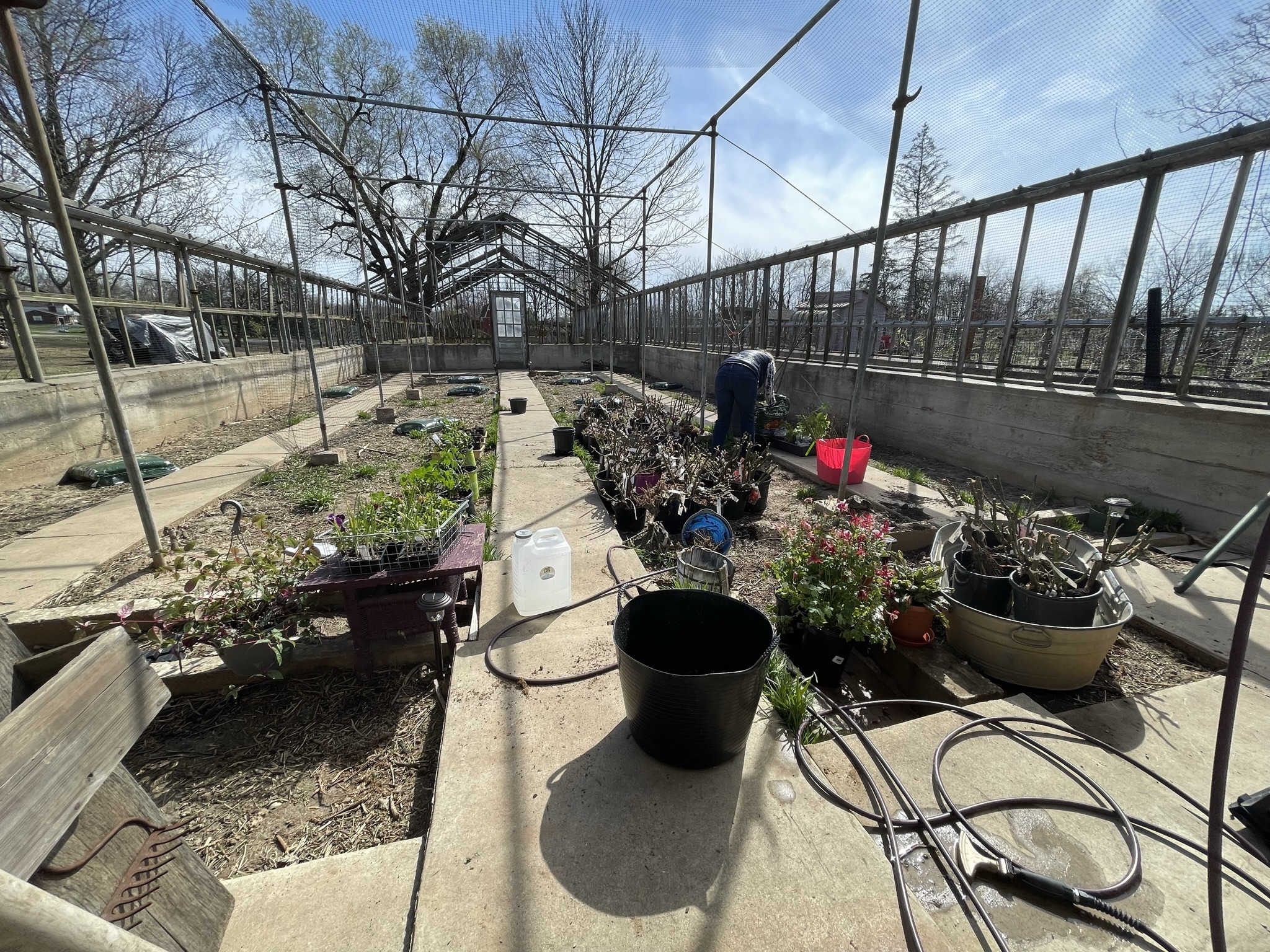
Active planting — buckets, hoses, someone bent over the beds. The greenhouse alive and working.
April 2022 Alive and working
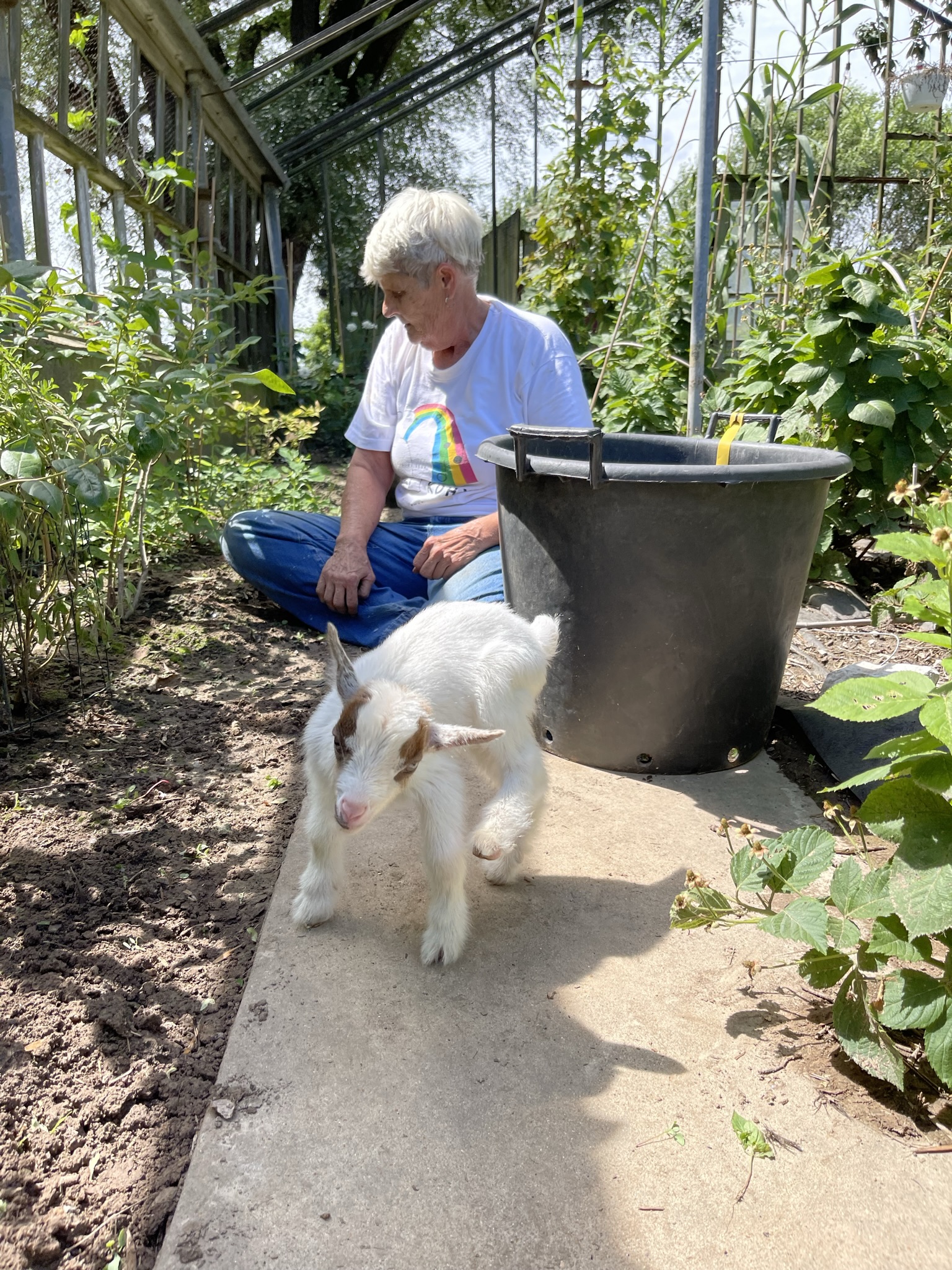
Life inside the greenhouse — a small visitor on the concrete path among the summer growth
Summer Life inside life

Today · The Open Frame

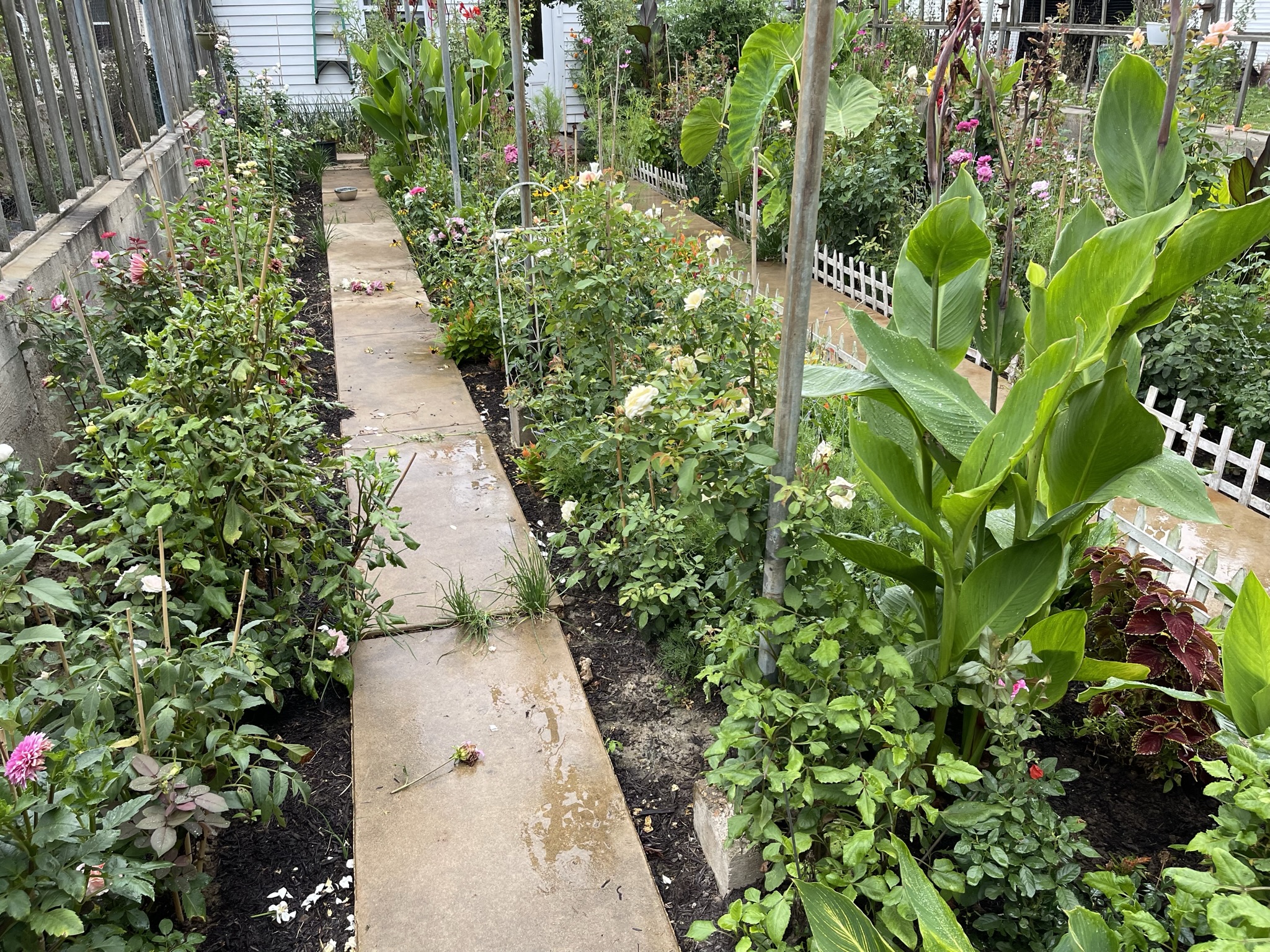
The greenhouse at peak summer — cannas, roses, dahlias, everything competing for the same light
Peak season Over 200 varieties have grown here
Inside the greenhouse now — pink dahlias along the path, roses climbing, string lights overhead
Interior The frame — no glass, all sky
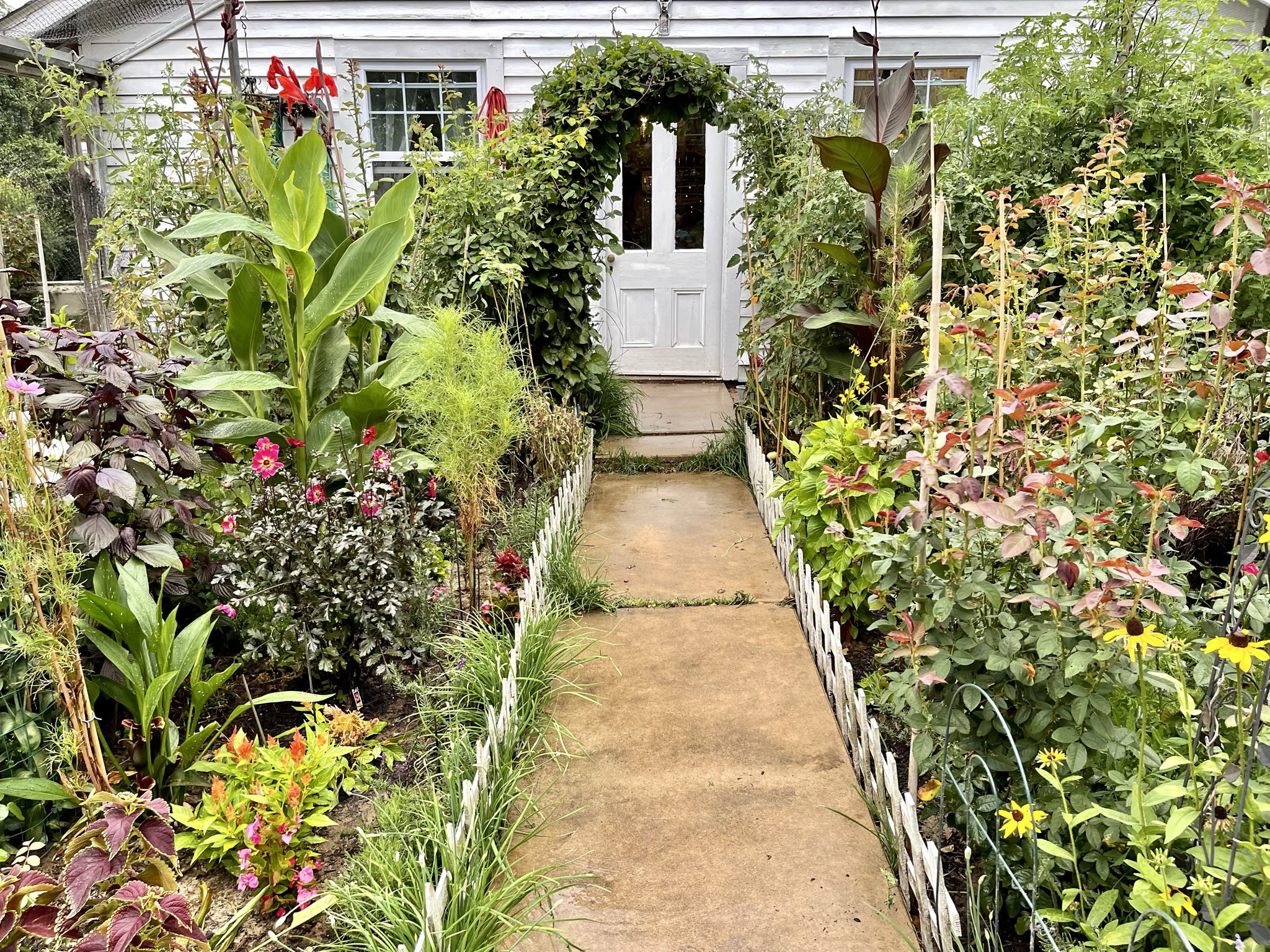
Looking through the lush planted walkway toward the greenhouse door — cannas tall enough to touch overhead, climbing vines over the arch
The approach Cannas, climbing vines, celosia — the path in is half the experience

What It Grew Into

The greenhouse was never just the building. Over fourteen years the garden spread — out from the bones of the old frame, along the iron structure, into the open air in every direction. The glass came out entirely for safety; what remains is the skeleton of what was, and the roses climbed it anyway. The original idea multiplied beyond anything the original builders imagined — and outgrew the walls they built to hold it.
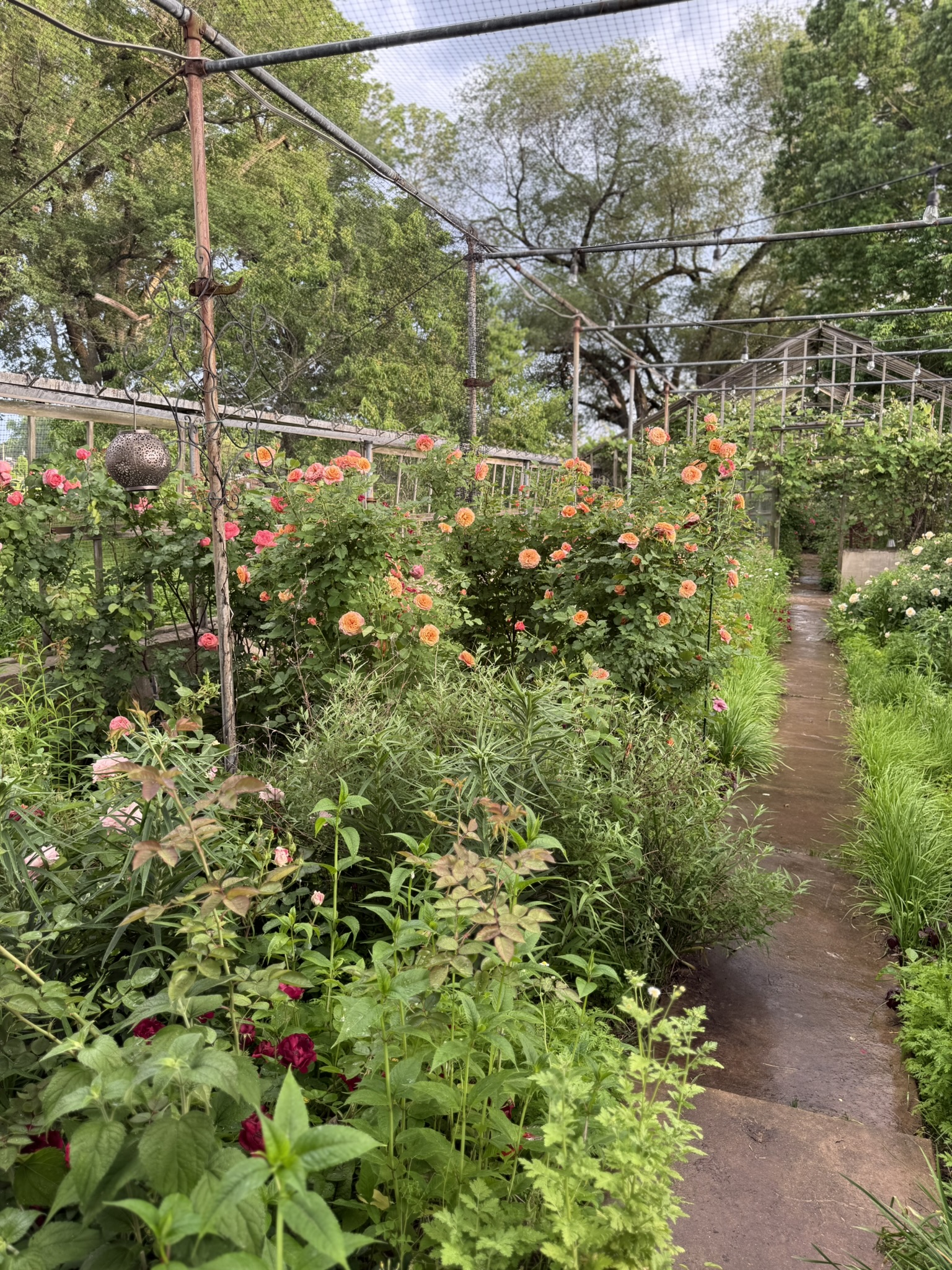
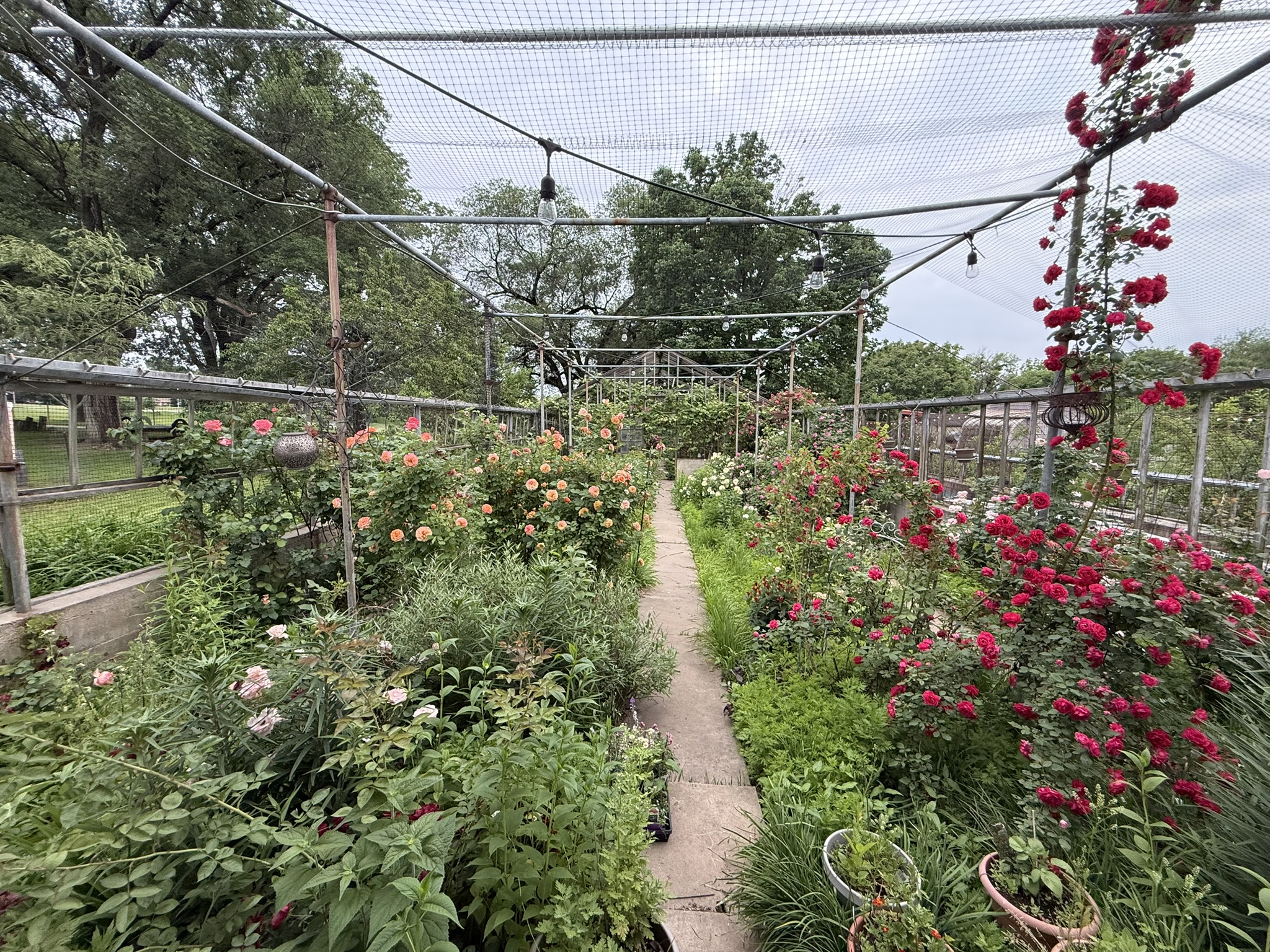
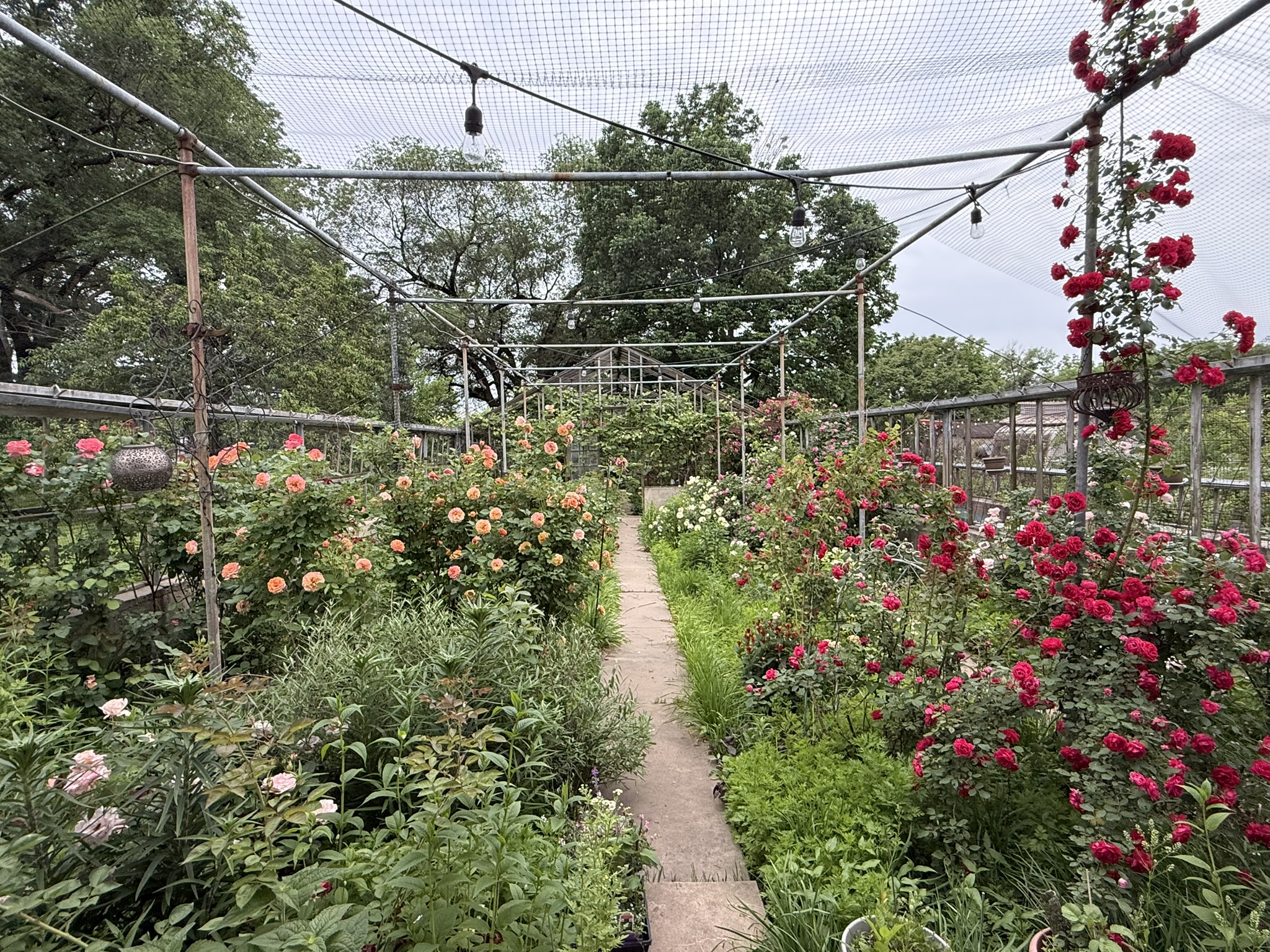
The rose garden path after rain — orange and apricot English roses along the iron framework, deep crimson behind
The rose garden What grew outside the glass
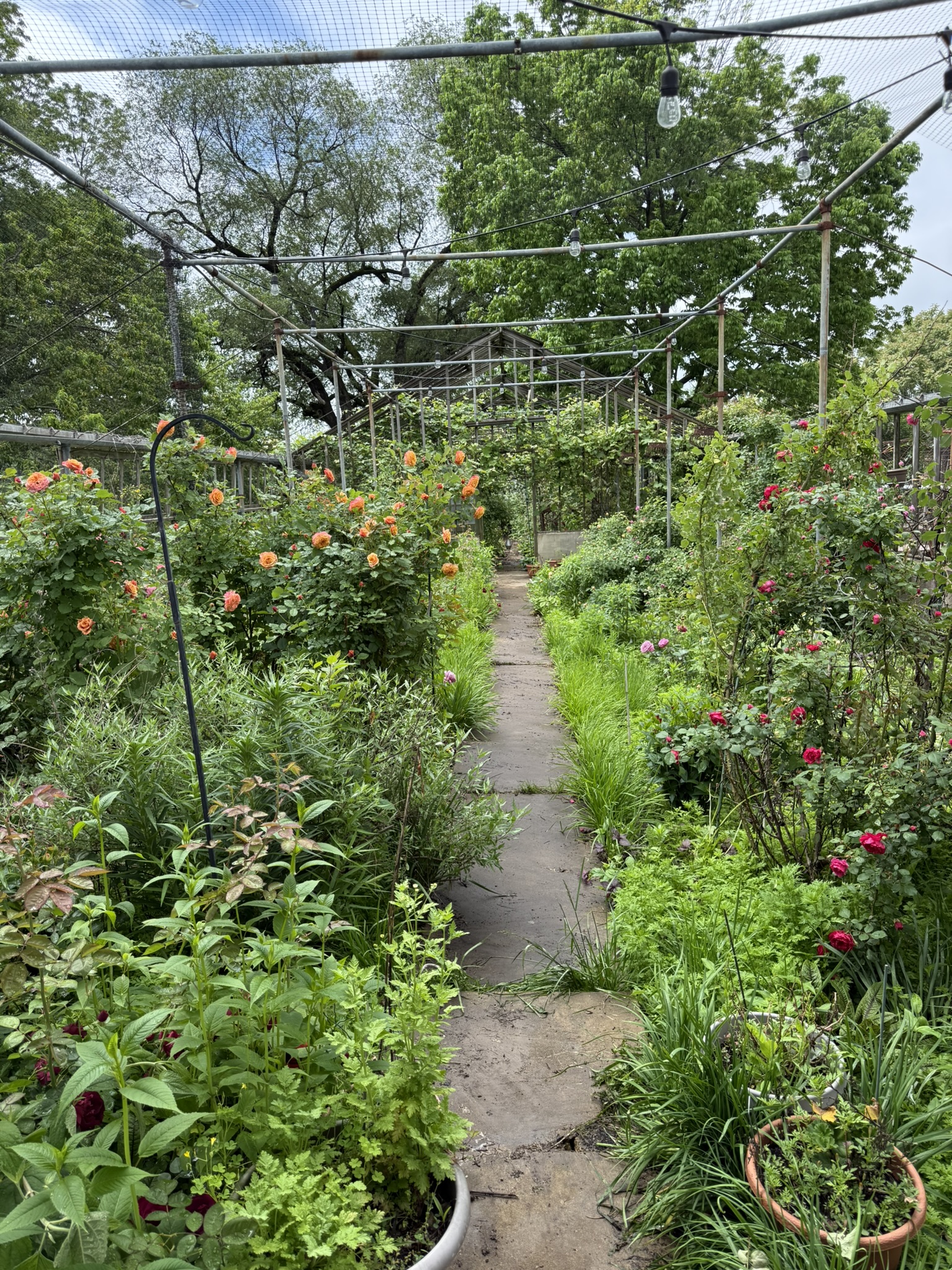
Wide view of the outdoor rose garden — roses climbing the iron frame structure, string lights crossing overhead, open sky above
Full scope Open to the sky — the garden outgrew its walls

The Rose Room

Specifically chosen scent roses — excellent for teas, jams, jellies, and just general rose loveliness. The grapevines slithered fully over and through the entrance to the berry room.
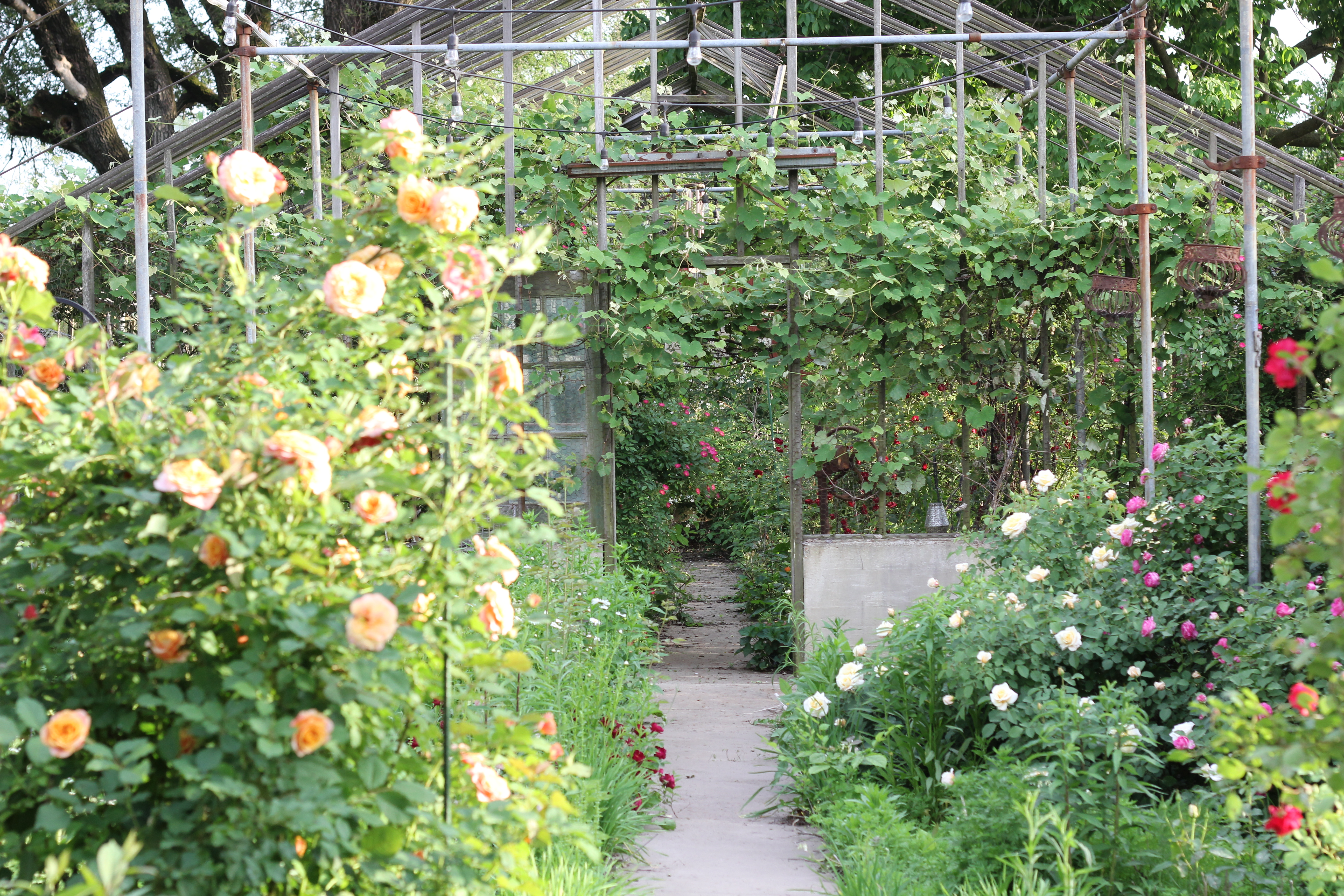
Looking from the Rose Room toward the berry room entrance — grapevines completely covering the iron frame overhead, orange and cream roses on both sides of the path
The entrance The grapevines slithered fully over and through it
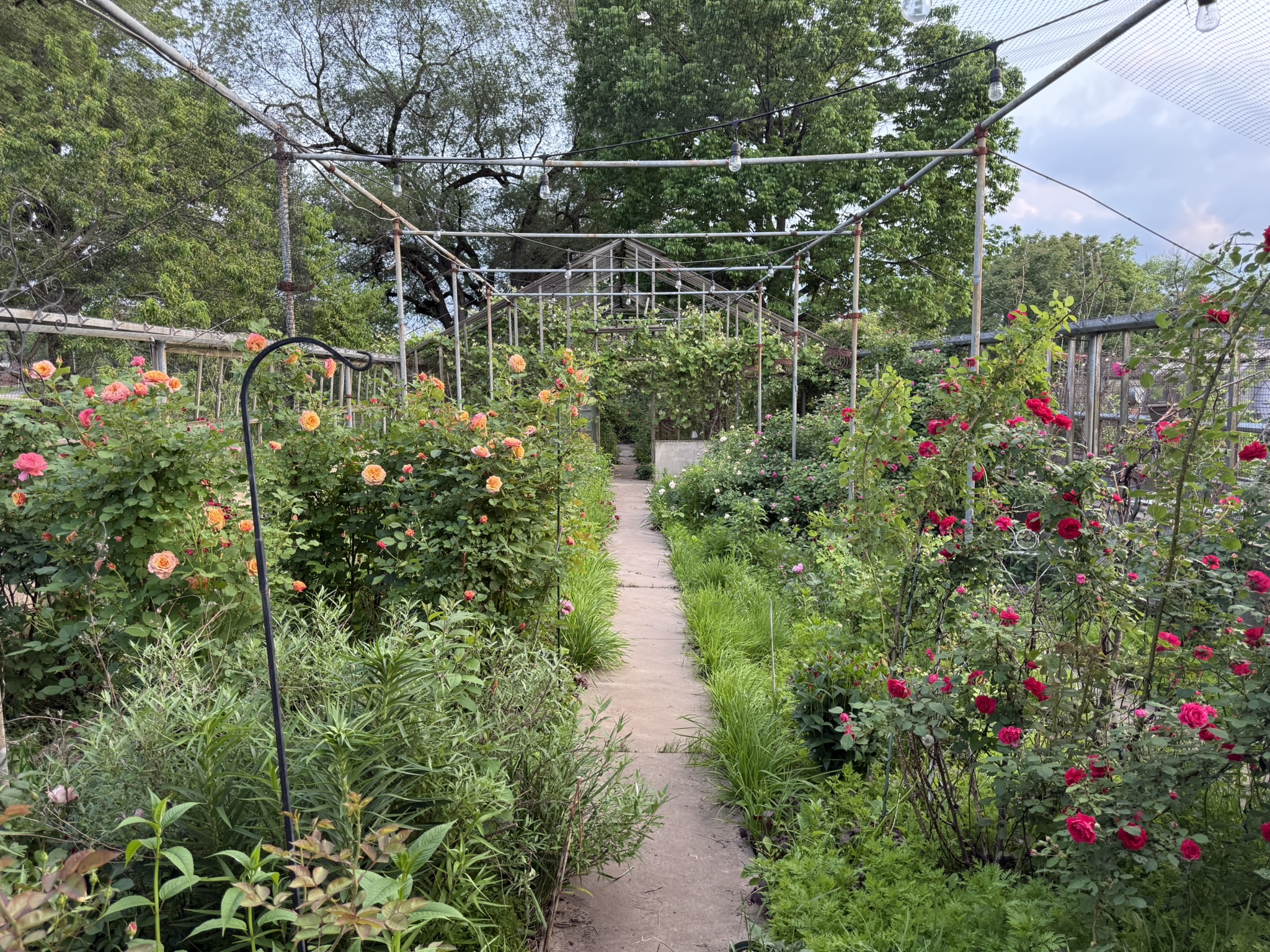
The Rose Room path — orange and apricot scent roses left, deep crimson right, looking toward the greenhouse structure
Scent roses For teas, jams, jellies — and just general rose loveliness
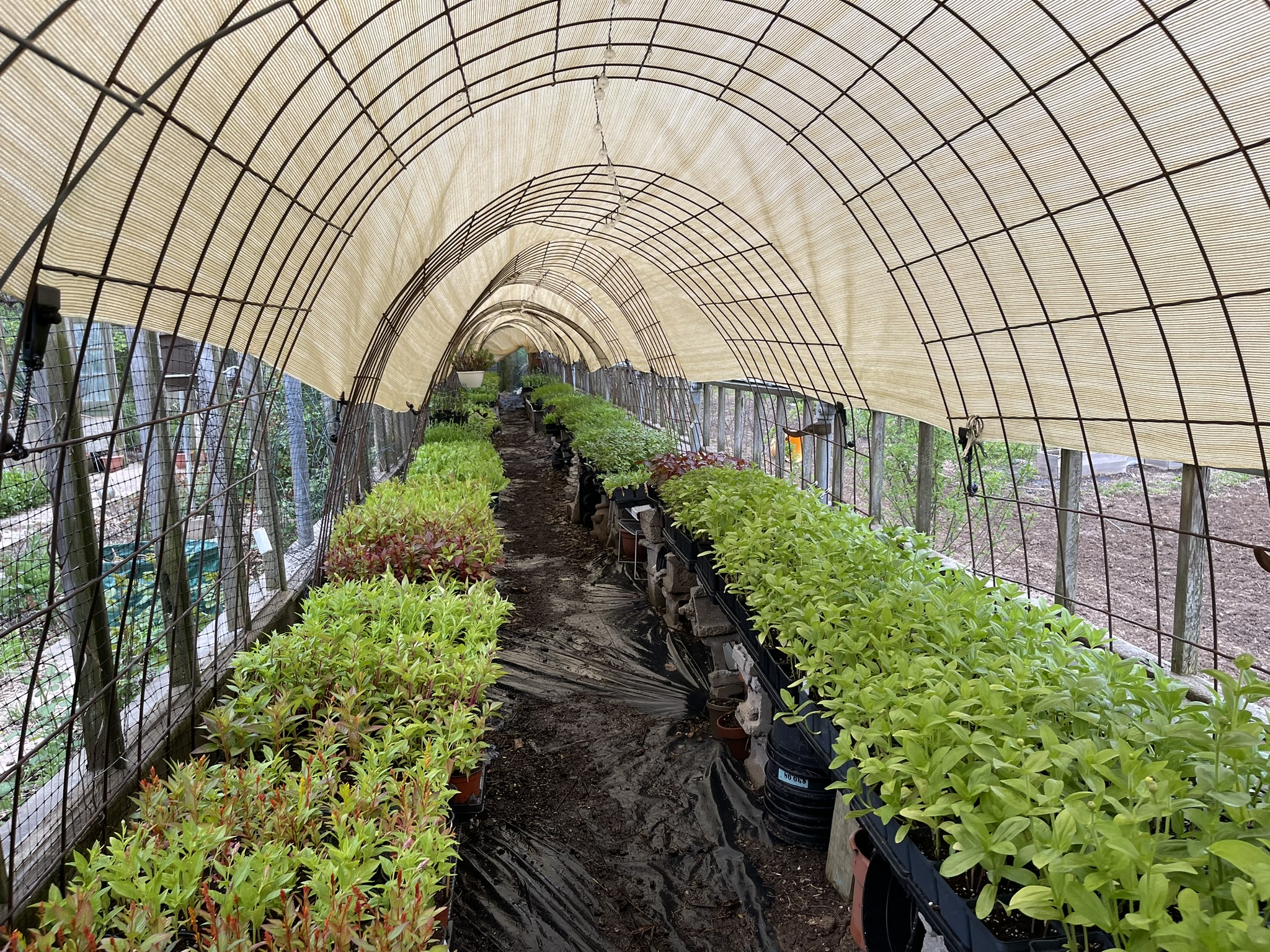
The propagation hoop house — hundreds of seedlings under shade cloth, row on row. This is where every variety begins.
Every one started here Here's how they escape to the garden
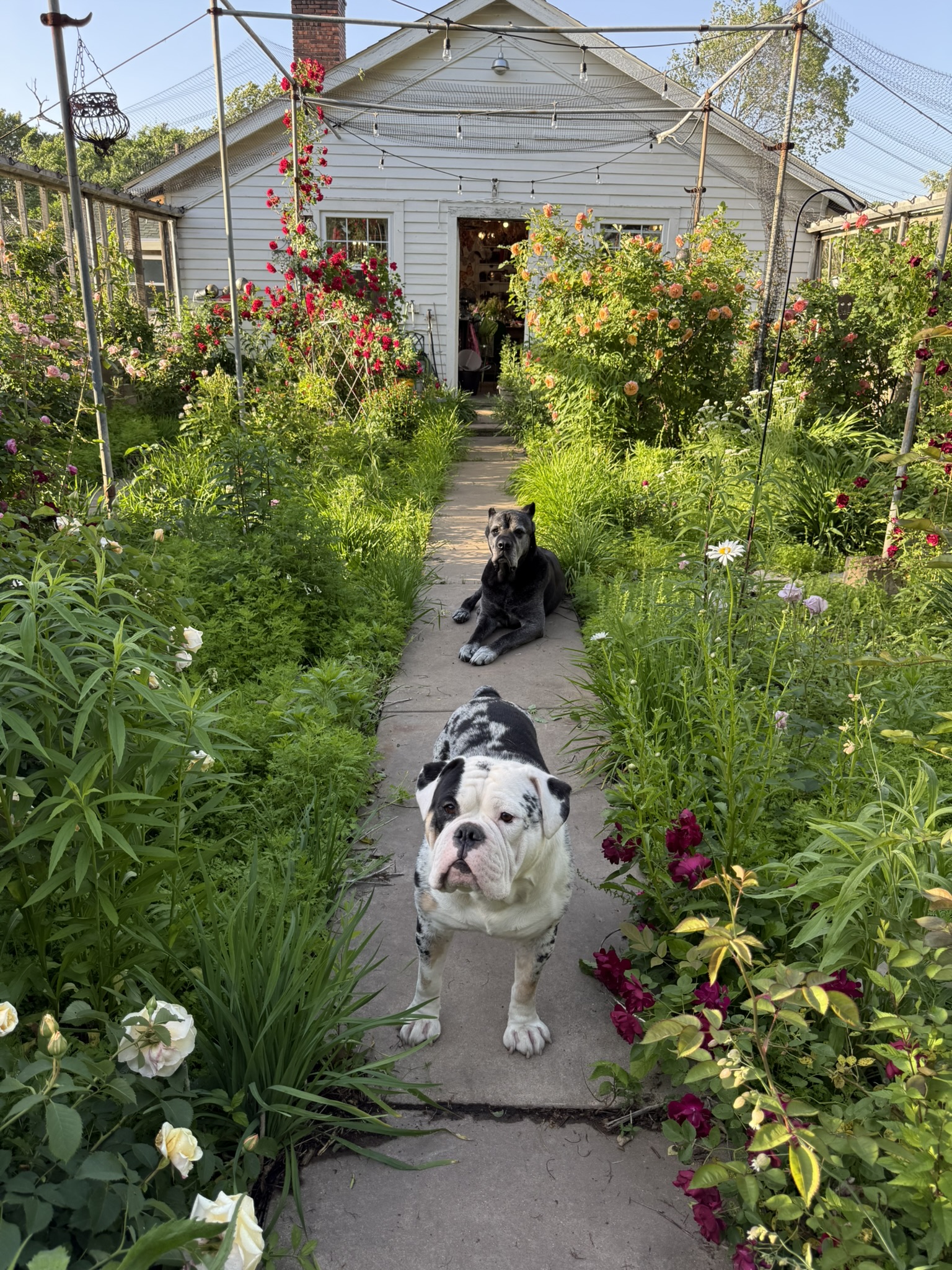
Two dogs resting in the rose garden path at golden hour — climbing roses on both sides, light filtering through
Guardians They claimed the path. It was not a negotiation.
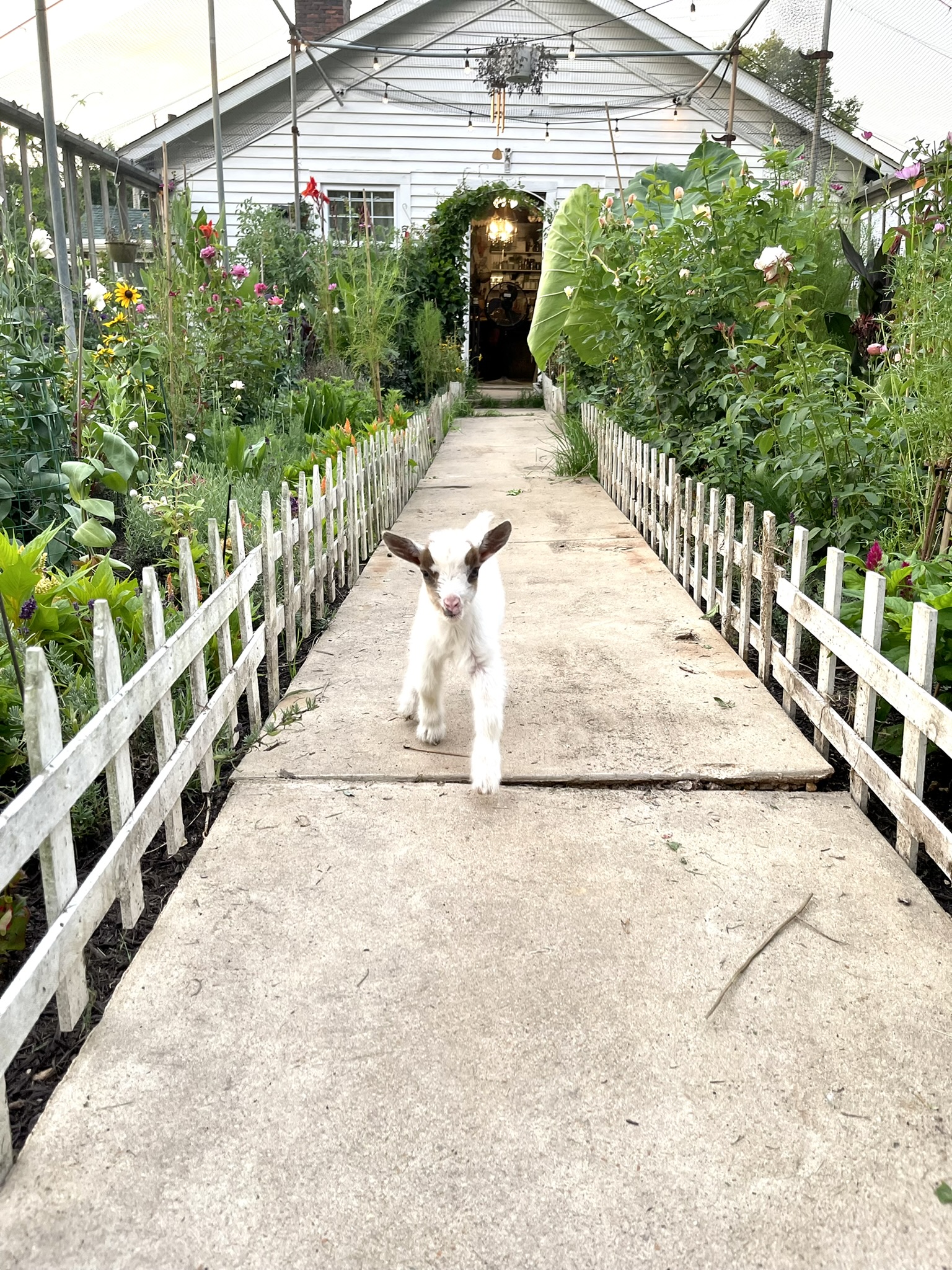
A baby goat at full sprint down the greenhouse path — plants towering on both sides, the sage green door glowing at the far end
Life inside life Unexpected. Announced. Utterly welcome.
The Rose Room at full bloom — orange and apricot English roses left, deep crimson right, bird netting and string lights overhead, the full length of the garden open to sky

The garden kept adding rooms. The garden keeps adding rooms.

What grows here now is different from what grew here then. The purpose has shifted — not wintering tropicals for a formal garden, but growing what will eventually become a piece. The seedlings in March. The first green of April. The crowded midsummer abundance when everything is competing for the same light. Over 200 varieties of botanical material have passed through this space. The list changes every year, and the garden keeps adding rooms.

The fresh daylilies on the wonder table came from outside the glass, this morning. They were cut and set down in the middle of everything — still holding whatever the garden was doing when they were taken from it. This is how they got there. Everything that appears in a piece passed through here at some point, at some scale, at the most temporary version of what it would become.

"The boiler in the basement looked big enough to power the Titanic. It kept two rooms of glass warm all winter. The steam pipes are still in the ground. The plants grow over them now."

← Return to the Wonder Table