She was a solo traveler. She went everywhere — alone, on purpose, without apology. And everywhere she went, she bent down. A beach in one country, a river path in another, a trail somewhere she had never been before and would never be again. She picked up the stone that caught her eye and put it in her pocket. Every stone was a memory of a place. Every stone was proof that her feet had been somewhere.
She didn't label them. She didn't organize them geologically or by country or by year. She just kept them — in bowls, in crystal dishes, on shelves, on windowsills, arranged on the balcony railing beside her painted pots. She played with them the way a child plays with beautiful things: making patterns, making faces, making spirals. The collection was not a museum. It was a conversation she had been having with the ground for her entire life.
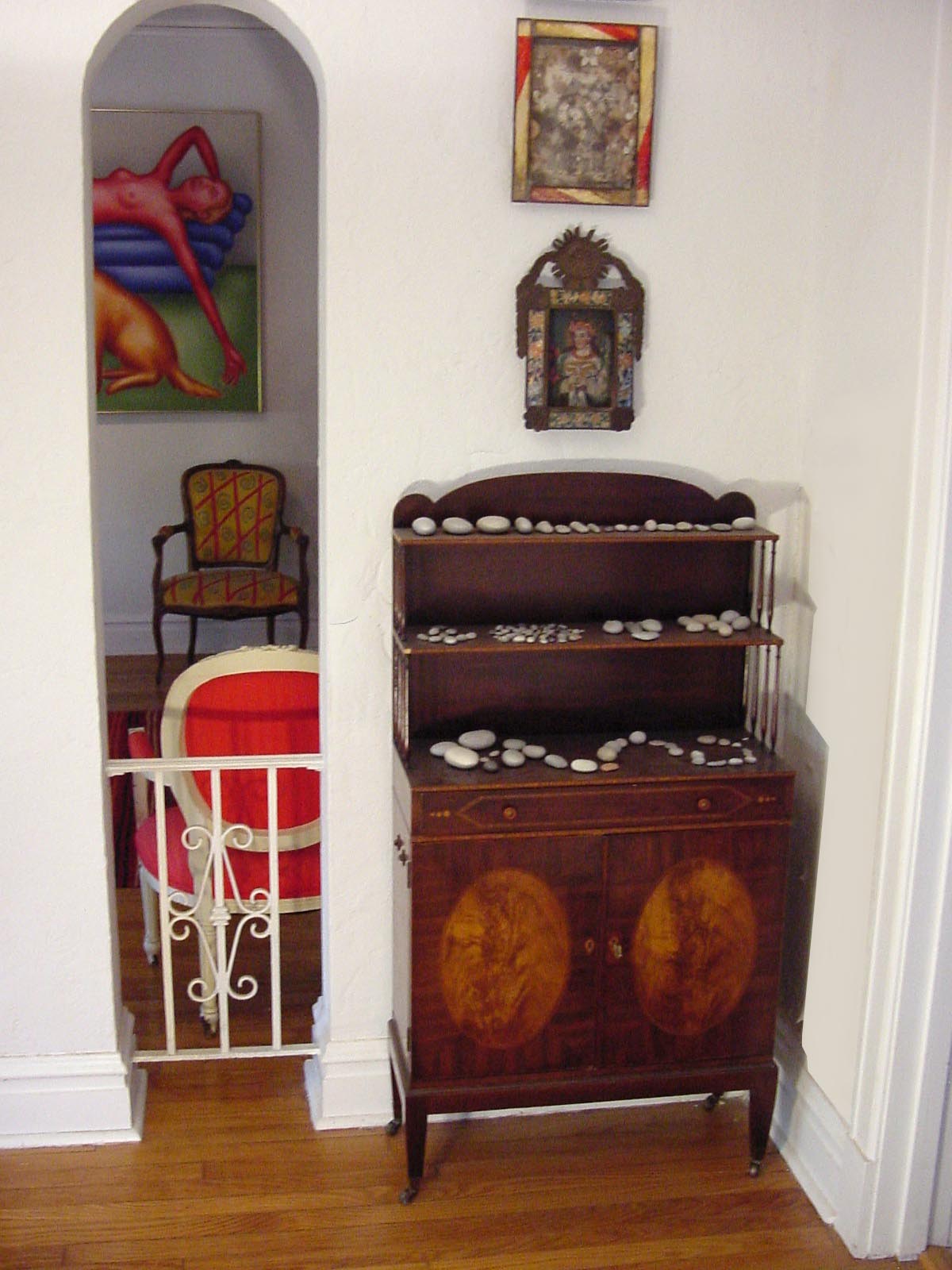
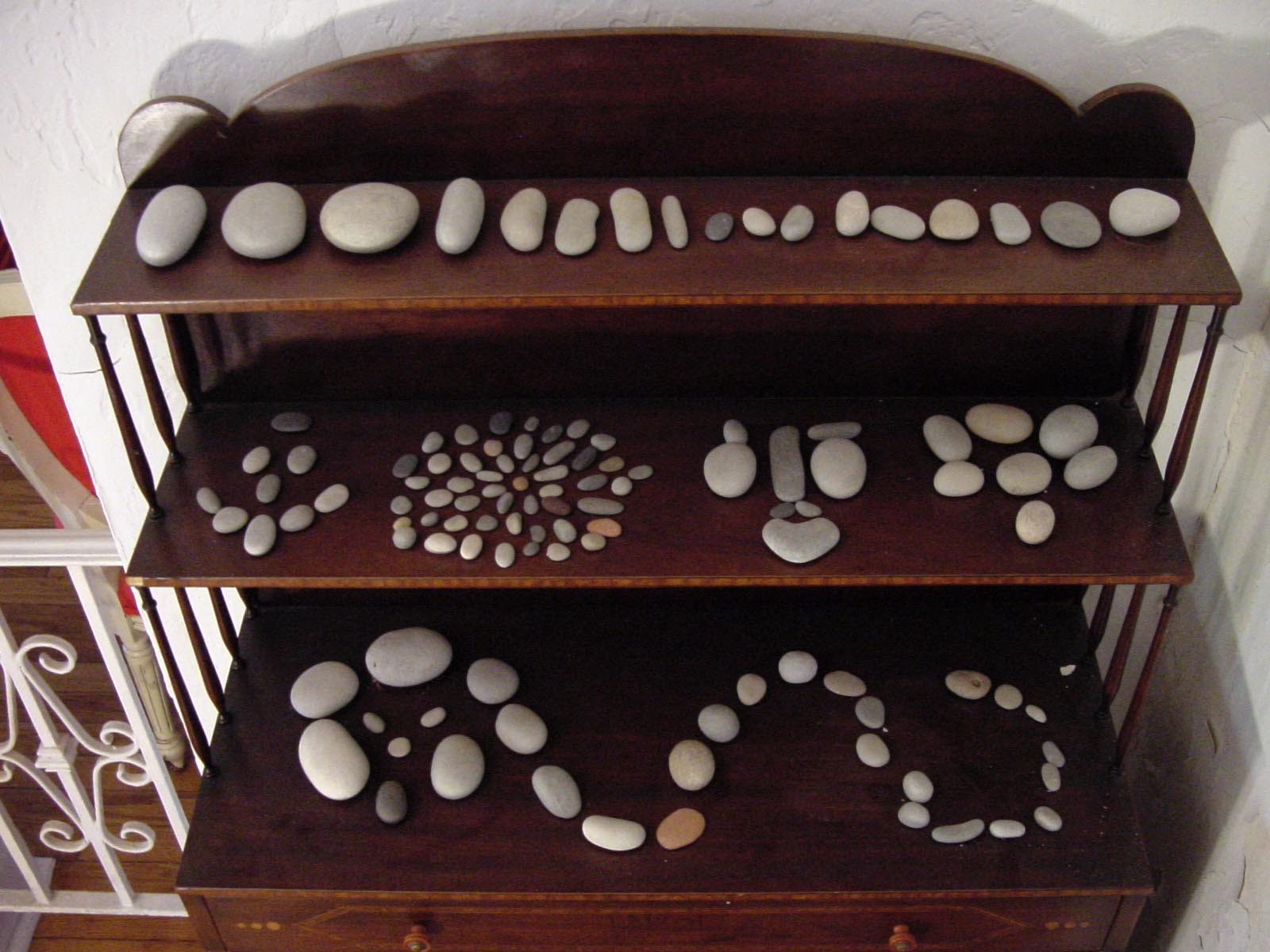
Her apartment — the collection in its home
Look at what she built on those shelves. The top row: stones arranged by size, largest to smallest, left to right — a kind of grammar, a counting. The middle shelf: four distinct compositions, each one a different thought. A spiral mandala. A face — two oval eyes, a round nose, a smile made entirely of carefully placed stone. A cluster. A loose gathering. The bottom shelf: long flowing curves, like writing, like a river seen from above.
She was making art with them. She had been making art with them all along. She just called it keeping rocks.
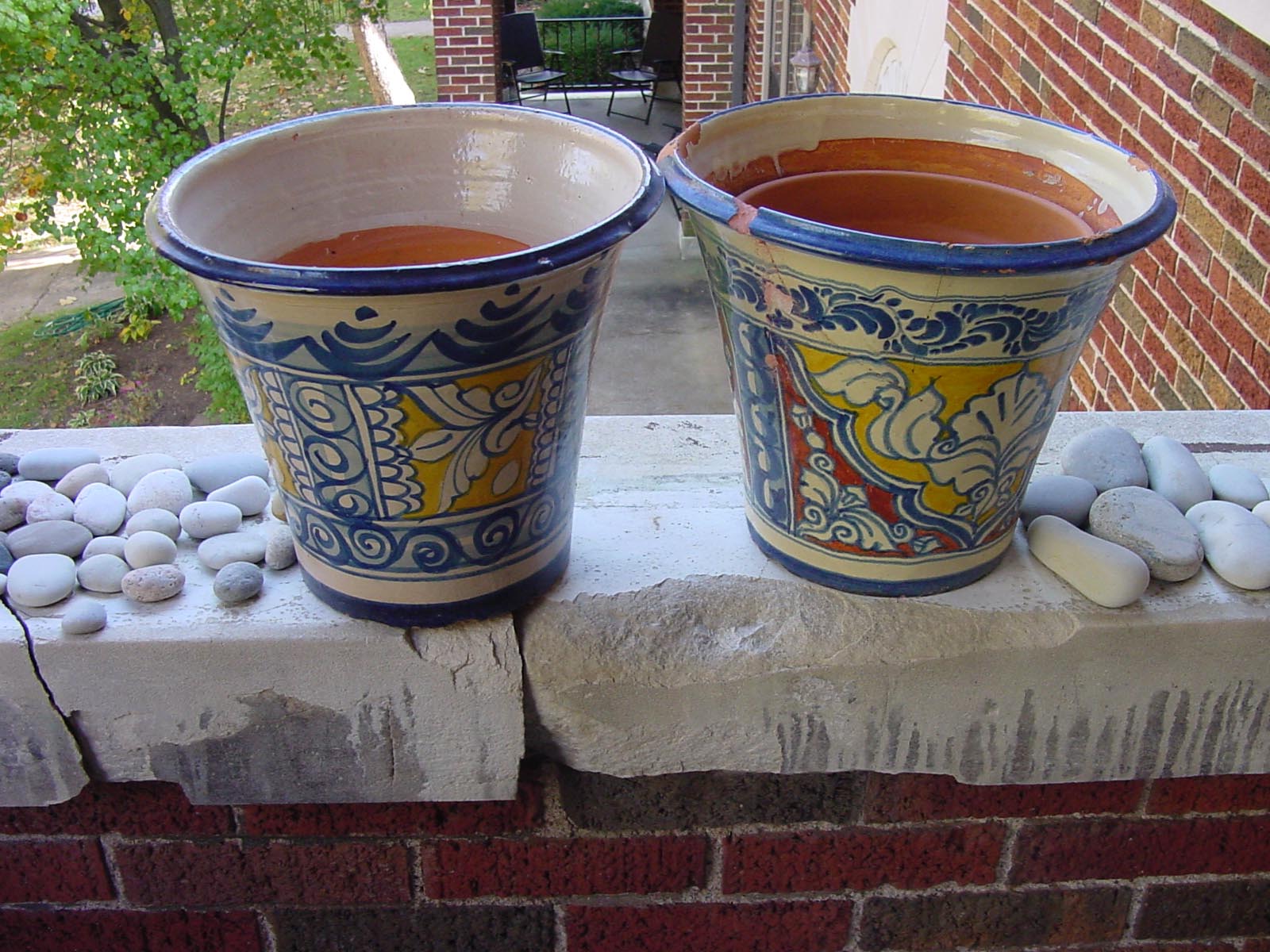
On the balcony — arranged where she could see them every day
Every stone was picked up on purpose. Someone stopped. Someone decided this one was worth carrying across the world and putting on a shelf where she could look at it every morning. That decision, made again and again over a lifetime of travel, is the collection.
What the Water Shows
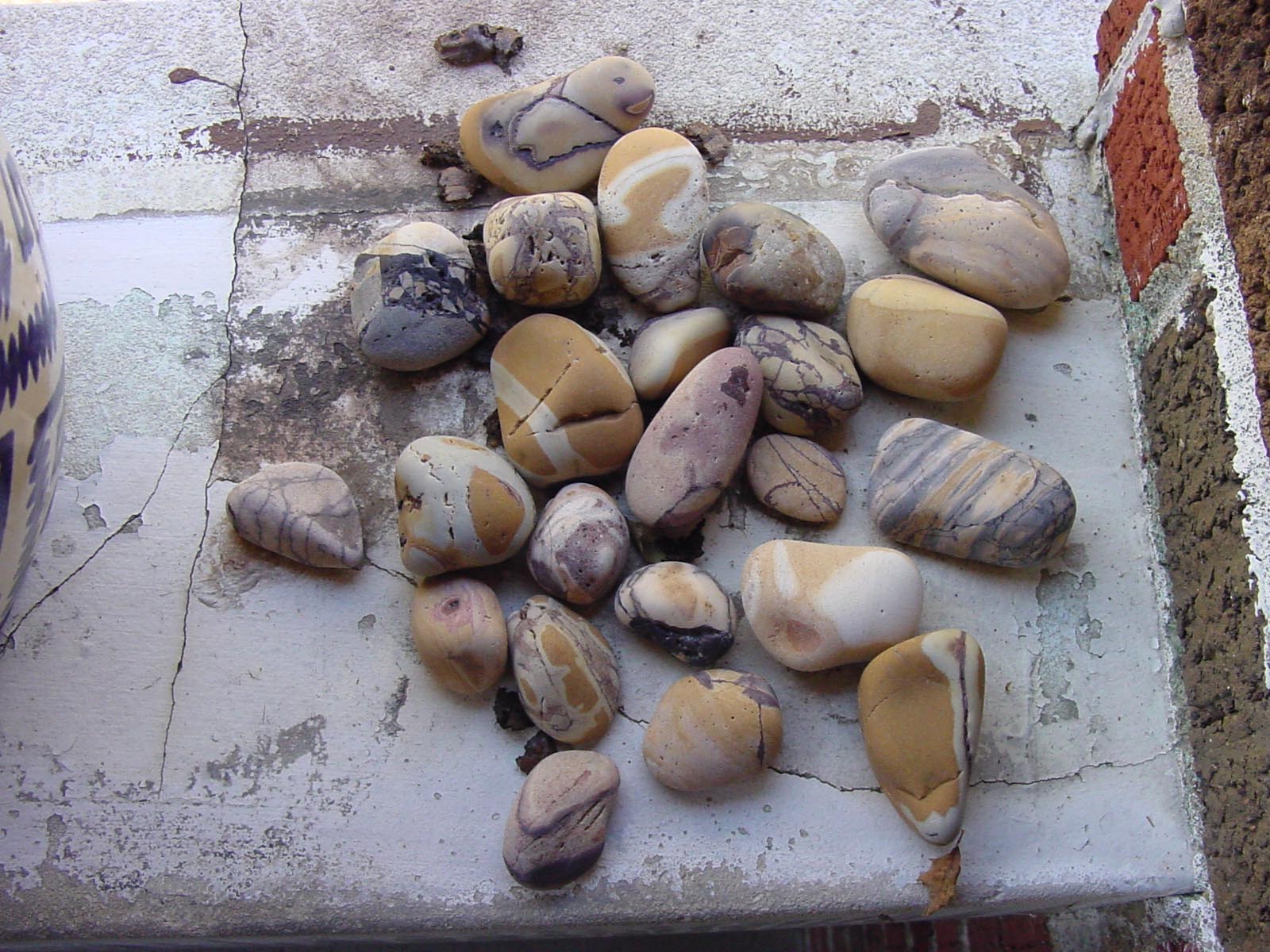
Put a river stone in water and it becomes what the river always saw: vivid, saturated, the real color under the dry surface. Rose. Terracotta. Iron grey. Honey gold. Chalk white with purple veining. Deep red. Pale grey-blue. Wet, they look like something precious. Dry, they look like ground. She knew this. She kept picking them up anyway — in their quiet dry state, before anyone else had thought to look. She saw what they were before the water showed it.
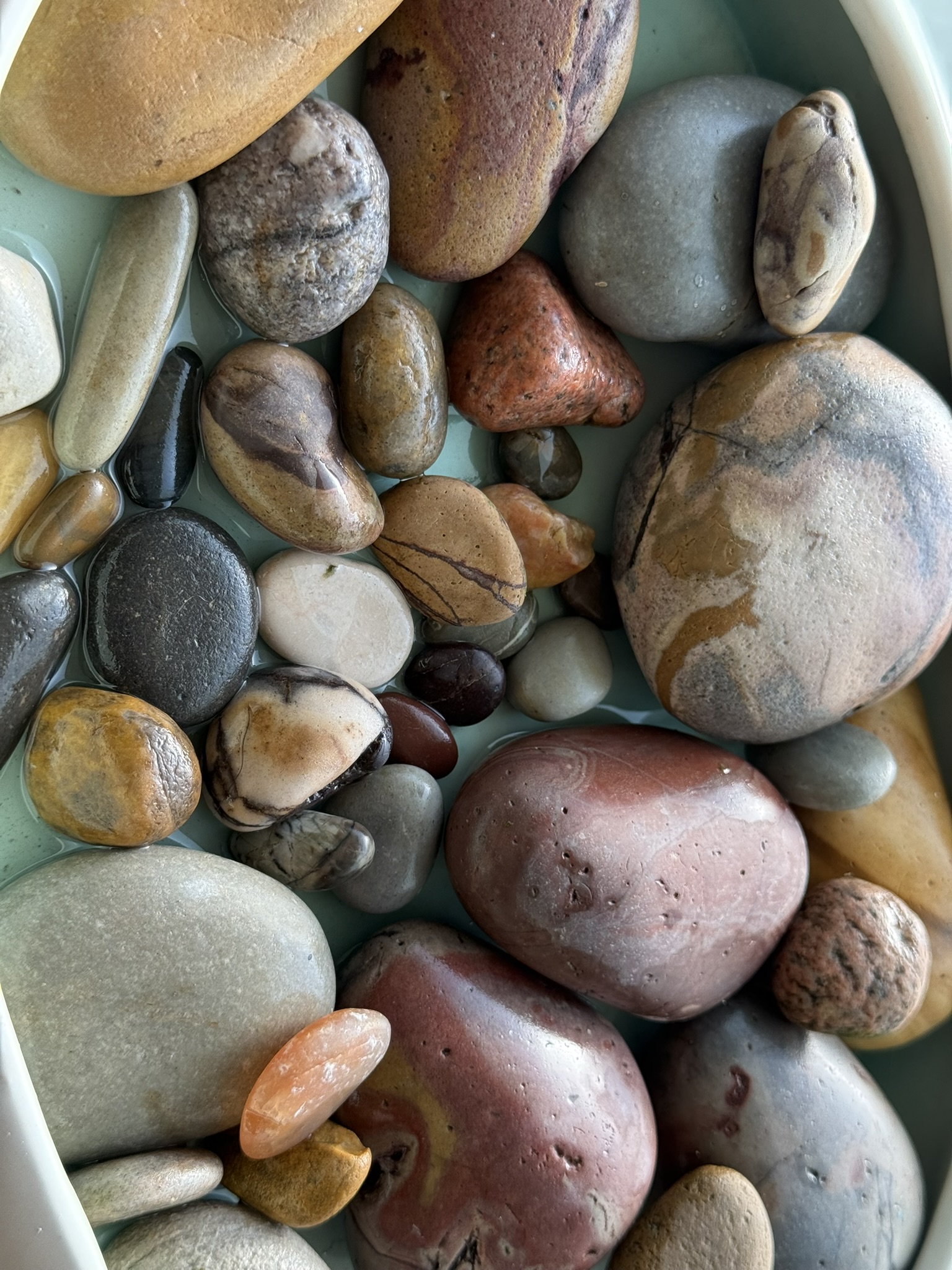
In water — the colors as the river always knew them
The Inheritance
When she died, the collection came to me. Boxes of stones. Crystal bowls of stones. Stones wrapped in newspaper, stones in ziplock bags, stones in the pockets of coats I couldn't bring myself to donate. I couldn't keep them in boxes. I couldn't put them in a cabinet and close the door on them. They were her attention — forty, fifty years of it — and they deserved better than storage.
I began pressing botanicals onto them. The flowers from my land — ferns, Queen Anne's lace, tiny wildflowers, the delicate skeletons of things that had bloomed and dried — laid onto the surface of her stones and sealed under resin. Her travels. My garden. Two lives meeting in an object that is now neither one thing nor the other, but both.
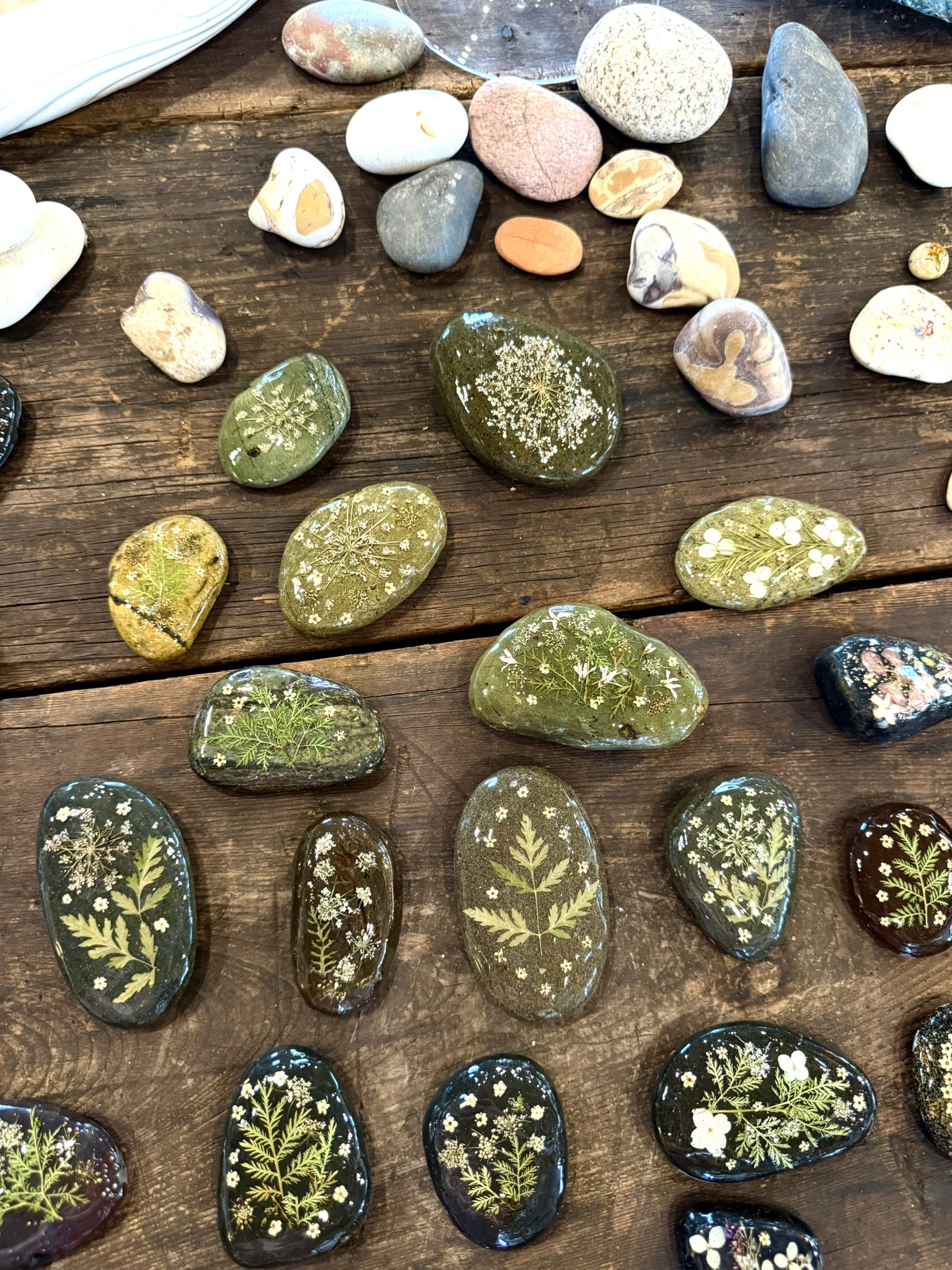
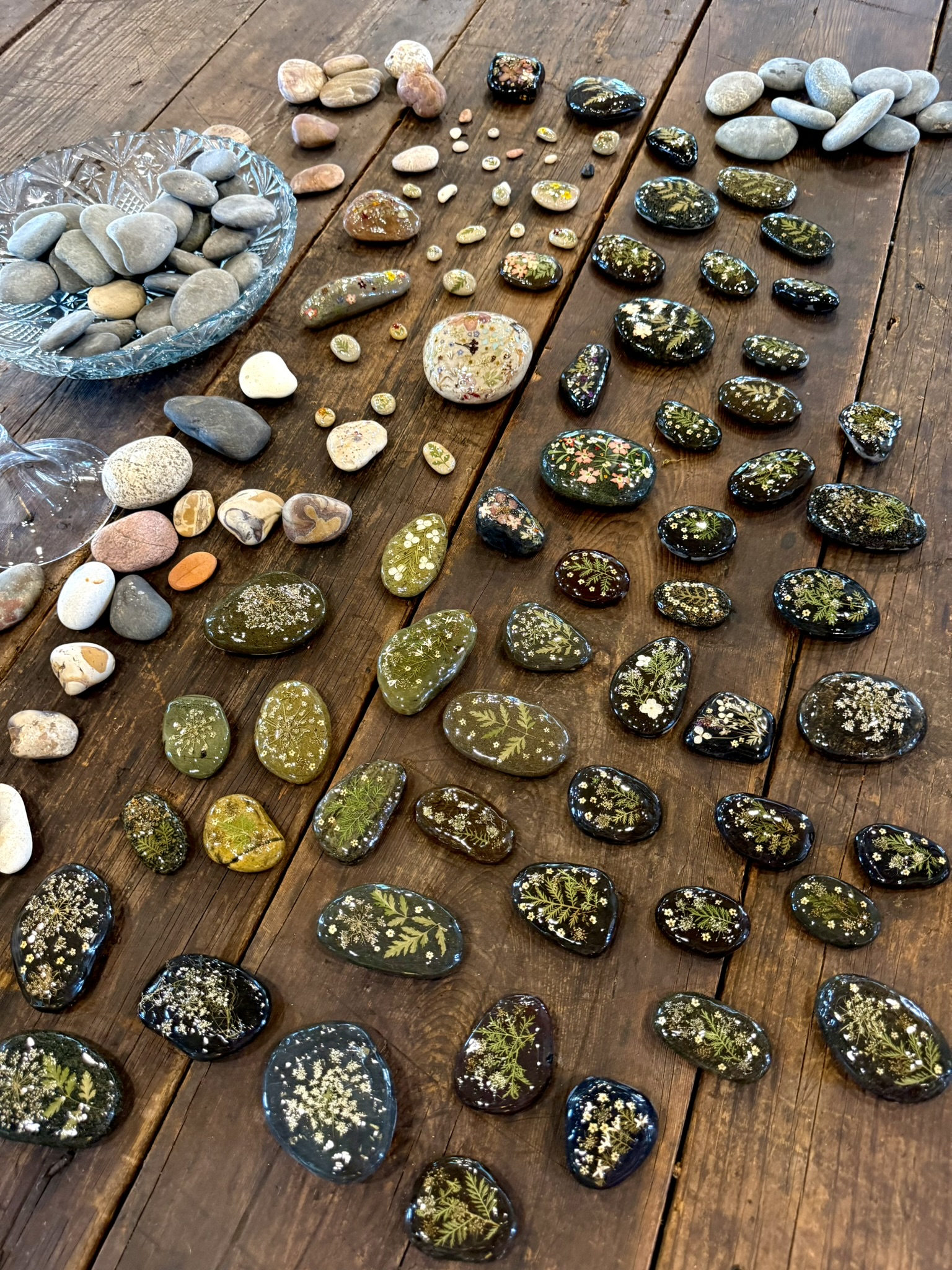
Her stones. My botanicals. The same collection, continued.
She stopped for beautiful things on the ground. I stop for beautiful things on the ground. The impulse is the same — the reaching down, the looking closely, the deciding this one is worth keeping. She trained that reflex in me without either of us knowing she was doing it. I only understood it when the boxes arrived and I stood there unable to put them away.
The practice of Floral Alchemy begins here. Not with the pressing, not with the resin, not with the metal settings. It begins with a woman alone on a beach somewhere in the world, bending down, deciding a stone is beautiful, and carrying it home. Everything I make is a continuation of that decision.
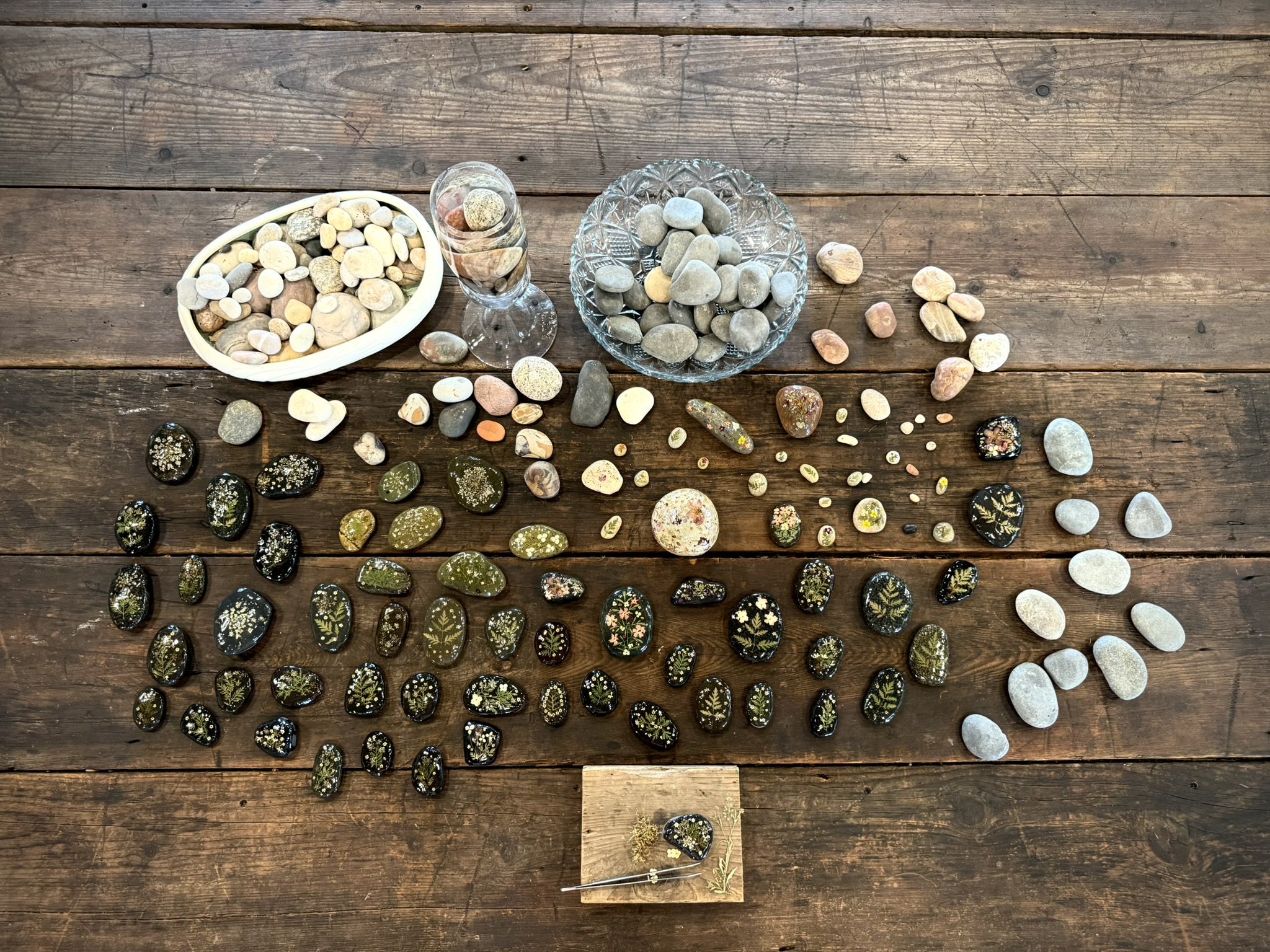
The collection now — hers and mine together
For my mother
Who stopped first.
Who taught me the ground is full of things worth carrying.
Who made art without ever calling it that.