They were her mother's favorites. There were china vases painted with violets — proper china, with gold rims — and every spring, without fail, her mother would go out and pick them. Small handfuls. A gesture that happened every year like a ritual, like a promise being renewed. That love was passed along the way certain things are passed: not by instruction, but by watching, by proximity, by being the child who came along.
The violets are still being picked. Every spring, the same low places, the same fence lines, the same colonies that have been here longer than anyone has been paying attention. The practice continues. The china lives on.
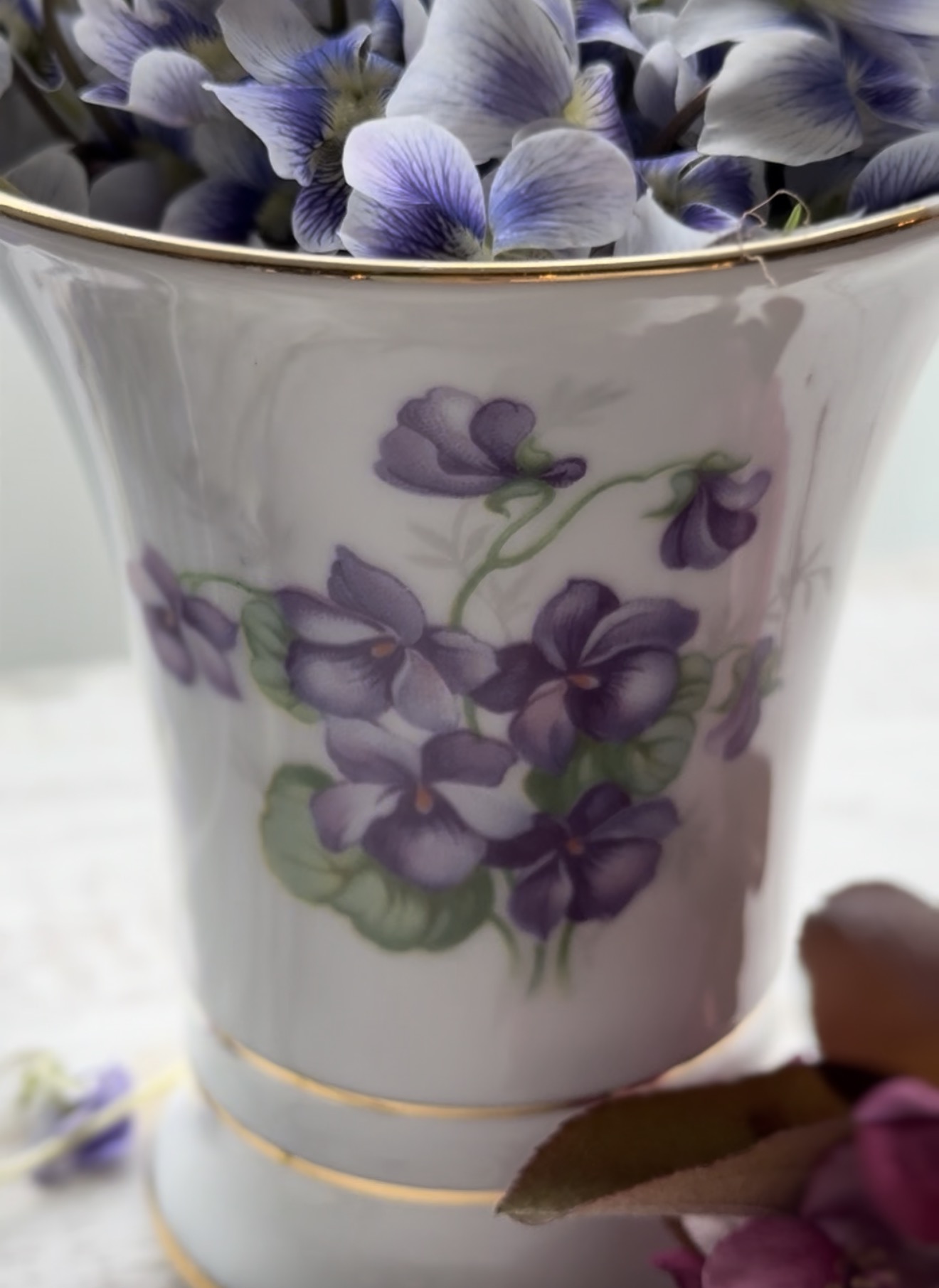
Her mother's china. This year's violets. The inheritance, visible.
The Year They Went Electric
This year was different. Or rather — this year, everything was different, and the violets were no exception. There have been a series of awakenings this season, reality shifting in ways that are hard to explain and easy to feel, and in the middle of all of it, the violets showed up like they had been briefed.
More colors. More gradients. More sizes. Deep indigo beside soft lavender beside near-white beside a dramatic bicolor that looks painted — white petals with violet veins radiating out from the throat like a map of something interior. Colors that seemed almost lit from within. Electric was the word that came to mind, standing there in the lawn, and so was a question, said out loud, to the flowers themselves:
"Did you partner with Pantone or something? What is going on this year?"
They did not answer. But they kept blooming.
A guilty pleasure, violets — something small and private and seasonal that stops everything for a few weeks each spring. This year the pleasure was guiltier than usual, because it was harder to move on. Every new patch seemed to introduce another variety that hadn't been noticed before, or hadn't existed before, or had simply been waiting for this particular year to reveal itself.
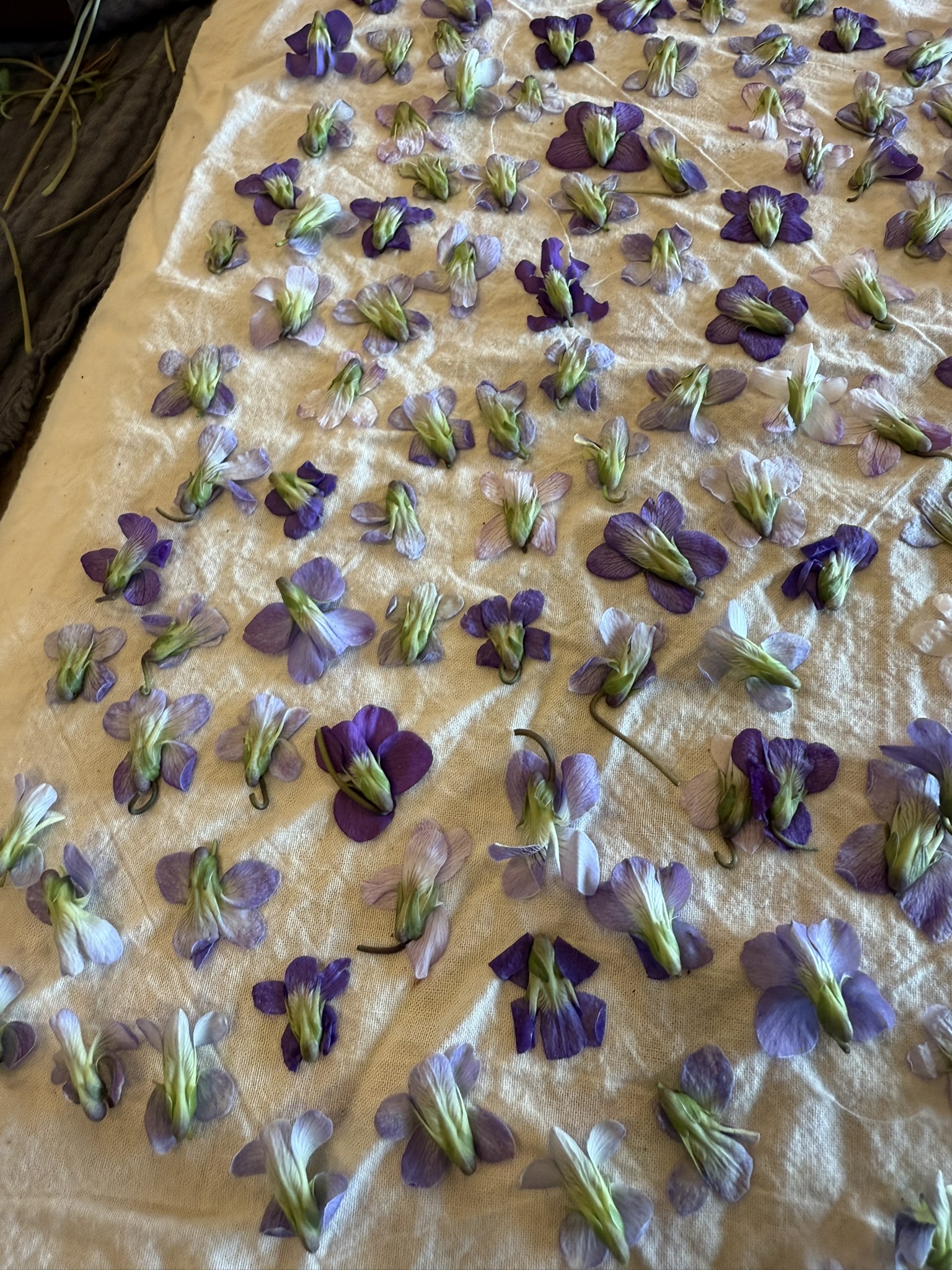
One season. One garden. Every shade between white and indigo.
What the Victorians Knew
The Victorians communicated in flowers with the seriousness of a second language. A violet in a posy meant something specific — love, faithfulness, remembrance — and the recipient understood. We have mostly lost that fluency. But the flowers have not changed. They still carry the same weight. They have been the flower of love and remembrance for at least two thousand years, through Greek myth, through medieval poetry, through Shakespeare, through Napoleon carrying pressed violets from Joséphine's grave until the day he died.
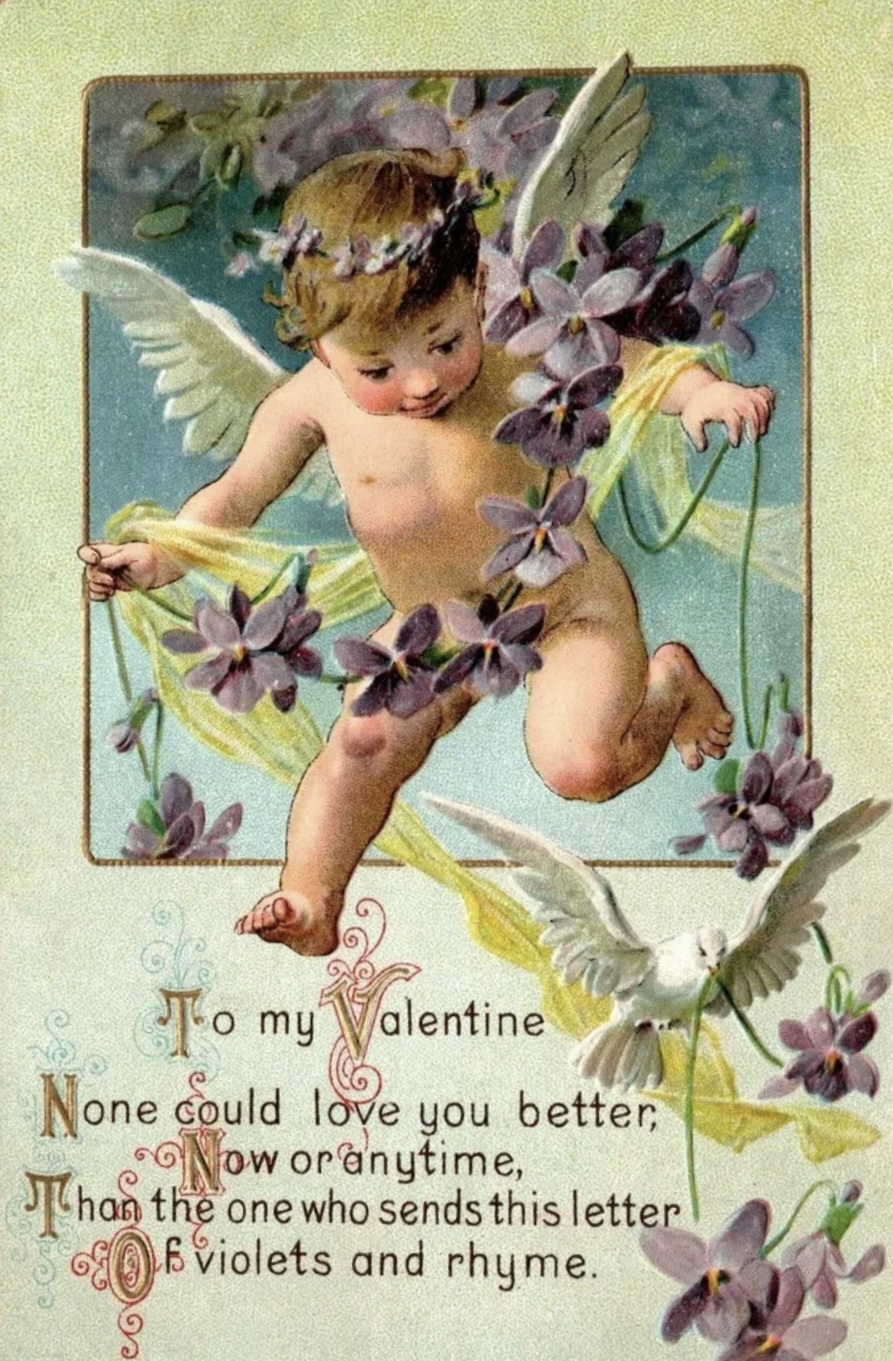
The Victorian understanding — violets and love were inseparable
"They are not a grand flower. They are a faithful one. And faithfulness, it turns out, is rarer and harder to hold onto than grandeur."
The Range
What looks from a distance like one flower is, up close, a whole chromatic argument. The deep indigo ones press so dark they look almost painted. The lavender ones go translucent at the edges. The bicolors — white at the outer petals, violet rushing in from the throat — are the most dramatic, the ones that make people stop when they see them pressed into resin.
Growing here in the same colonies are several distinct varieties, some so similar only stem angle and vein pattern tell them apart. Others are unmistakable. The bicolor that stopped everything this spring — white washed with violet as if someone started painting and decided halfway through that the contrast was the whole point — is not a cultivar. It is wild. It has always been there. It just finally got noticed.
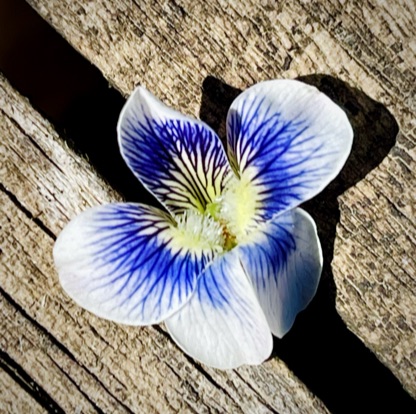
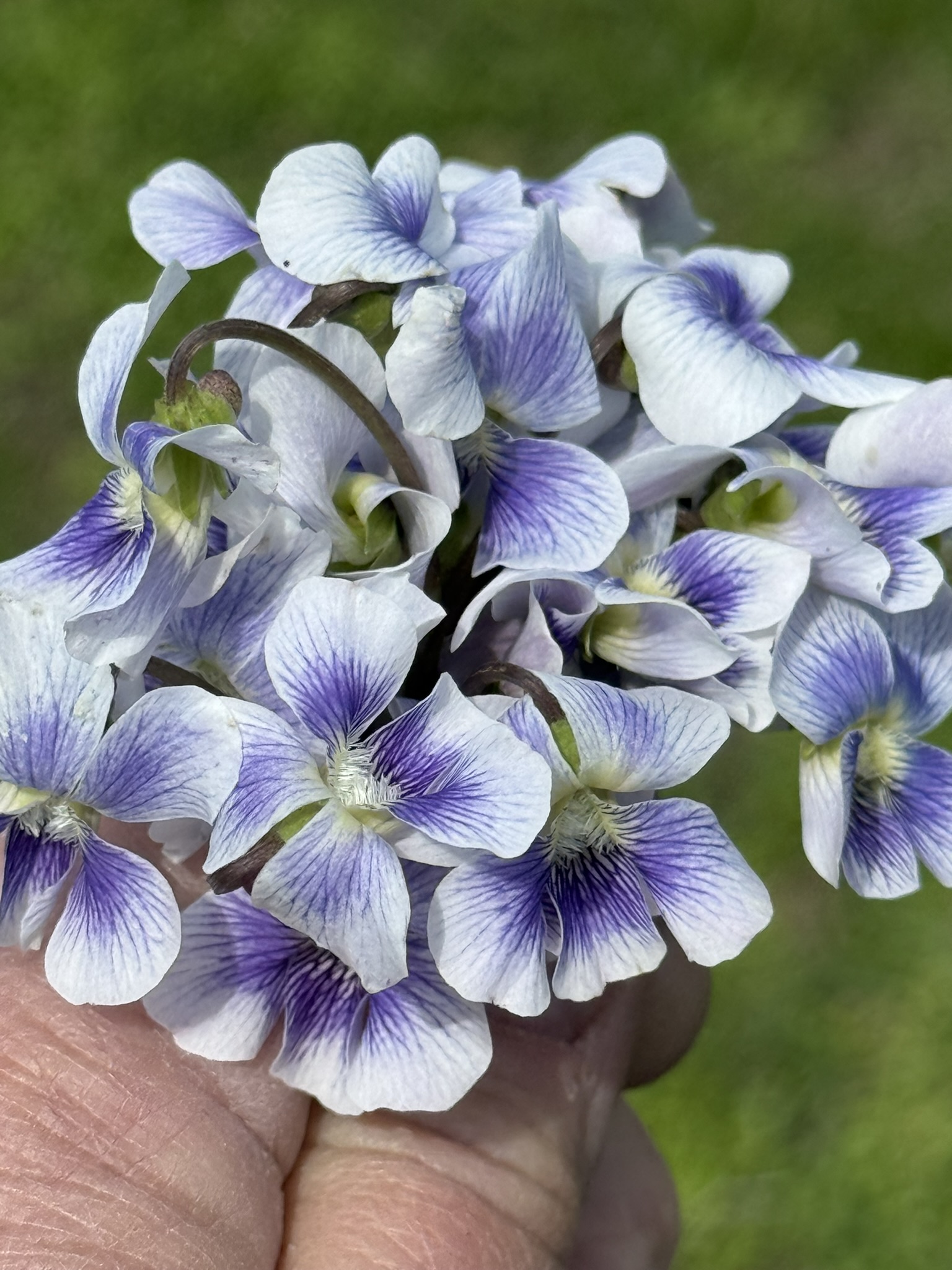
Wild. Always been there. Finally got noticed.
In the Garden
They grow in the low places, in the shade at the base of old trees, in the lawn where the mower has to go around them. They do not ask for anything. They spread by runners, by rhizomes, by seeds flung sideways from capsules that split in the heat of late spring. By the time you realize how many varieties there are, they are already done for the season and you are left waiting for next year, hoping this year's range wasn't a fluke.
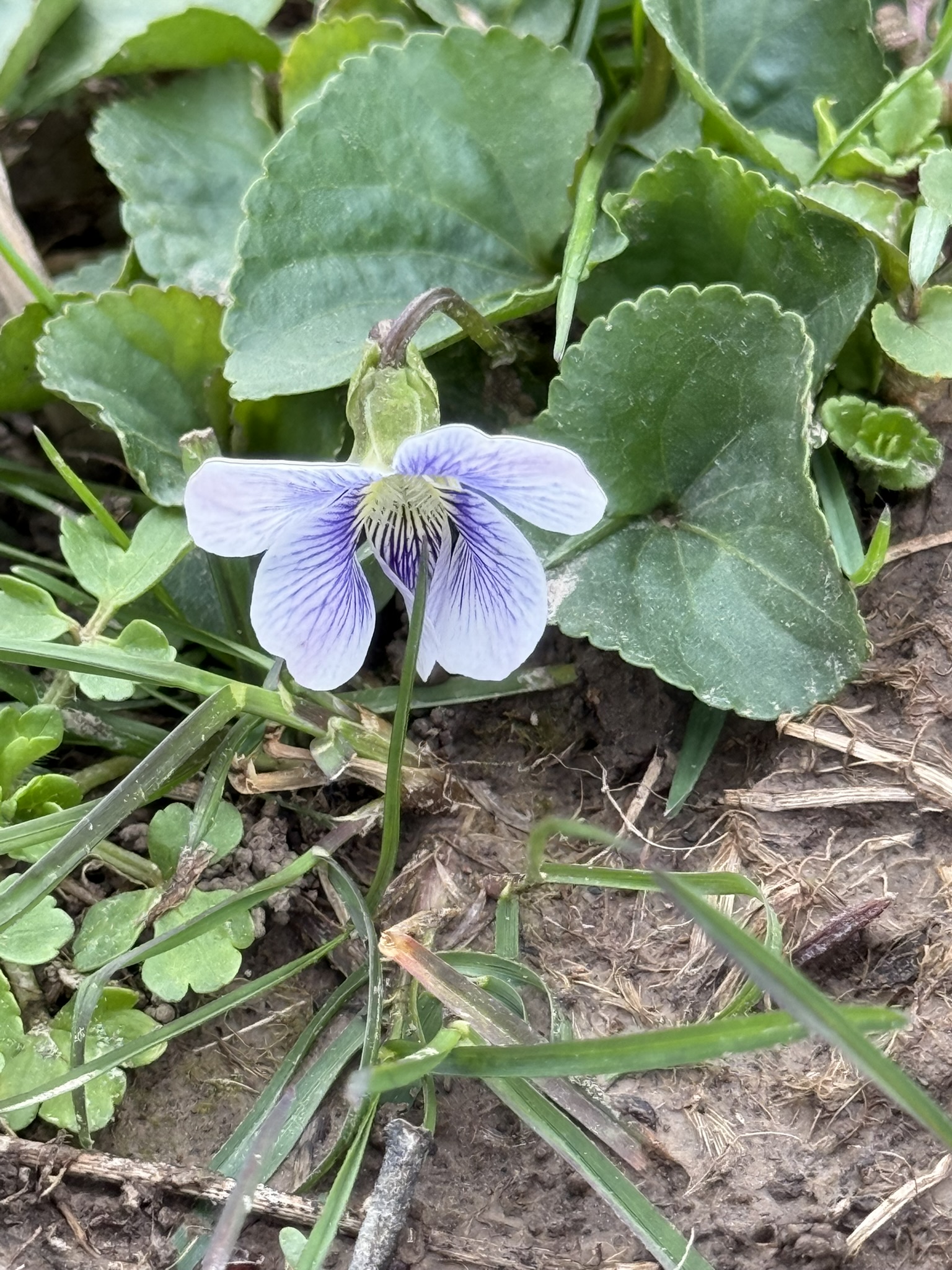
In situ — the violet where it lives, in the low places
From Garden to Press
The harvest window is narrow — maybe two weeks from first bloom to the moment heat pulls the color. They go from garden to parchment to press within the hour. Each one placed face-down on the blotting paper, stems arranged, variety by variety or mixed as the morning's picking comes in. There is a meditative quality to it, the same gesture repeated a hundred times, small decisions that accumulate into something significant.
Violets press exceptionally well. They are thin-petaled, low in moisture, and they lie flat naturally. In two to three weeks they are ready: color-fast, papery, faithful to the form they had in the garden. The lavender ones shift slightly cooler. The deep indigo holds almost exactly. What comes out of the press is not the flower anymore — it is the flower's idea of itself, made permanent.
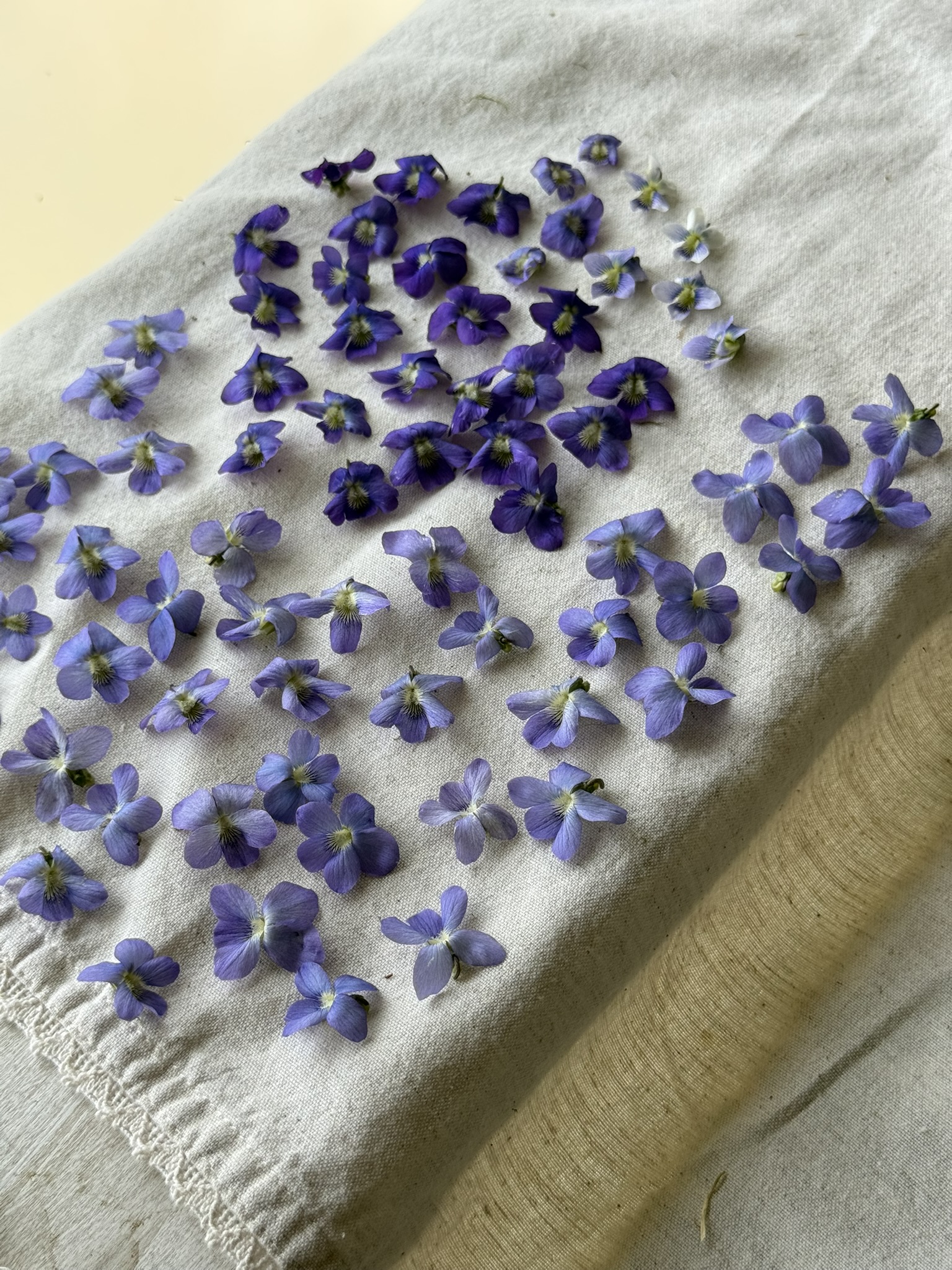
Sorted by variety — the difference visible only when seen together
What They Become
A pressed violet in resin is one of the most recognized things Floral Alchemy makes. People who know flowers immediately know what they are looking at. People who do not know flowers are drawn to them anyway — to the color, to the fineness of the veining that the resin holds forever, to something they cannot name but recognize.
They go into pendants, into rings, into earrings. Sometimes alone. Sometimes paired with periwinkle or another specimen from the same season, the same spring, the same low-light morning. Every one is from this land. Every one is from a colony that has been returning, faithfully, for years. Every one carries the whole story — from the little girl watching her mother pick them, to the press, to the piece in your hands.