The Historical Answer
Prima materia — the starting substance
For thousands of years, alchemy was the pursuit of transmutation — the turning of base metal into gold. Lead, crude and heavy and worth almost nothing, was the starting point. Gold, incorruptible and luminous and worth everything, was the destination. The alchemist's task was to find the process that moved matter from one state to the other.
The earliest alchemists worked in Alexandria in the first centuries of the common era, drawing on Egyptian metallurgy and Greek philosophy. By the medieval period the practice had spread through the Islamic world — scholars mapping the properties of substances with a rigor that looked very much like chemistry, which it was becoming. By the Renaissance, alchemy was practiced at every court in Europe. Newton spent more of his life on alchemical experiments than on anything else he is remembered for. The brightest minds of their centuries did not think this was a foolish pursuit. They thought it was the most serious one possible.
The planetary correspondences — everything begins from the flower
They sought something called the Philosopher's Stone — a substance or a process that could catalyze the great change, turning the base into the precious. Many believed it would also grant the Elixir of Life: the ability to renew, to restore, to extend. The alchemist was not only trying to make gold. They were trying to understand the nature of transformation itself.
"As above, so below. As within, so without." The hermetic principle at the heart of all alchemical thought: the outer work mirrors the inner work. You cannot change the material without changing yourself.
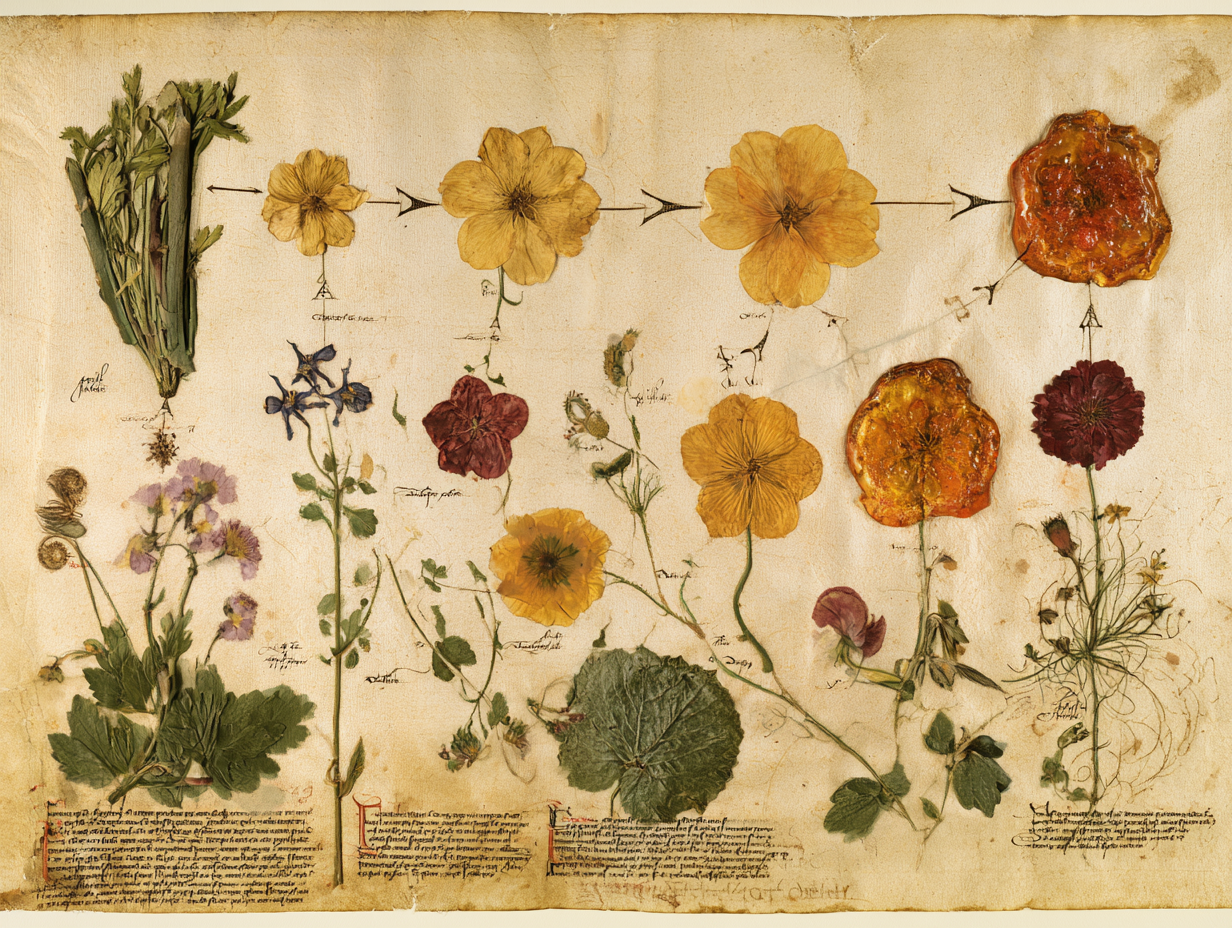
The received reading — material into permanence
The Four Stages
Alchemical transmutation followed a sequence. The work had stages — each with its own color, its own character, its own particular difficulty. No stage could be skipped. You had to pass through all of them.
The first stage is dissolution. The material must be broken down completely before it can be remade. The alchemist called this putrefaction — the rotting away of the old form. Nothing useful comes from skipping it. The darkness is not a failure. It is the beginning of the work.
After the blackening comes the washing — the separating out of what is pure from what is dross. This is the clarification. The alchemist begins to see what is actually there when all the impurities are burned away. A kind of luminosity appears in the material. Something essential becomes visible for the first time.
The material begins to warm. The first signs of gold — not yet gold itself, but the approaching of it. Something has awakened. Some alchemists described this as the moment the work started to move on its own, as though the material had acquired an intention of its own toward its final state.
The completion. The material arrives at what it was always capable of being. The base becomes precious. Not because something foreign was added — but because everything hiding the gold was finally removed. The gold was always in there. The work was only the uncovering.
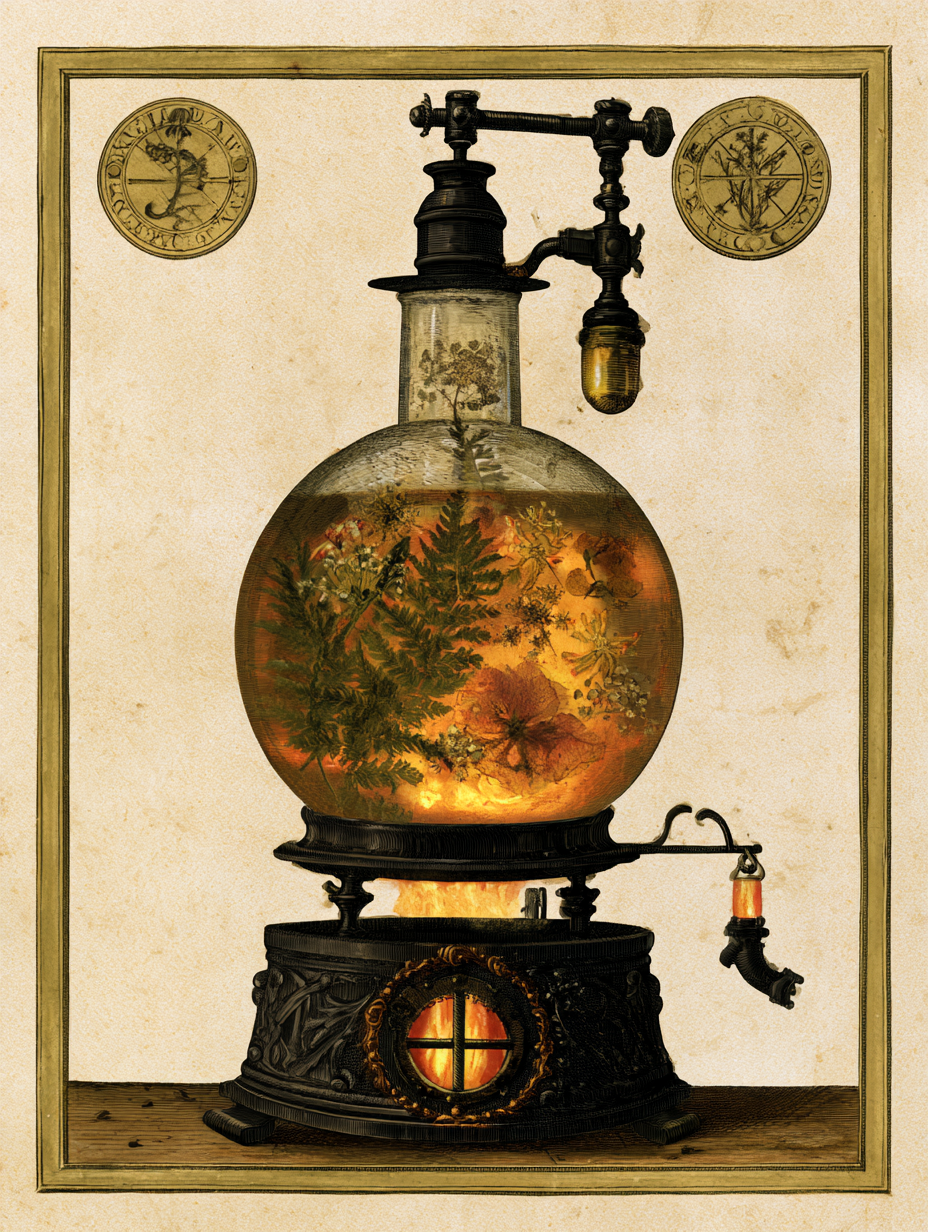
The vessel — where the work happens
The Deeper Answer
Carl Jung spent years studying alchemy and concluded that the alchemists were doing something they may not have fully understood: they were describing the work of psychological transformation using the language of chemistry. The lead was the self at its most burdened — weighed down, unrealized, full of potential it couldn't yet access. The gold was the integrated self, the fully realized version, the human being who had done the work of becoming who they actually were.
Jung called this process individuation. The alchemists called it the Great Work. The language is different. The destination is the same.
The Great Work
What It Means Here
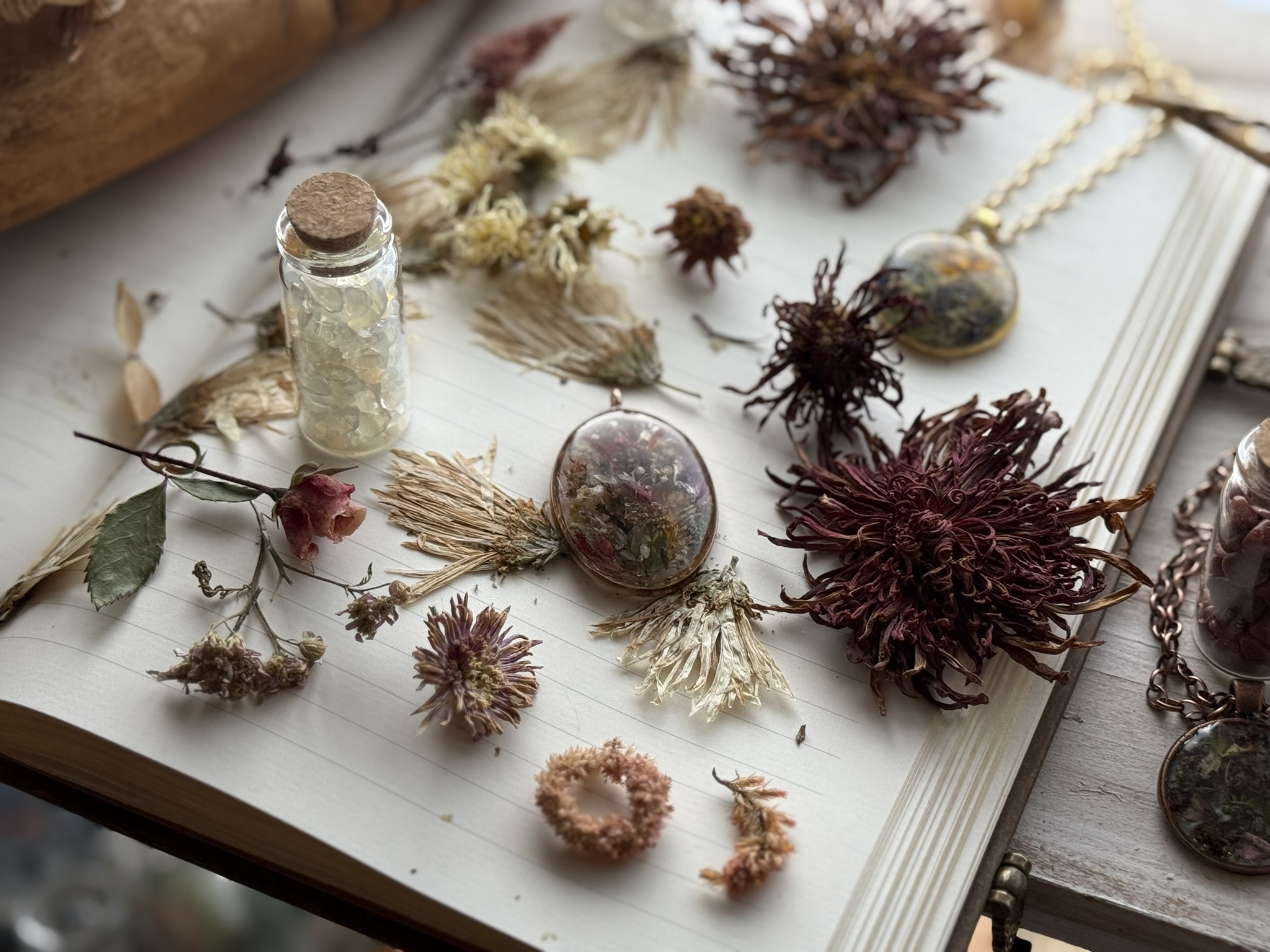
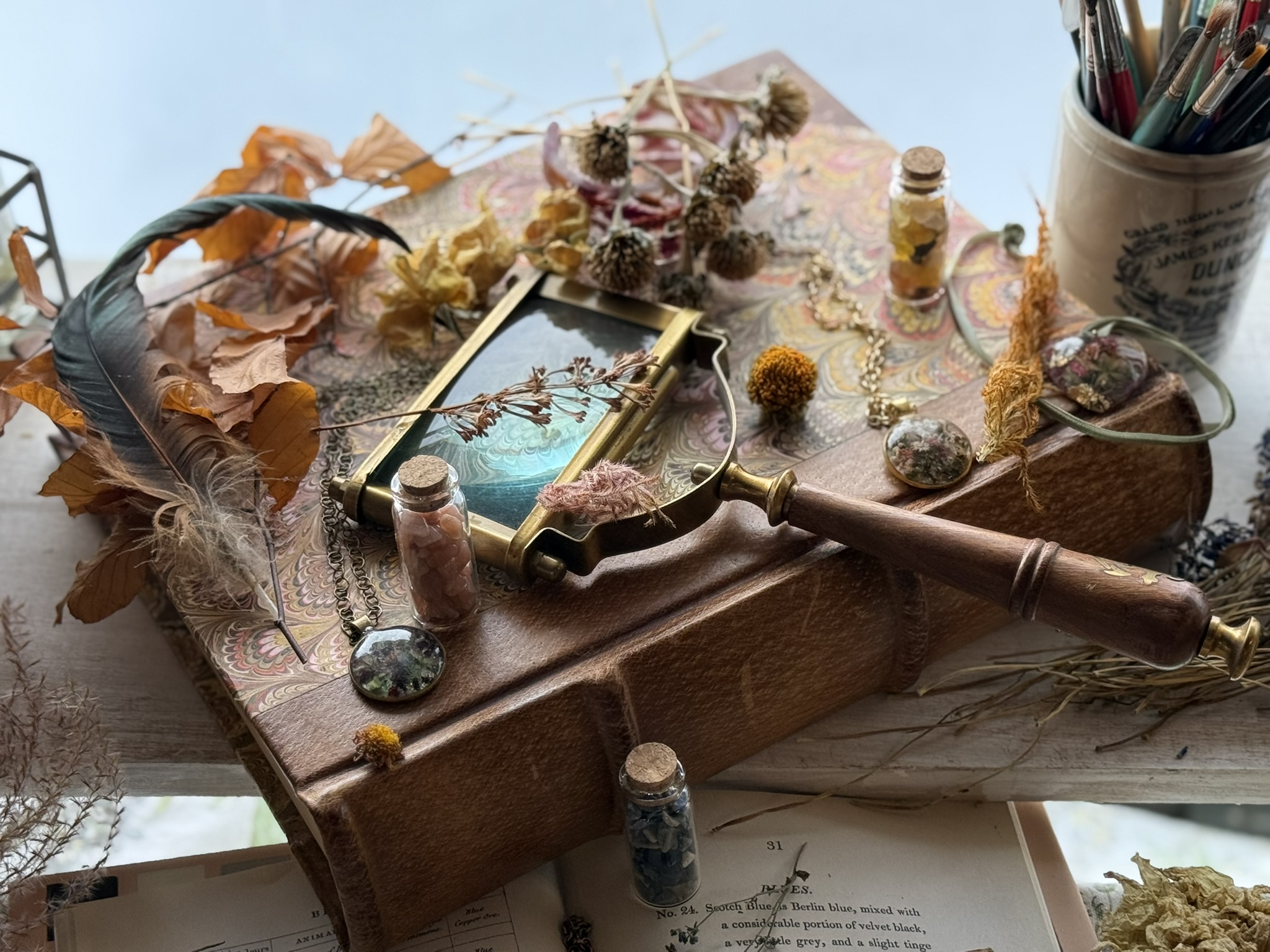
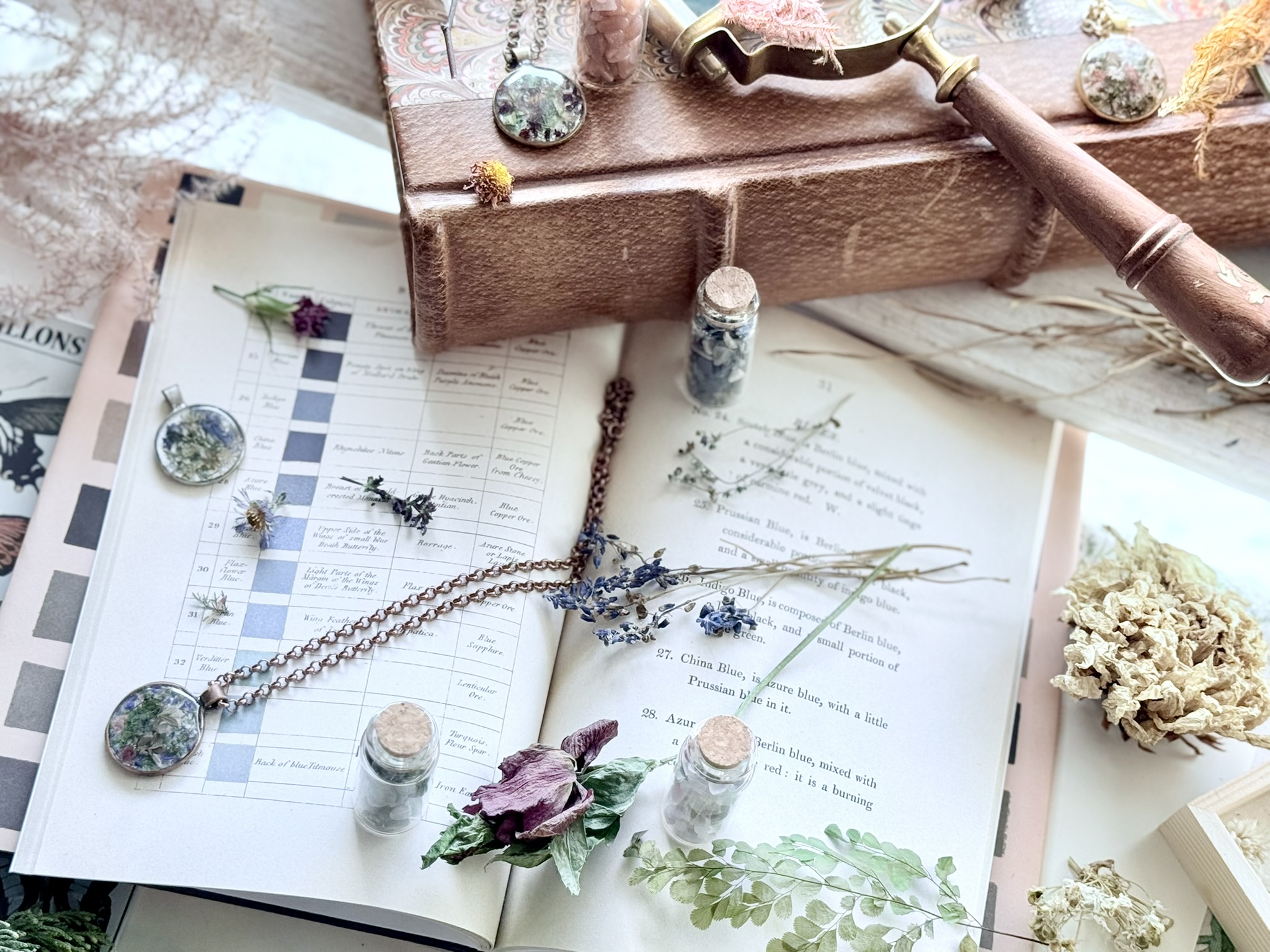
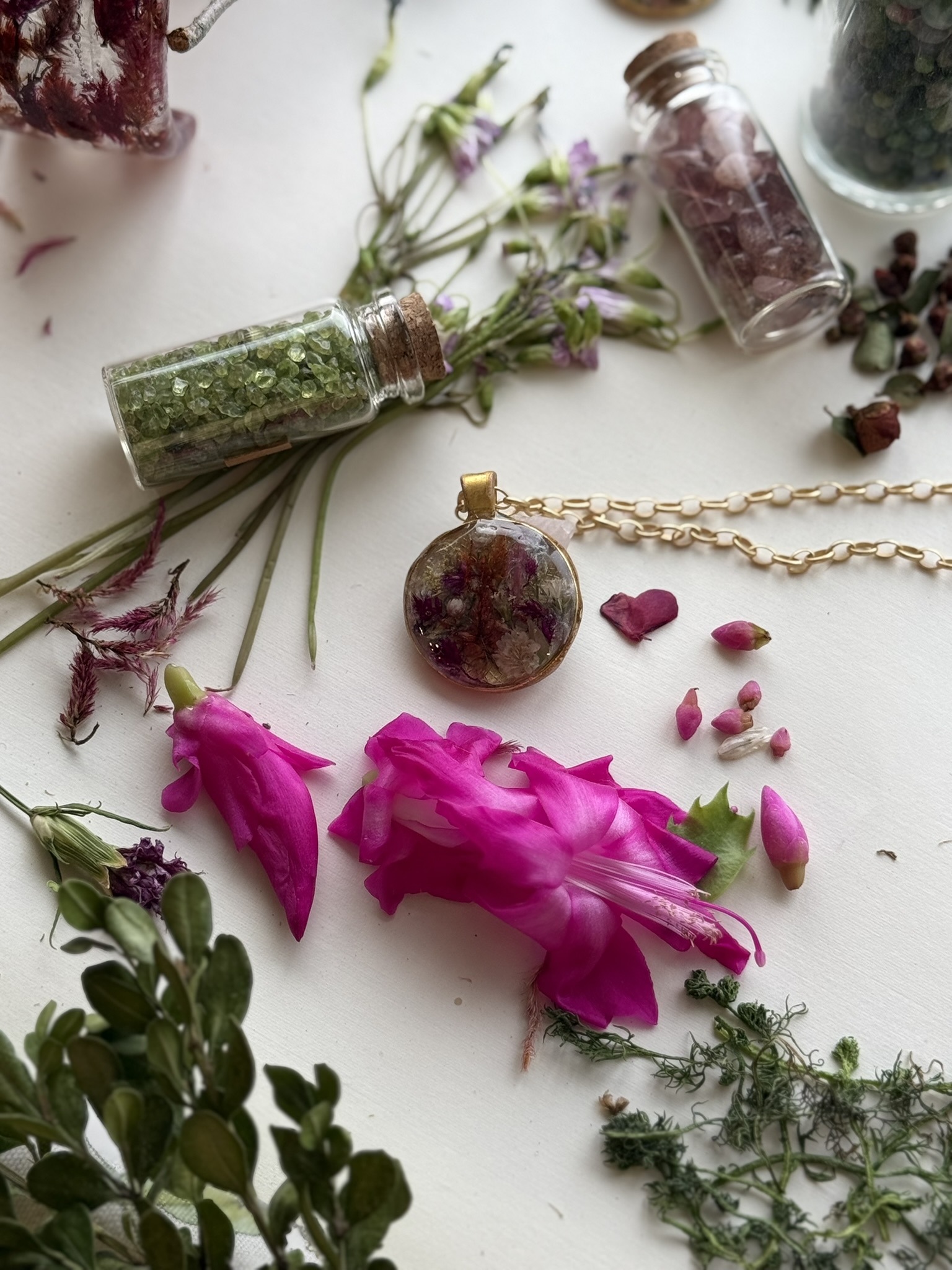
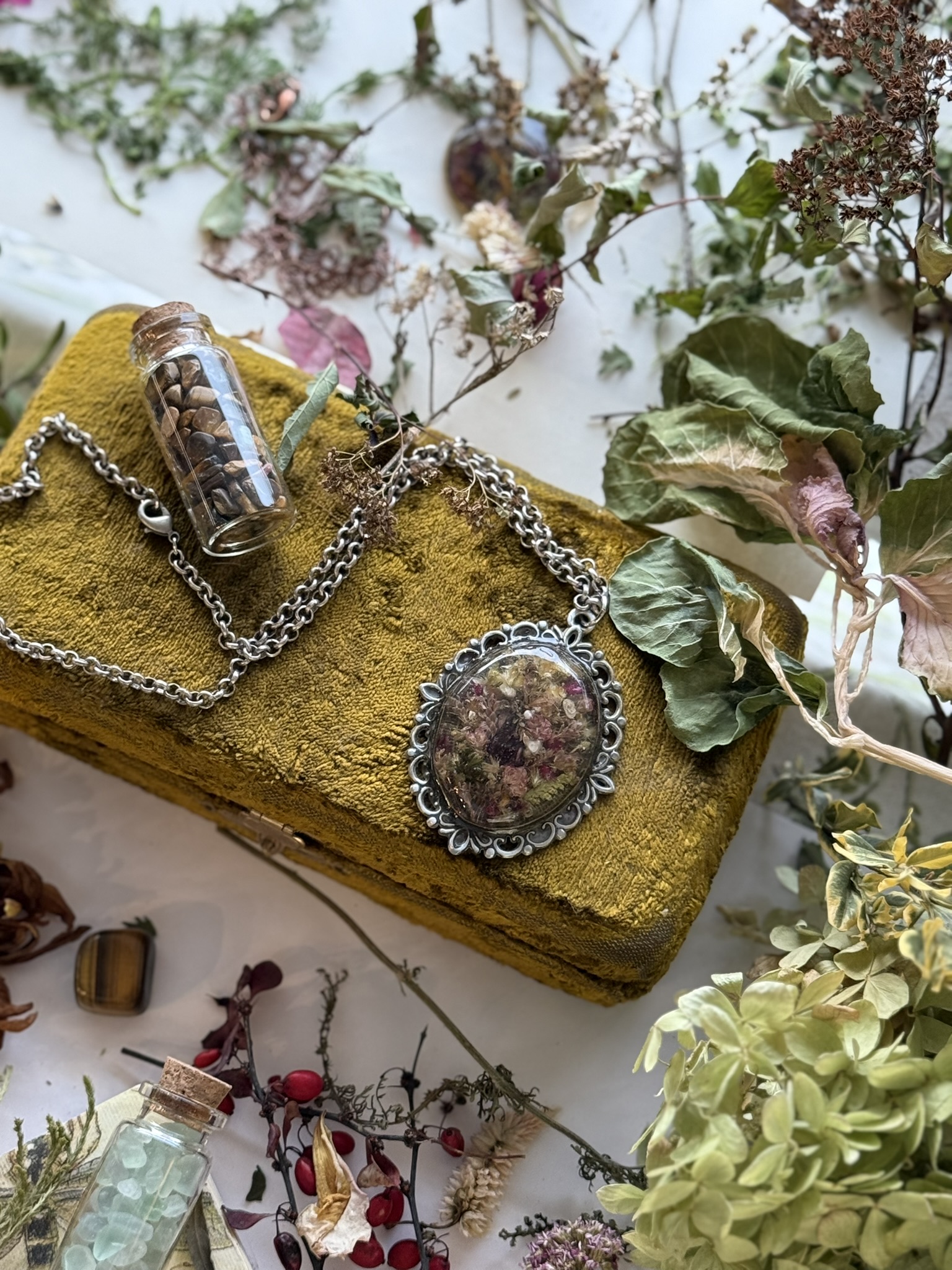
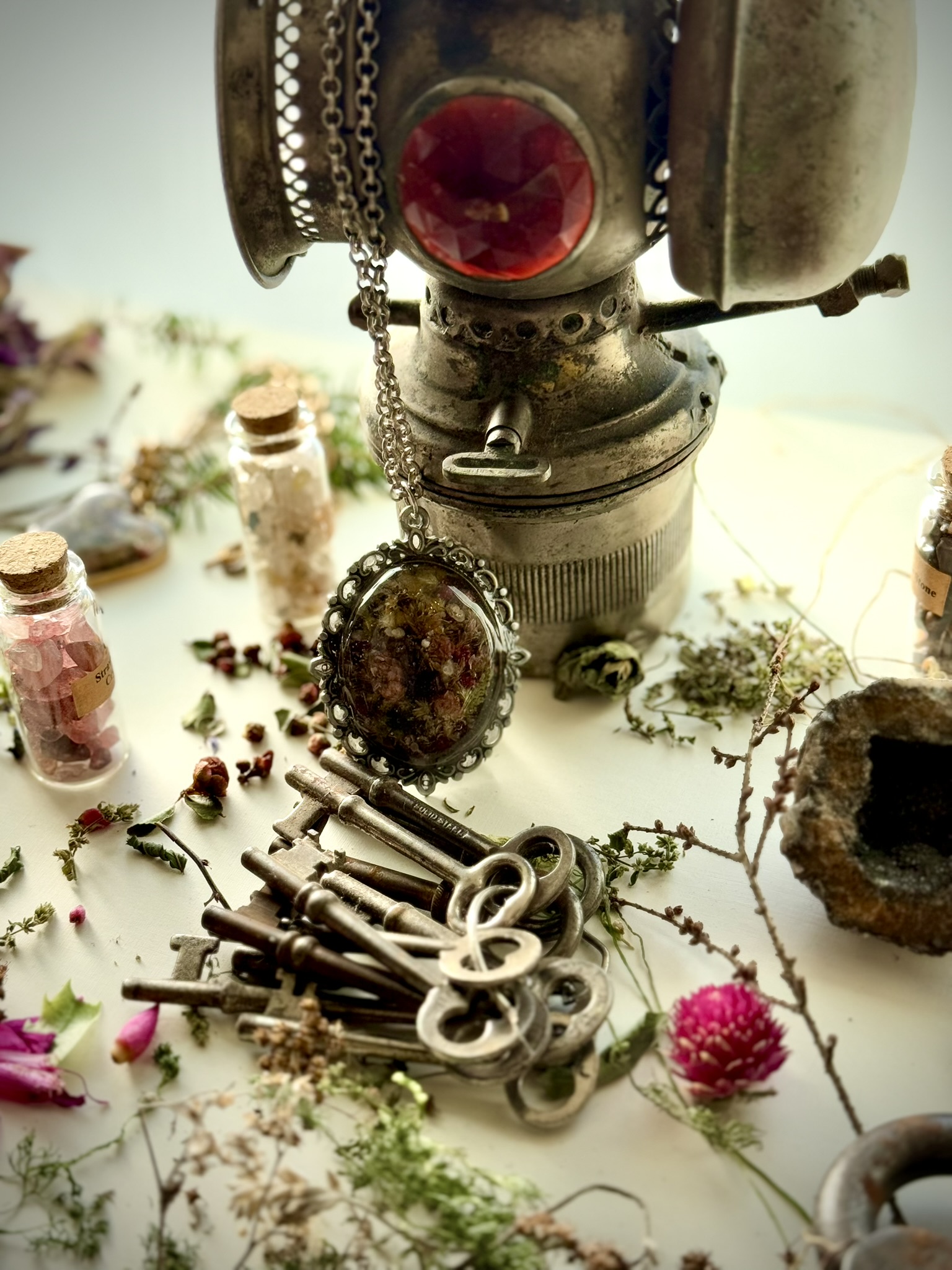
There is the literal version. I take base material — a dried flower, a pressed botanical, a fragment of something that grew in the ground on this land — and I set it in metal and put it under glass and make it into something people carry on their bodies as an object of beauty. That is transmutation in the most direct sense: the perishable becomes the permanent, the overlooked becomes the precious. The material is alchemized.
But that is not the part I think about most.
What I think about is the other direction. What if I am the base material? What if I am the lead — heavy, promising, not yet what I am meant to be? What if the garden, the land, the losses, the reclaiming, the seasons of hard work, the thousands of hours of making — what if all of it is a force working on me the way an alchemist works on a substance? Applying heat. Applying time. Dissolving what no longer serves. Clarifying what was always there.
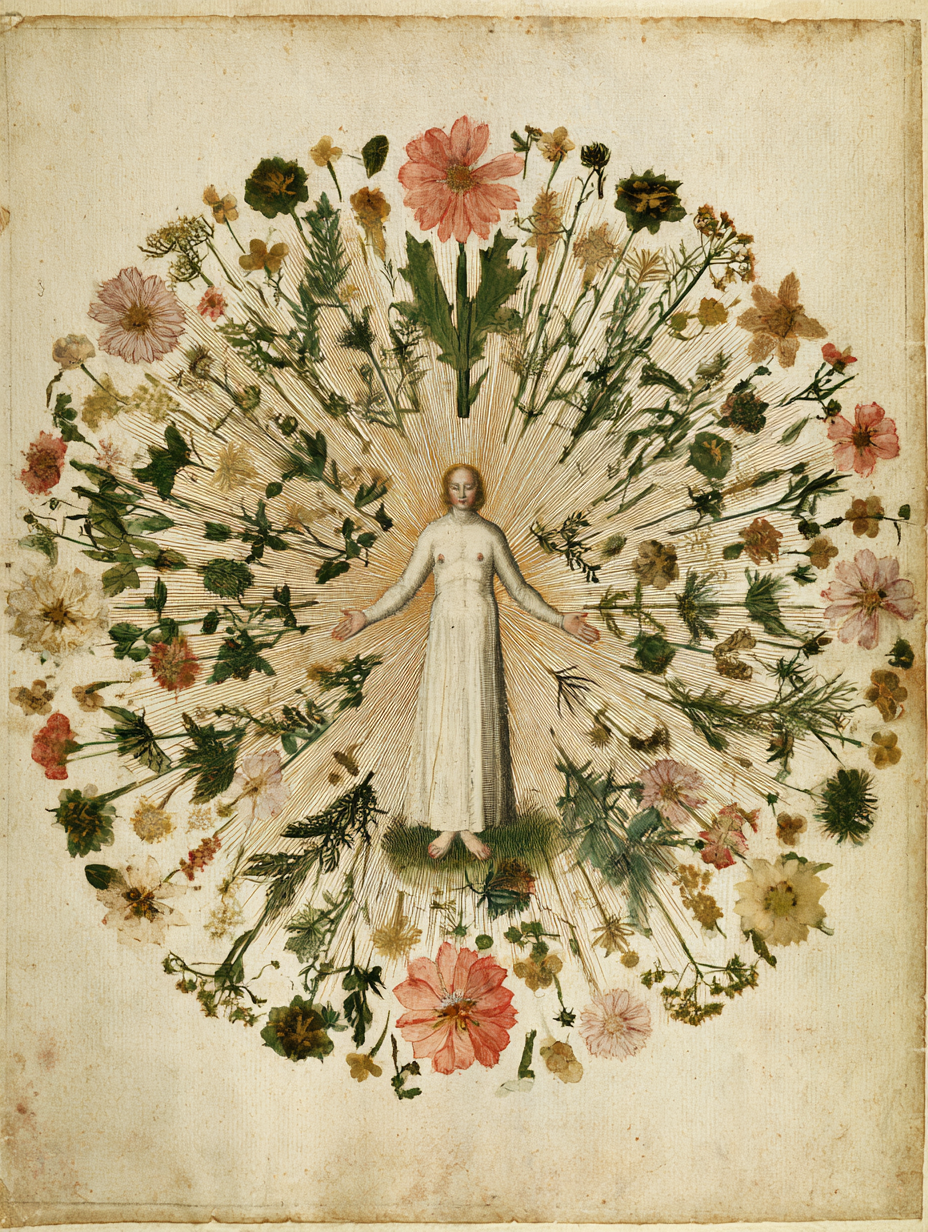
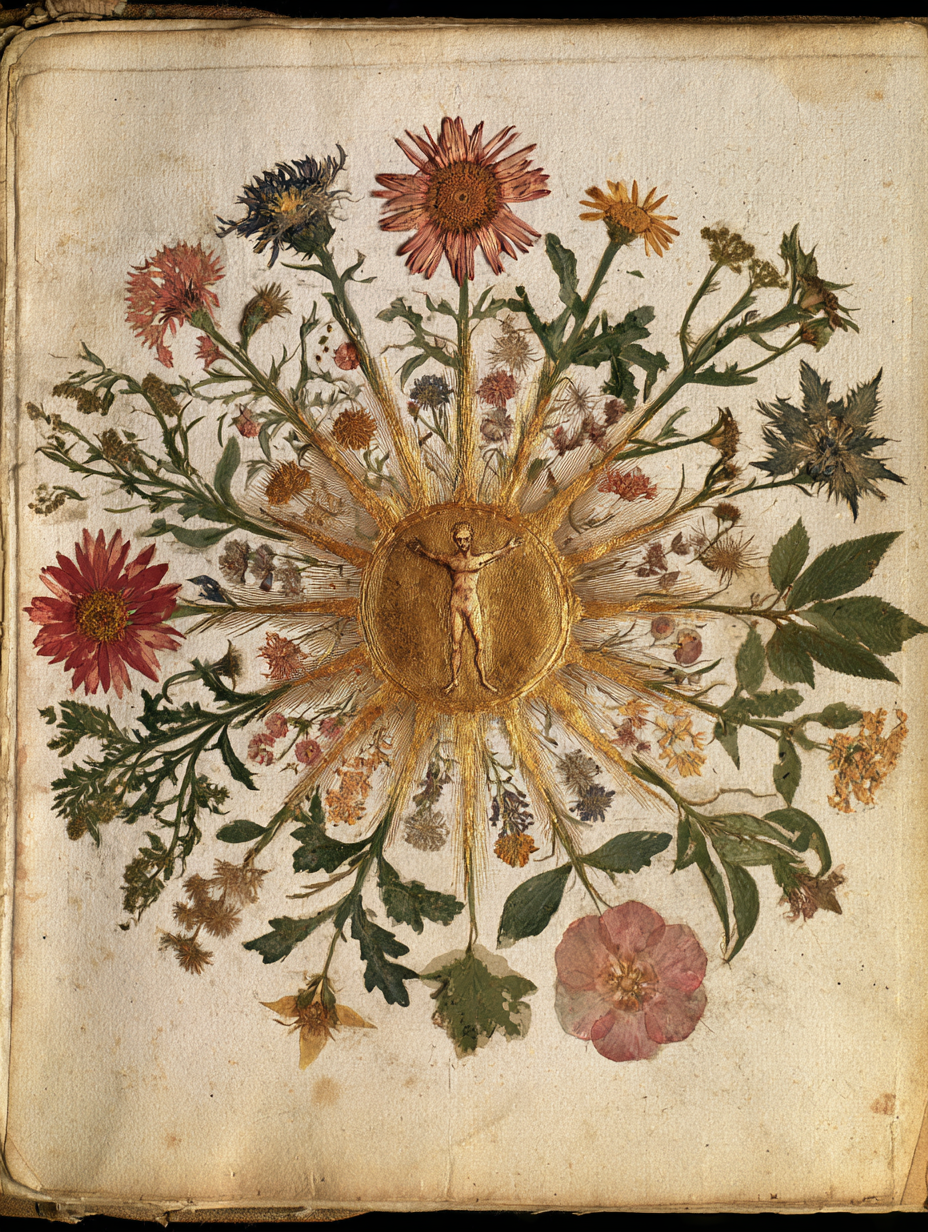
The inversion — not the flower into gold, but the gardener
What if an outside force can alchemize me? Optimize me? Make me the golden version of myself?
I think that is what is happening.
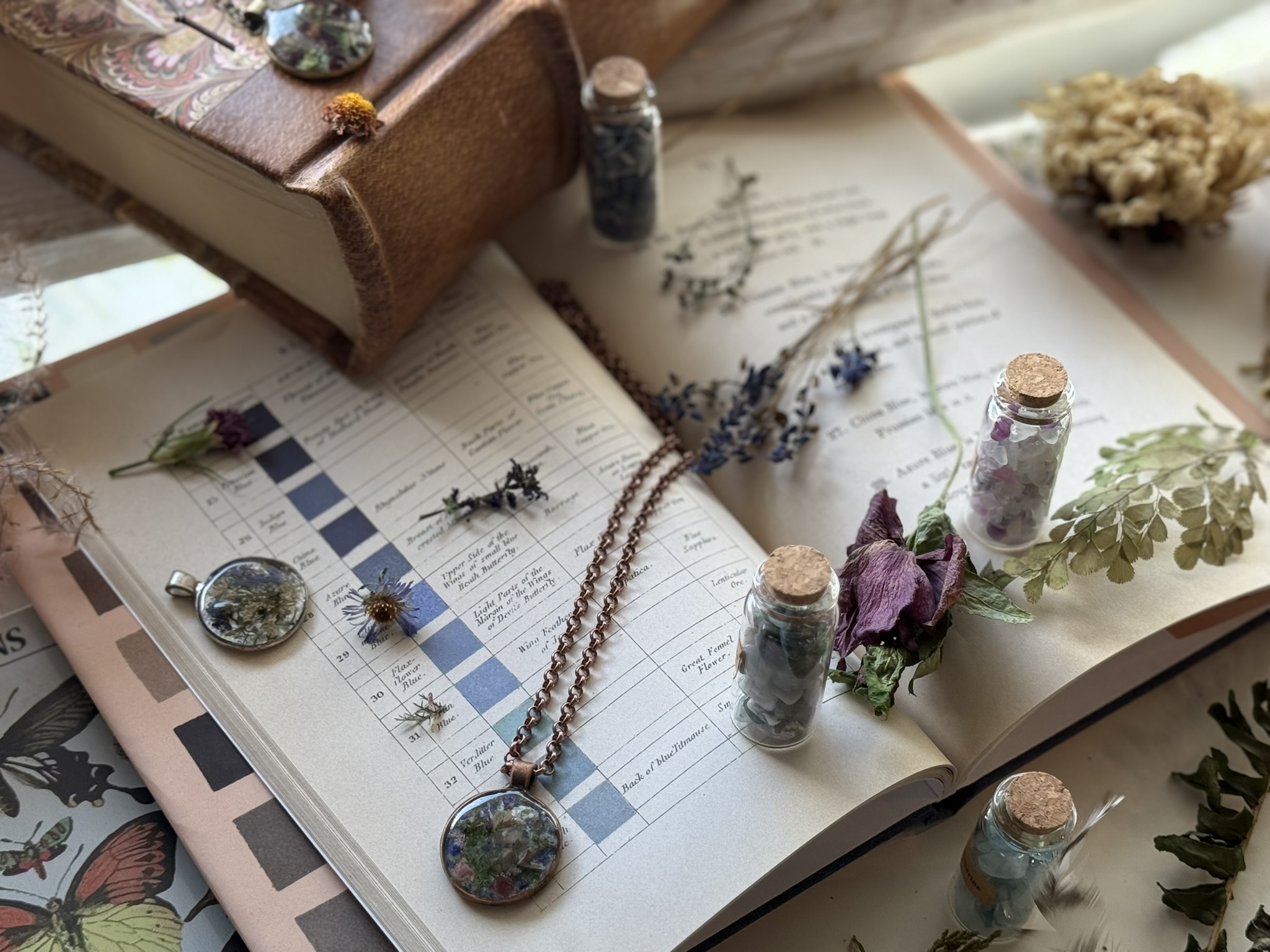
What the work produces
I look at where I started and where I am. I look at what I have survived and what I have built from it. I look at the greenhouse, derelict for forty years and now full of things I grew from seed. I look at the pieces I make, which carry the flowers of this land into the world, which travel on people's bodies to places the flowers themselves will never go. I look at the garden and the seasons and the creatures who use it, and I look at the woman who tends all of it and makes art from its remains. And I think: something is working here. Something has been working on me for a long time. I did not start as the person writing this.
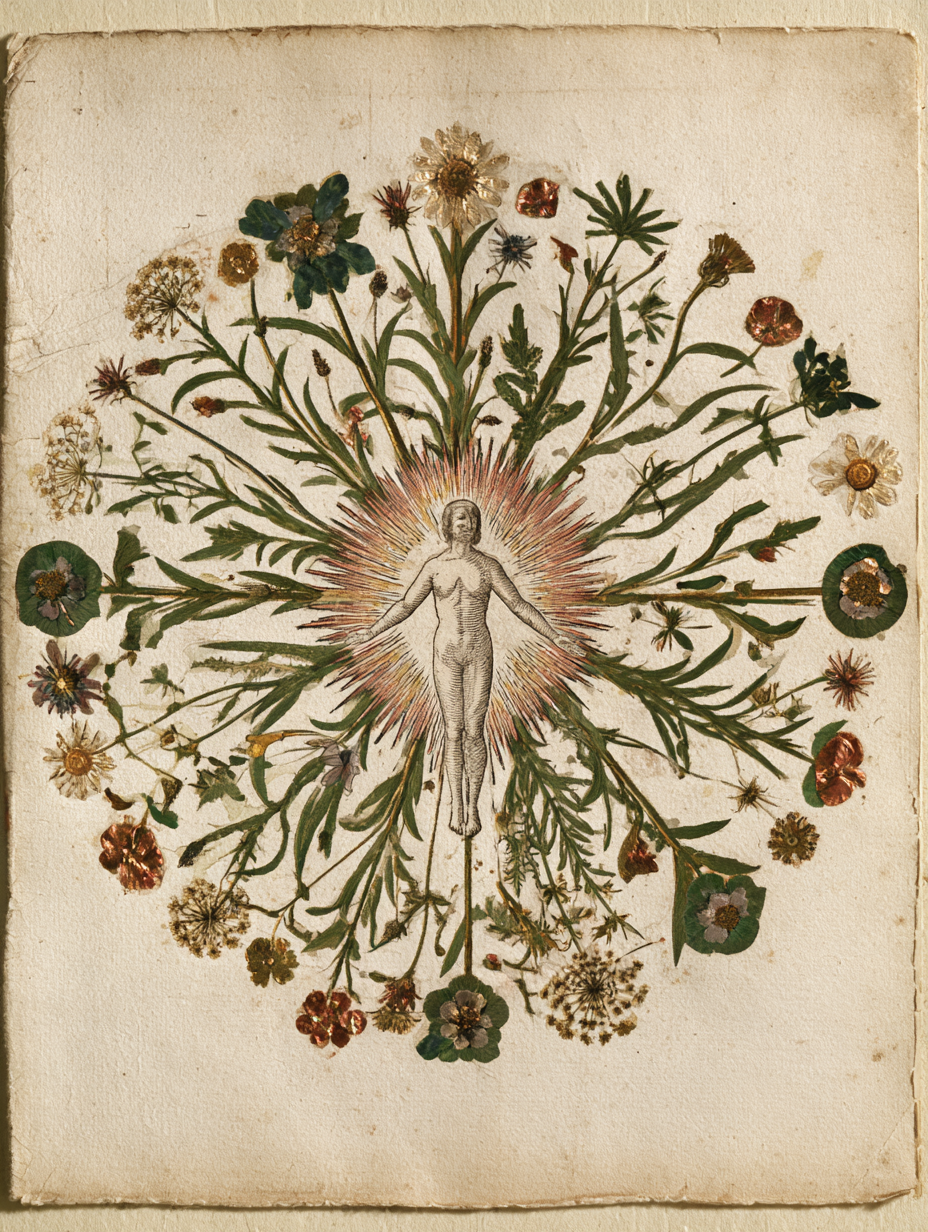
The alchemists believed the gold was never absent. It was always in the lead. The work was only the process of uncovering it — of removing everything that was covering it over. I find that very hopeful. It means the transformation is not a creation of something that was not there. It is a revelation of something that always was.
That is what Floral Alchemy means. Not just the flowers. Not just the art. The whole of it — the growing, the harvesting, the pressing, the preserving, the making, the tending, the losing, the returning. All of it is the Great Work. All of it is the uncovering.
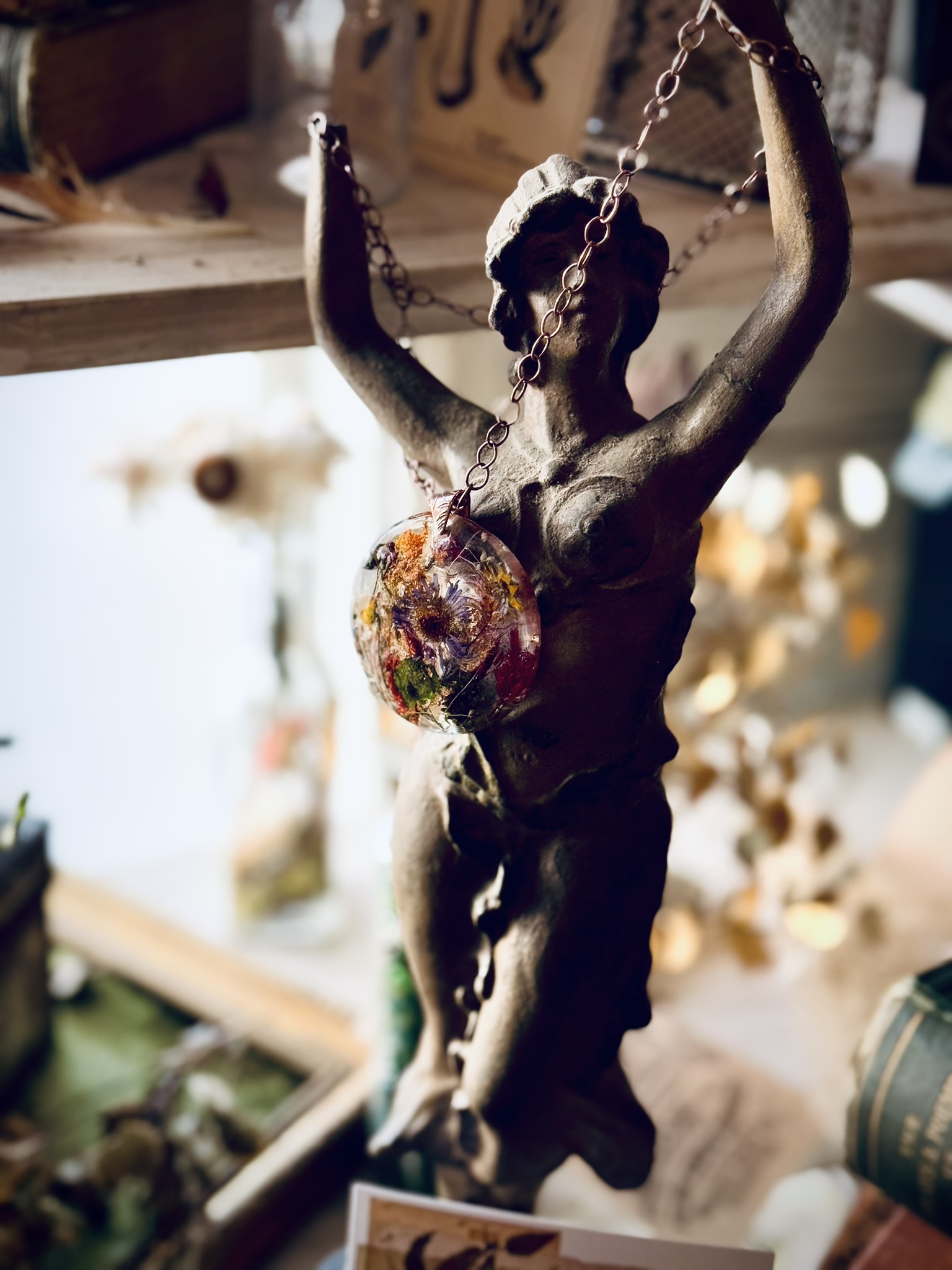
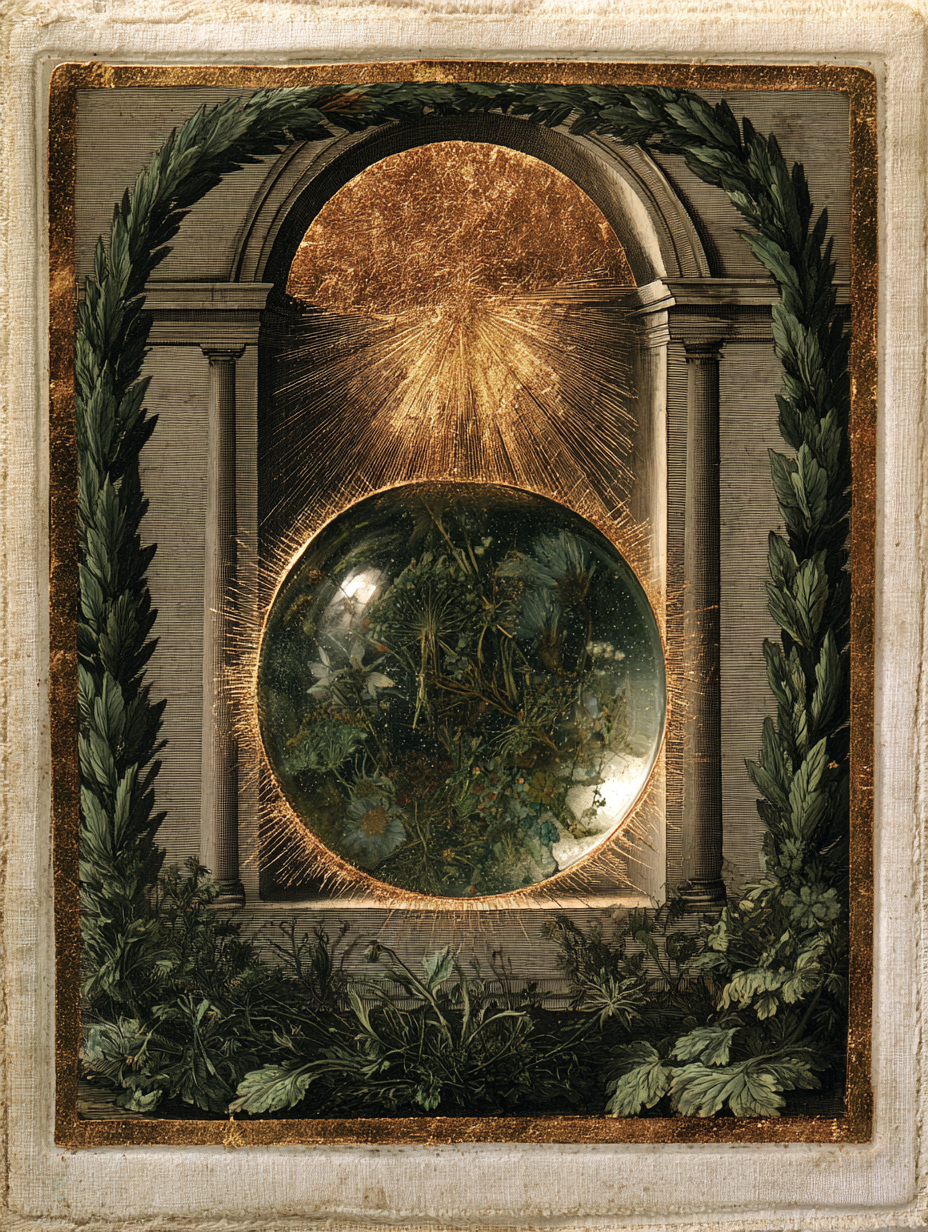
The gold was always there
You found the blank space at the edge of the table.
Most people don't look there.