The Wonder Table
Wildflowers
Beauty is in the eye of the beholder. The eye can be trained.
The Learned Disgust
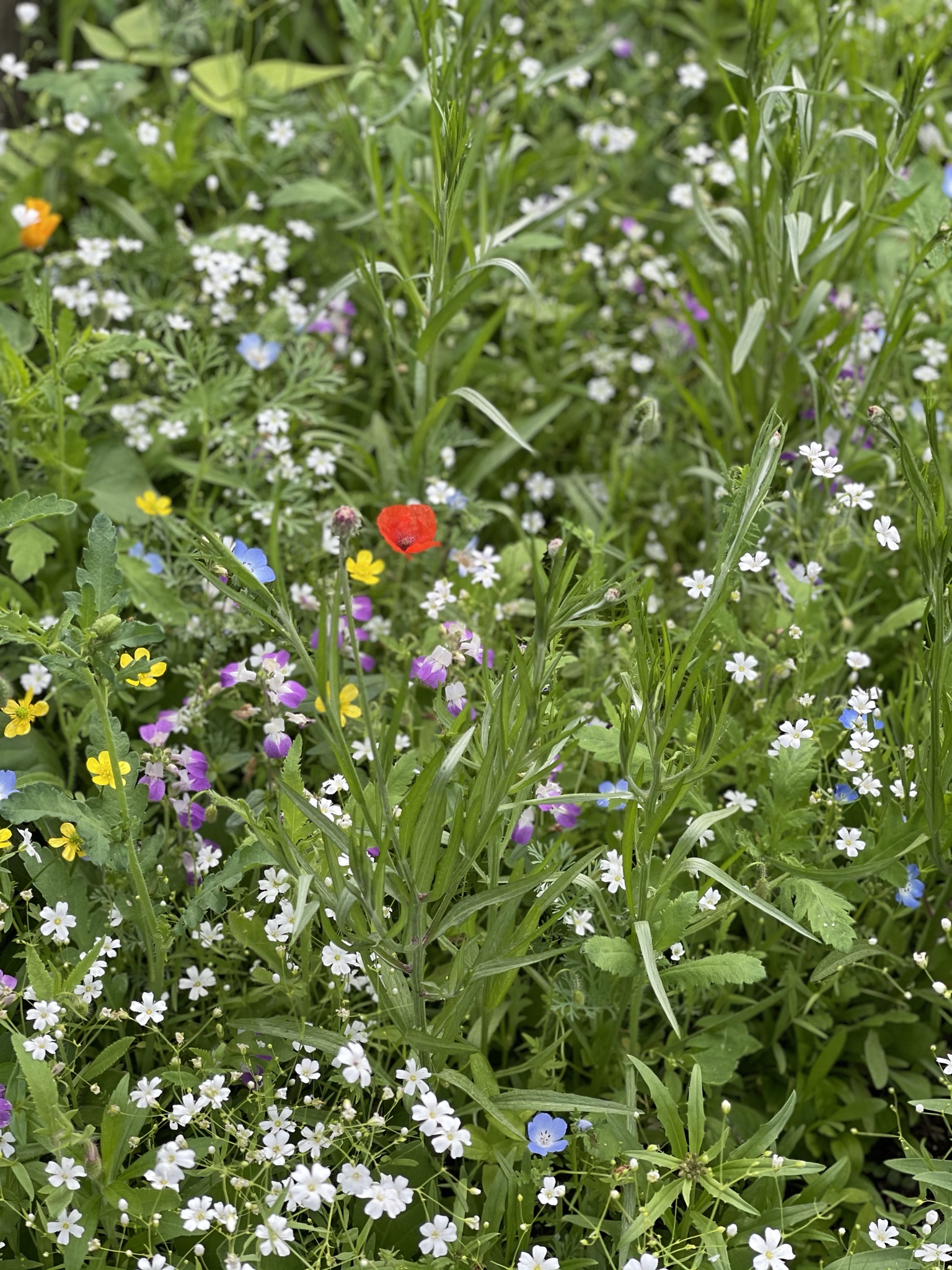
We have been taught to see wildflowers as failure. A dandelion is a lawn's failure. Goldenrod is a field that hasn't been mowed. Clover is a garden that hasn't been weeded. The purple thistle that arrives in an unmaintained fence line, the chickweed spreading through the vegetable bed, the Queen Anne's lace colonizing the verge — all of these are read, by the trained modern eye, as signs of neglect. Of letting things go.
This is a learned response. It is not natural, not universal, not old. It is specifically American, specifically 20th century, tied to the rise of the lawn as a marker of social status — a cultural invention that required the elimination of any plant that declared its own preferences. The lawn as we know it is a monoculture of uniform grass, kept short, kept green, kept empty of anything that didn't ask permission. It arrived from the English aristocratic tradition of the "pleasure ground" — a vast swath of controlled green that only the wealthy could afford to maintain. The American suburban lawn democratized that symbol of wealth, but kept all its assumptions. Chief among them: that a living thing growing without human direction is a problem to be solved.
This disgust is fairly recent and it is entirely cultural. For most of human history, a field full of wildflowers was read as abundance. The dandelion was a cultivated food plant. The yarrow was medicine. The violet was a delicacy. The thistle fed finches through the winter. The weeds were not weeds. They were a pantry, a pharmacy, and a feast.
What a Wildflower Actually Is
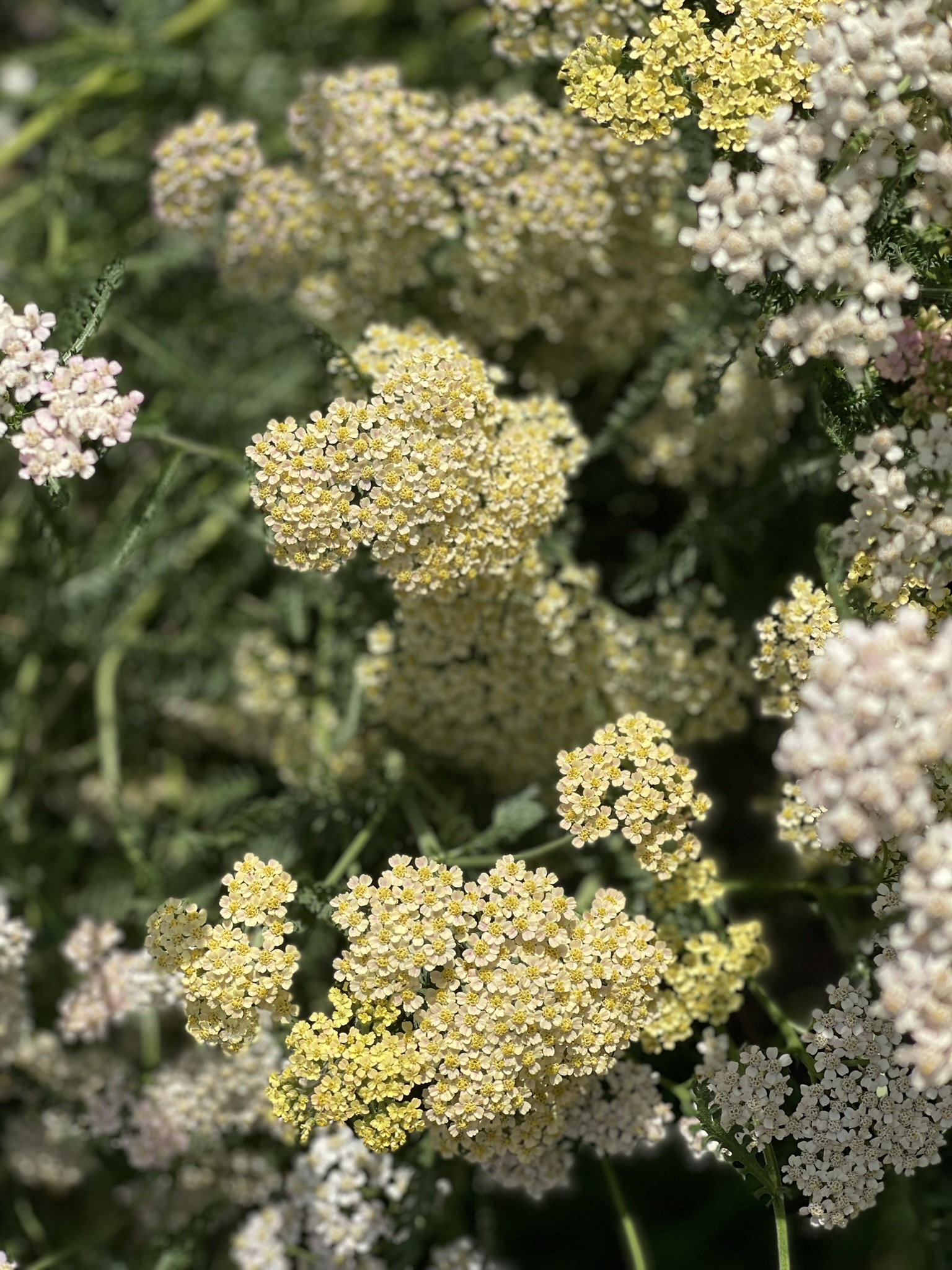
A wildflower is a plant that evolved, without human direction, to thrive in a specific place. That is the complete definition. Every feature of a wildflower — the precise height it grows, the specific time of year it blooms, the exact architecture of its flower, the chemical compounds in its leaves, the shape of its seed — is the result of millions of years of conversation between that plant and the specific ecosystem it evolved within. The soil chemistry, the rainfall patterns, the insects available for pollination, the birds and mammals that might carry its seeds, the competing plants it needs to outgrow or cooperate with — all of this shaped it. The wildflower is not a product. It is a solution. A refined, tested, time-proven solution to the problem of how to live in a specific place.
A wildflower is not a failed cultivated plant. A cultivated plant is a wildflower that was interrupted.
The cultivated varieties in our gardens were, in almost every case, wildflowers once. Someone noticed them. Selected for particular traits. Bred them, crossed them, refined them over generations toward a human aesthetic. The result is often spectacular and sometimes beautiful — but it has been interrupted. Its conversation with its original ecosystem was cut short. It was redirected toward us, and in that redirection it often lost the ability to feed the wildlife that depended on its original form.
The Ecology
A native plant supports wildlife that a cultivated ornamental cannot. This is not sentiment — it is ecology. The relationship between a native plant and the insects, birds, and mammals in its ecosystem is ancient, specific, and irreplaceable. A native oak tree in the eastern United States supports over 500 species of caterpillar — which means it supports every bird that feeds on caterpillars, which means it supports every hawk that feeds on those birds. Remove the oak and you do not simply lose one tree. You pull a thread that unravels a web.
A rose bush from a garden center supports almost none of this. It has been selected for color and form and disease resistance and reblooming capability — all of which matter enormously to the human buyer and not at all to the ecosystem it's planted in. It is beautiful and it is ecologically silent.
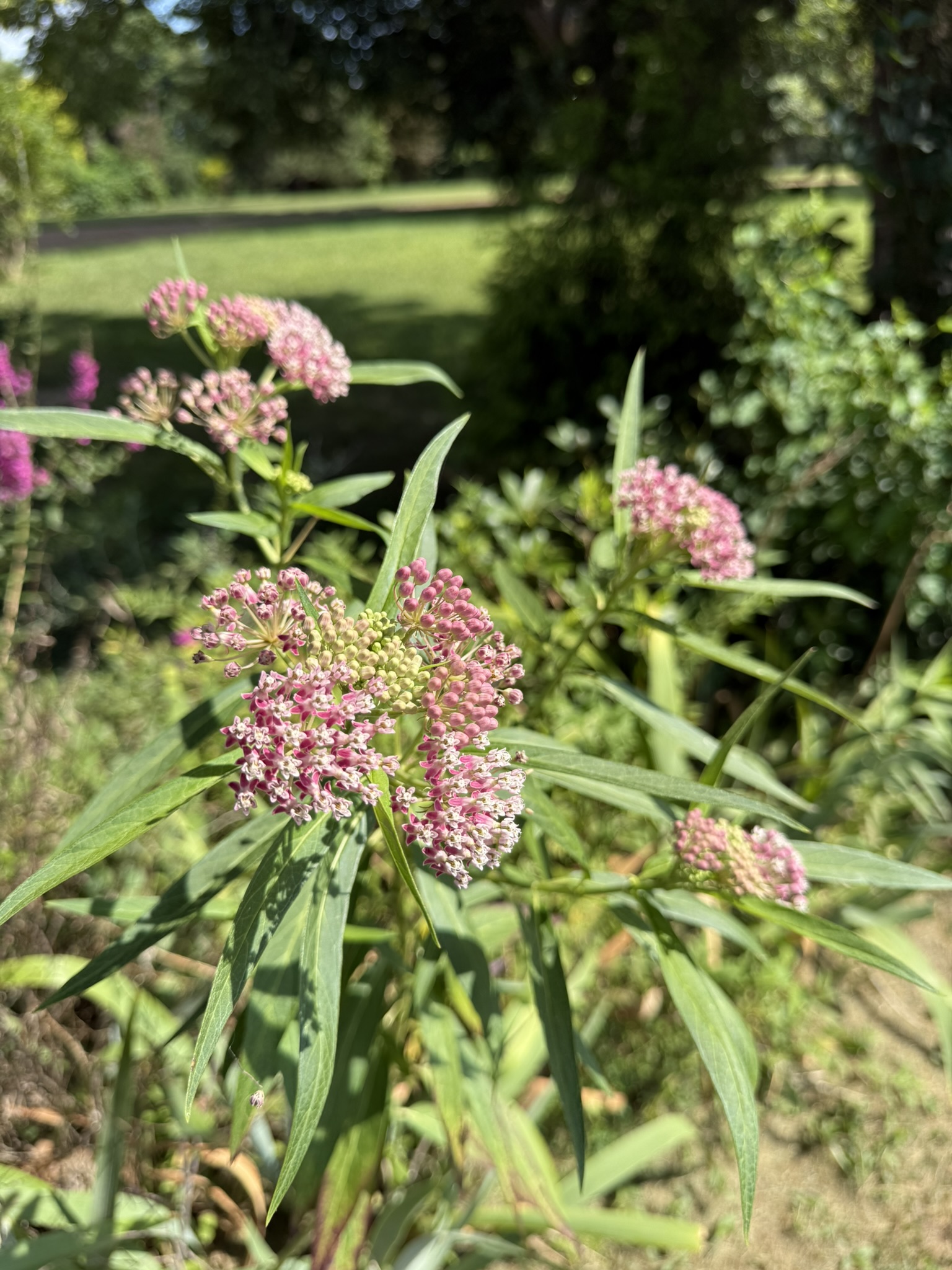
The monarch butterfly needs milkweed. Specifically milkweed — Asclepias, the genus — because monarch caterpillars can eat nothing else. The monarch caterpillar evolved to sequester the toxic cardiac glycosides in milkweed's sap, which makes the adult butterfly toxic to most predators. Remove milkweed from the landscape and you don't just reduce monarch habitat. You break the only reproductive chain the species has. You cannot substitute something prettier. The relationship between a monarch and a milkweed plant is three million years old. Three million years of co-evolution, of mutual dependency, of a butterfly becoming what it is because of a specific plant. You can't replace that with something that looks similar.
Learning to Look Differently
This is the real work: training the eye. Not to be told what is beautiful, but to learn how to see what is already there.
It starts with learning names. You learn the name of a thing and suddenly you see it everywhere. The name opens a file in your perception that was locked before. Before you knew it was goldenrod, that yellow smear at the edge of the August field was background. After, it becomes foreground — a single species you can name, recognize, follow through the seasons, see in the particular angle of its bloom, understand in the ecology of the hundred bees working its flowers on a September afternoon.
Then you learn what the named thing does. Goldenrod feeds over 100 species of bee, plus wasps, butterflies, beetles, and flies. It is a late-summer feast at a moment when other bloom has ended — a critical resource just before winter closes in. What you were reading as an untidy field is a city, alive with purpose, running complex transactions you weren't previously equipped to see.
Ironweed feeds monarchs and swallowtails. Wild bergamot draws every generalist pollinator within a half-mile radius — bumblebees, mason bees, painted ladies, skippers, hawkmoths. Joe-Pye weed, nodding at the edge of any damp low spot, feeds tiger swallowtails, which are among the largest and most spectacular butterflies in North America. Every wildflower is a dinner table. You were walking past banquets and calling them weeds.
Five Worth Knowing
Trillium
A woodland ephemeral — it blooms in early spring, before the canopy leafs out and closes the light. Three petals, three sepals, three leaves, always in threes: a fact so exact it reads as intentional. It takes seven years to flower from seed. Seven years of root growth, of patient accumulation underground, before the first bloom. A wildflower that requires patience not just from the gardener but from the soil itself.
Bloodroot
White petals, the color of snow, nothing like blood — the name is for its root, which bleeds red sap when cut, a sap used as a dye and medicinally for thousands of years by Indigenous peoples of the eastern woodlands. It blooms for days, sometimes only hours, then folds and is gone. To catch bloodroot in flower you have to be paying attention at exactly the right moment. It does not wait.
Wild Violet
The plant many gardeners are most eager to eliminate from their lawns. It is also the host plant for several species of fritillary butterfly — including the great spangled fritillary, one of the most beautiful orange butterflies in North America. The fritillary caterpillar eats nothing but violet leaves. Pull the violet and you pull the butterfly's nursery. The "weed" in your lawn is a maternity ward.
Goldenrod
Wrongly accused of causing hay fever for over a century. It does not. Ragweed causes hay fever — it blooms at the same time and is wind-pollinated, releasing invisible pollen into the air. Goldenrod is insect-pollinated; its heavy pollen stays on the plant and on the bees that visit it. You are not allergic to goldenrod. You are allergic to ragweed, and goldenrod has been taking the blame since the 1800s.
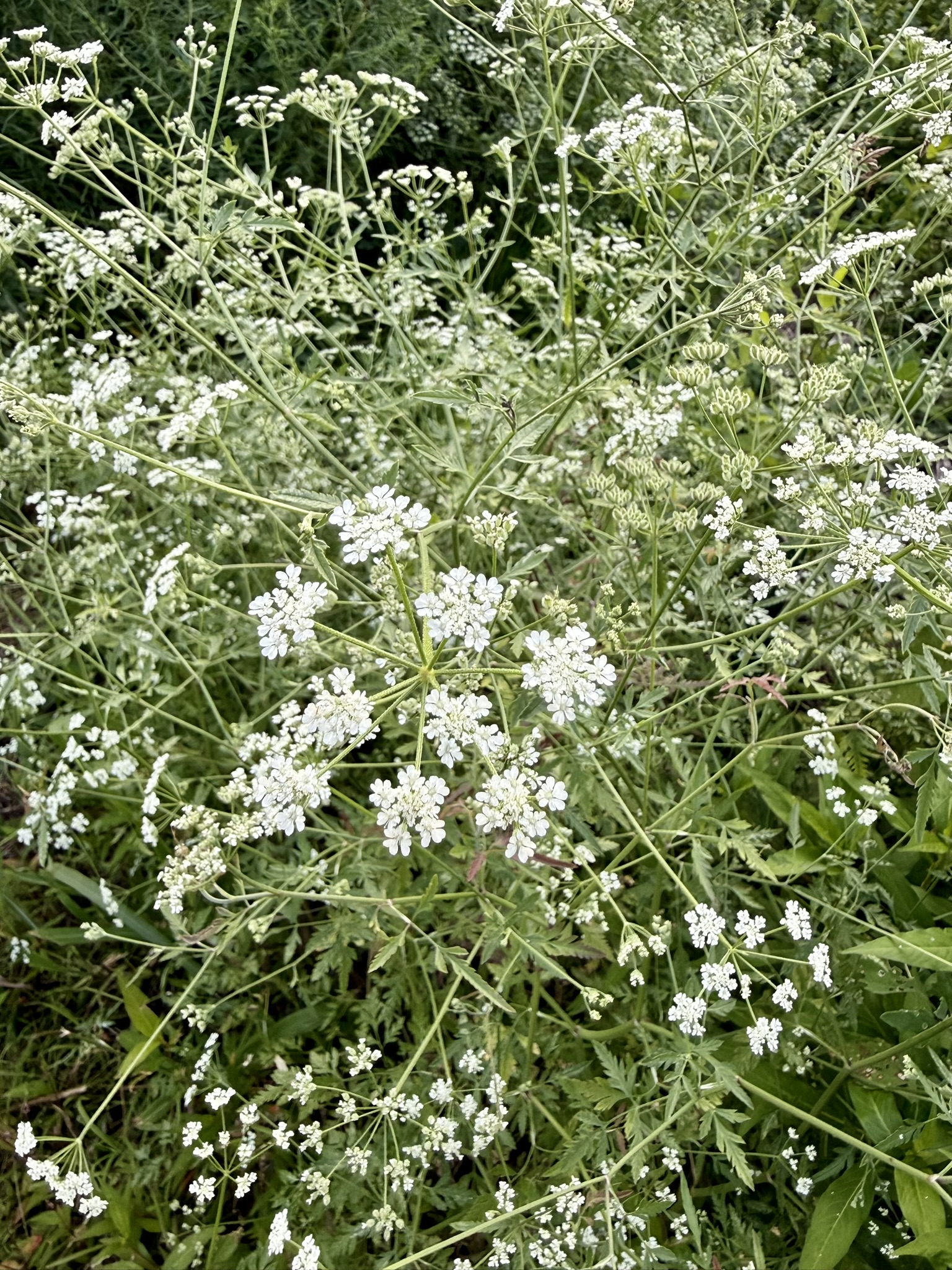
Queen Anne's Lace
The cultivated carrot's direct ancestor — wild carrot, Daucus carota, with its flat white compound flower head and the single dark purple floret at its center (legend says it is a drop of Queen Anne's blood from a pricked finger; botany says it is a nectary that attracts insects). The flower is not decoration — it is architecture. A landing pad designed by millions of years of evolution for specific insects to find and navigate. Every part of it is engineering.
The Wildflower Garden
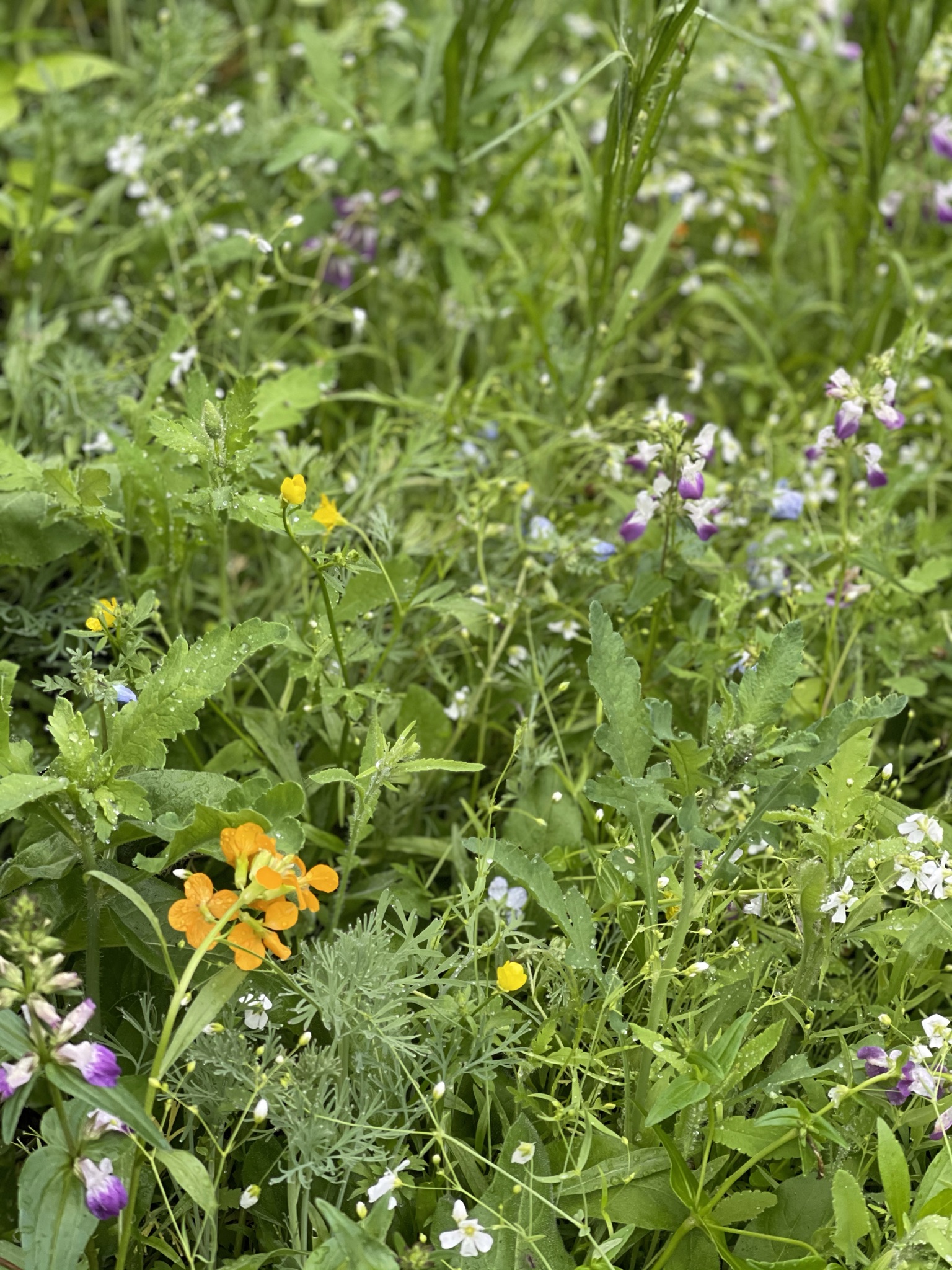
You don't plant a wildflower garden so much as you stop preventing one. You stop mowing a section of lawn. You stop pulling the things that arrive uninvited. You stop correcting. And then you wait — because the seeds are already there, in the soil, having waited for sometimes decades for the moment when someone finally stopped interrupting them.
This is called the seed bank — the dormant seeds that persist in soil long after the plants that produced them have disappeared. Stop disturbing the ground in any piece of land that was once meadow or woodland or verge, and within a few seasons you will see the memory of that land begin to resurface. The field knows what it wants to be. You are simply getting out of its way.
Different Eyes
When you fall in love with wonder, everything becomes beautiful — but for brand new reasons. Not the reason you were told. Not the reason the garden center selected for. The reason that exists underneath all of that, in the ecology and the chemistry and the long conversation between plant and place that preceded your arrival by millions of years.
The dandelion becomes a solar system of seeds, each one designed to catch air and travel. The goldenrod becomes a golden city in the August light, humming with ten thousand transactions. The milkweed becomes the beginning of a journey — a butterfly that will fly three thousand miles without knowing why, directed by a genetic memory no one fully understands, carrying the weight of a relationship three million years in the making.
Beauty was always here. You just needed different eyes. And the good news is: the eyes are trainable. They are being trained right now, in the reading of this, in the naming of things, in the first moment of looking at a field and seeing it as something other than a field that hasn't been mowed yet.