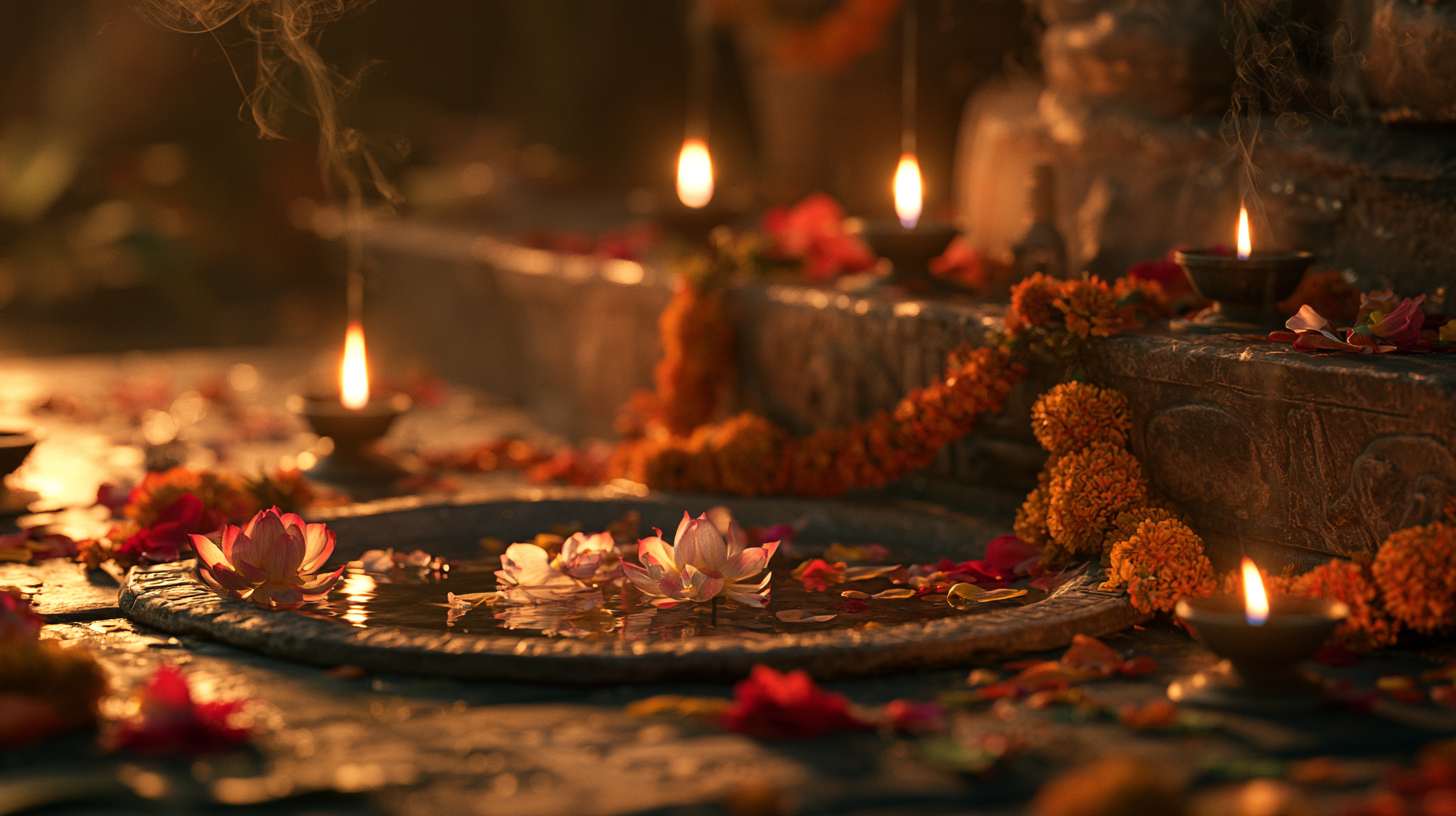
How it is made.
Where it begins.
What it actually is.
Every piece in Floral Alchemy begins in a garden and ends as a wearable object, but the distance between those two things is longer and stranger than it might appear. It passes through several years of growing, through the specific conditions of a single harvest day, through a press, through a drying period, through the particular alchemy of resin that makes a living thing into something that can be worn for a lifetime.
This drawer is a primer on that journey. Not a how-to — the practice is not something that transfers through instructions. But an introduction to what is happening, and why each stage matters, for those who want to understand what they are wearing when they wear a piece from this studio.
Every flower in every piece was grown by Luli, on her land, from seed or from division. There is no supplier. There is no farm upstate, no wholesaler, no market visit. The chain from soil to skin is unbroken and entirely known. That is the foundation of everything that follows.
The Practice
Growing
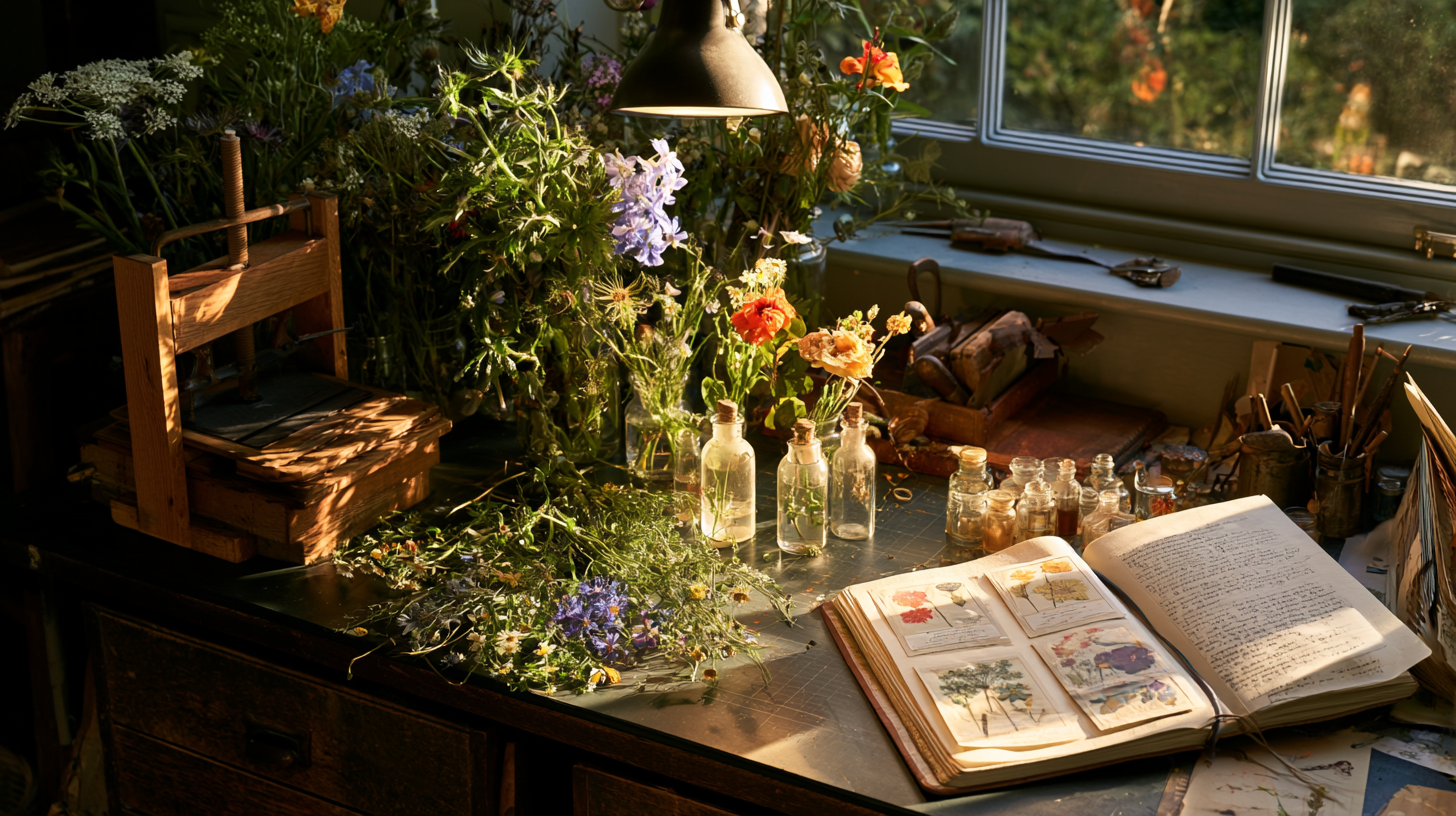
The work begins in late winter with seeds — over 200 varieties of flowers, selected for color, form, pressing behavior, and what they say. Celosias, violets, larkspur, strawflowers, goldenrod, lavender, and dozens more, all grown without synthetic inputs on Luli's land. The growing season determines everything: what is available, what performs, what surprises.
Harvesting
Timing is everything. A flower harvested too early or too late will not press well, will fade quickly, or will lose the structural integrity that makes it wearable. Each species has its window — sometimes a matter of days, sometimes hours. Harvest happens by hand, stem by stem, at the moment of peak form.
Pressing
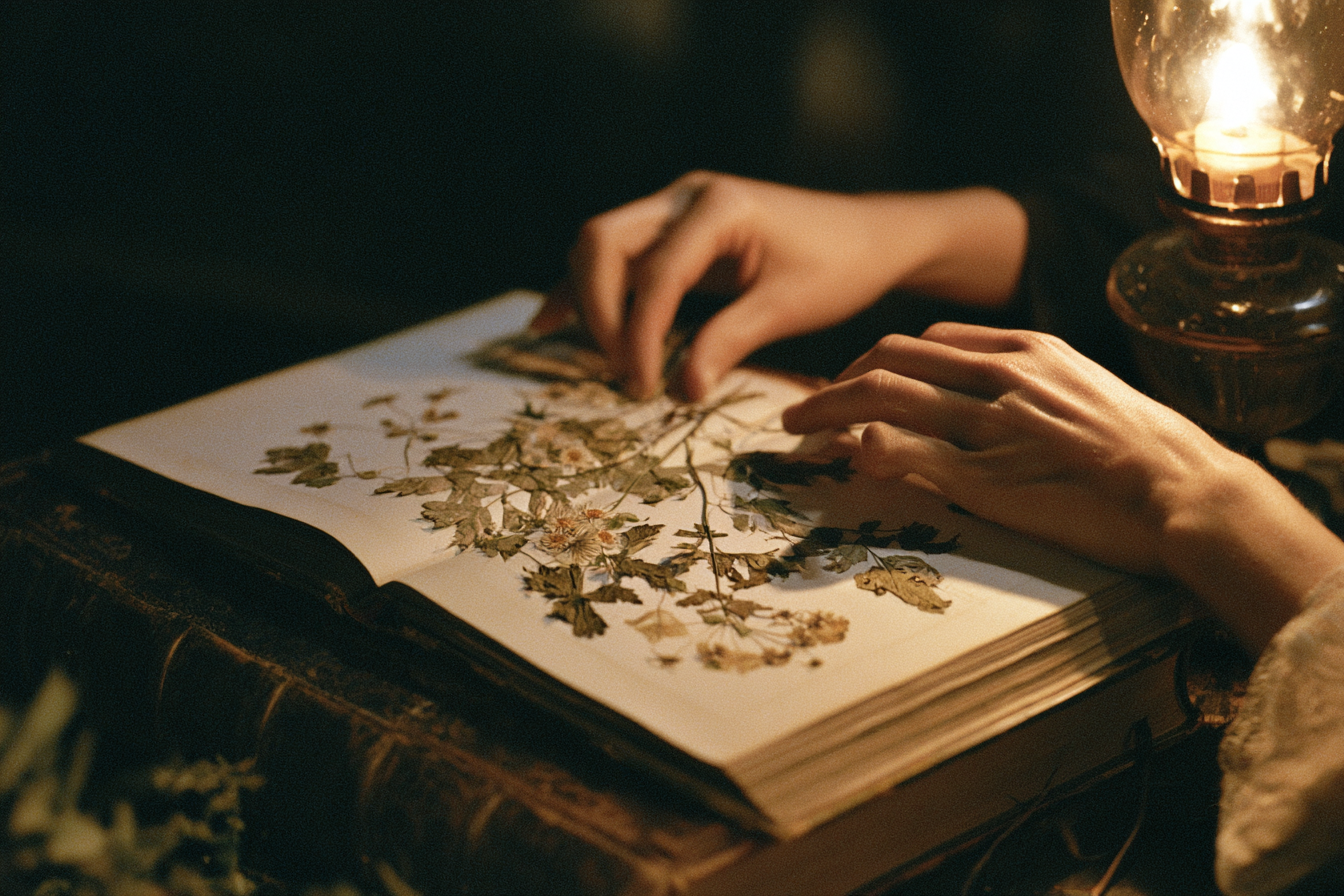
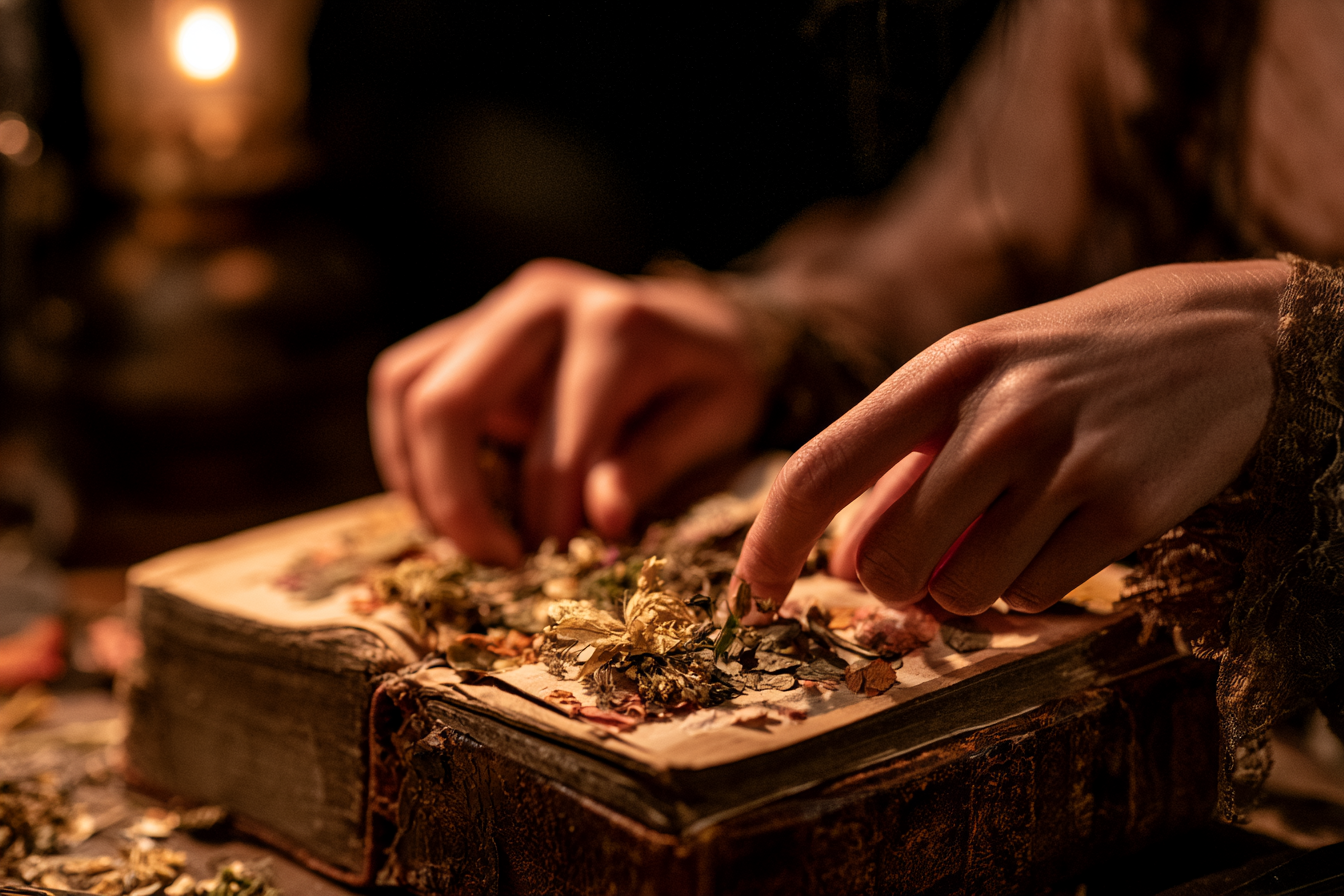
Flowers are pressed flat between layers of absorbent paper under even, sustained pressure. The pressing removes moisture while preserving form and, to a remarkable degree, color. Most flowers require two to four weeks. Some take longer. The press is where the flower stops being perishable and becomes permanent. It is the threshold the piece passes through exactly once.
Composing
A pressed flower does not become a piece automatically. Each composition is designed — the arrangement of specimens, the relationship between species and colors and forms, the intention behind each placement. This is the stage that most resembles what people think of as "art," though Luli would say the growing is equally creative and far more demanding.
Setting in Resin
The composed flowers are set in botanical resin — a clear, hard-setting medium that preserves the specimen, protects it from moisture and handling, and creates the jewel-like quality that makes the piece wearable. The resin is poured in stages, each layer cured before the next is added, to ensure clarity and prevent air bubbles. The finished surface is then sanded and polished by hand.
Setting in Metal
The finished resin piece is set into its metal finding — the frame, the bail, the clasp — by hand. Each piece is inspected at this stage for clarity, for the integrity of the composition, and for any imperfection in the surface. What passes this inspection is the piece. What does not goes back.
The Threshold Moment
The flower press is among the most ancient and most unchanged of botanical tools. The principle has not varied in five centuries: even pressure, absorbent material, and time. What has improved is the understanding of which flowers respond to which conditions — the papers that draw moisture without sticking, the weight that compresses without crushing, the duration that dries without fading.
There is something philosophically significant about the press. It is the moment at which the flower's life in time ends and its life as form begins. The same flower that would be unrecognizable in three weeks if left in a vase is, under pressure, perfectly itself a hundred years from now. The press is not preservation. It is transformation.
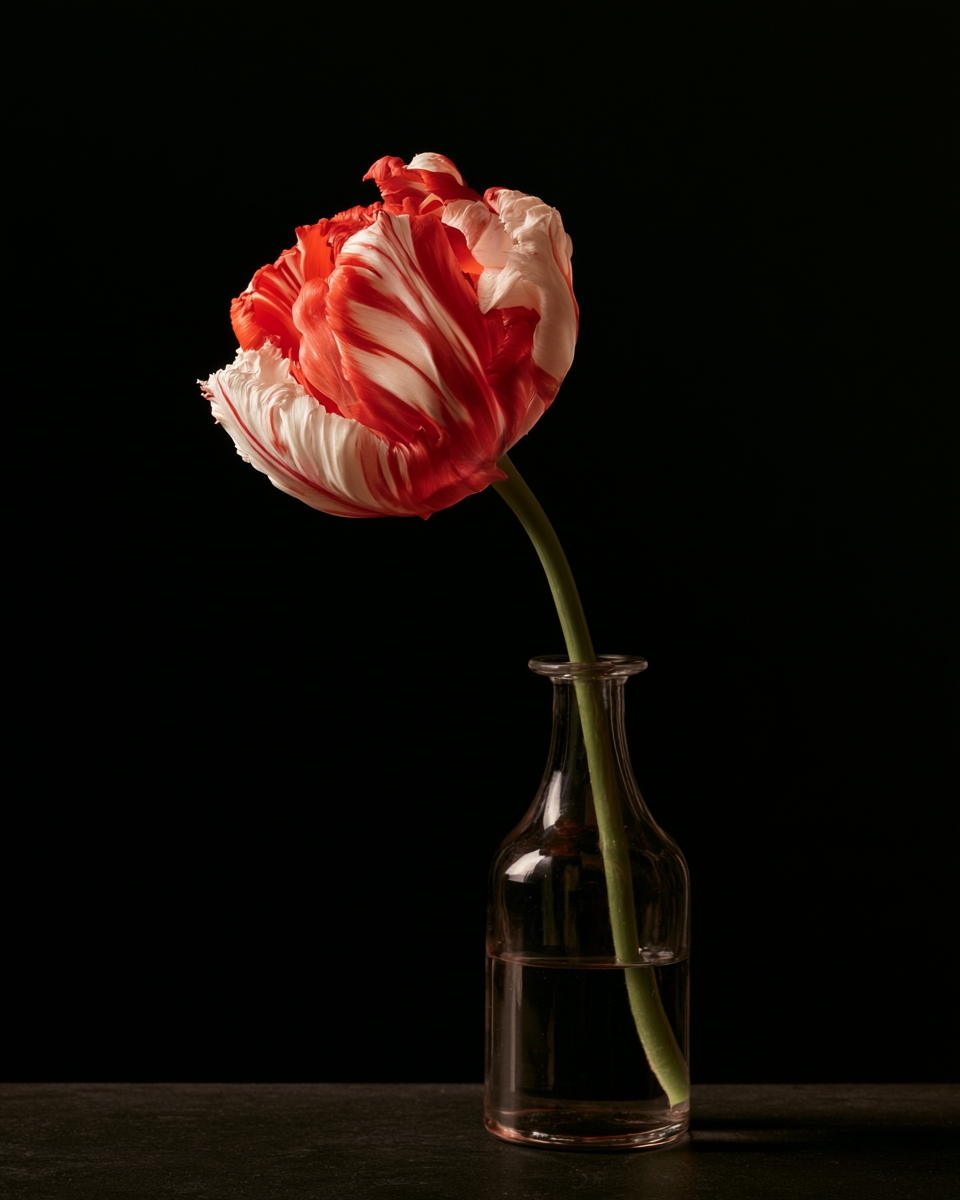
A tulip. The flower that started a mania, built a legend, and still, centuries later, holds more variation in a single species than almost any other cultivated flower in the world.
What You Are Wearing
The piece you receive is a botanical record: a specific flower, grown in a specific season, pressed at a specific moment, set permanently into something you can carry with you. It is not a facsimile. It is not a photograph. It is the actual specimen — its actual color, its actual form, the actual weight and proportion of its petals on the day it was pressed.
It will not fade significantly in your lifetime if cared for. It will not deteriorate. It will remain, in its resin setting, exactly as it was on the day it was made — a small, permanent record of something that was alive, and of the hands that grew it, harvested it, pressed it, and set it.
That is what Floral Alchemy makes. Not jewelry that happens to have flowers in it. Flowers that have been made into something you can wear.