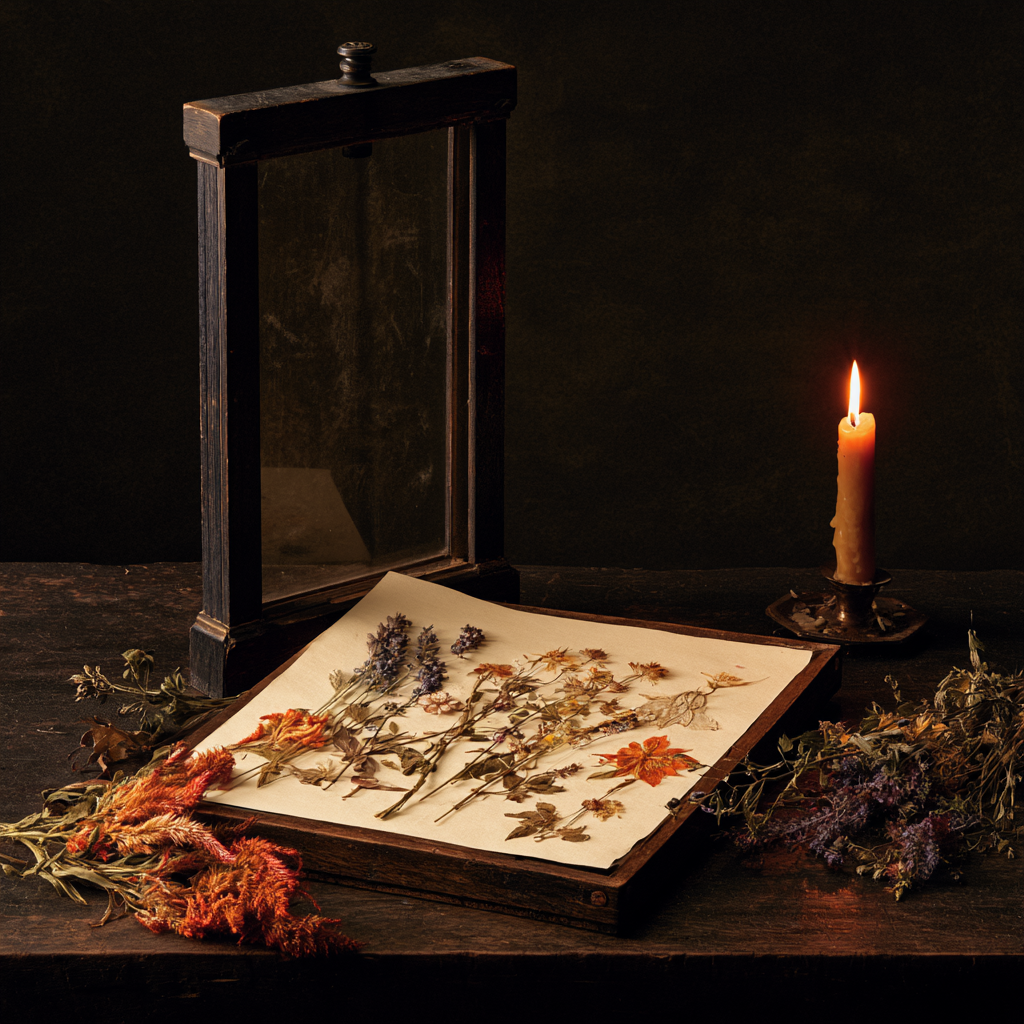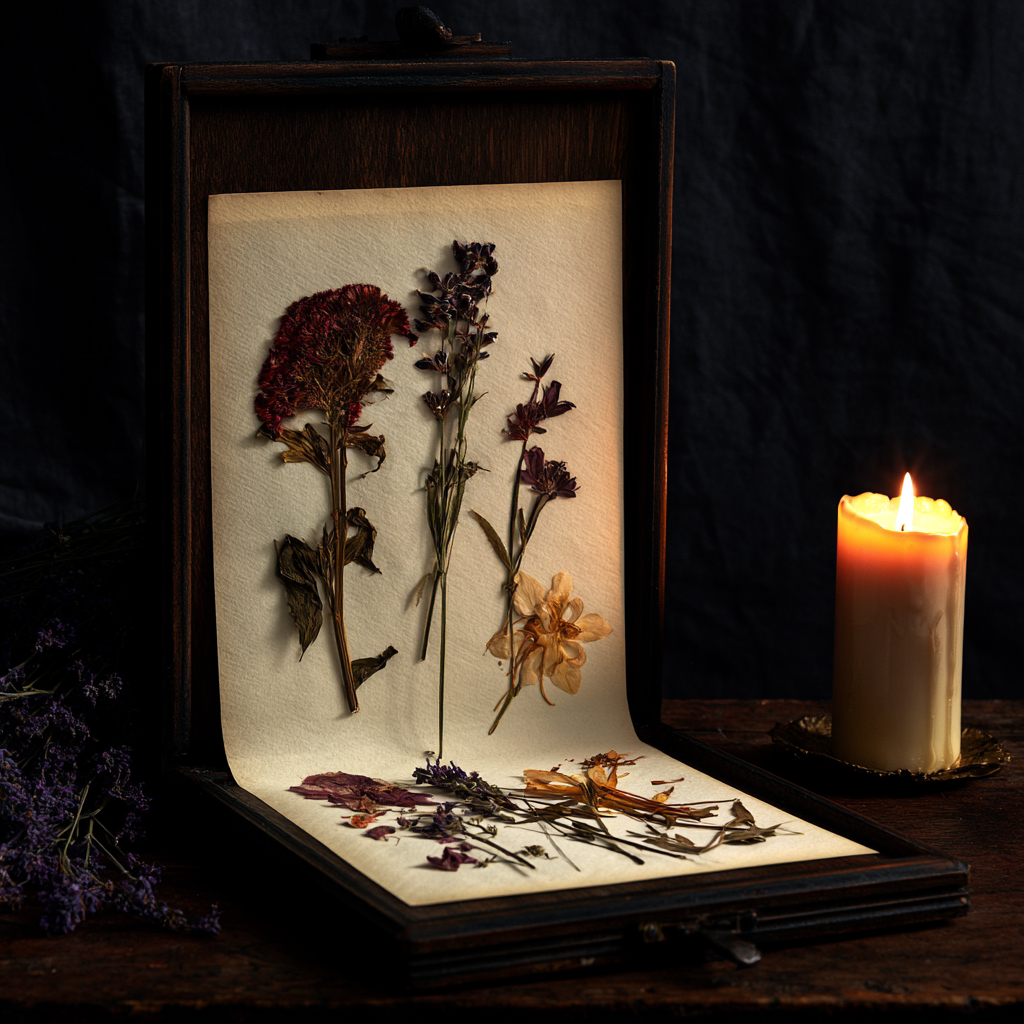
Every flower in a Floral Alchemy piece was grown on this land and then preserved before it ever touched resin. That step — preservation — is the whole middle of the story. The method determines what survives, and not everything survives every method.
There are three approaches used here: air drying, silica gel, and pressing. Each suits a different kind of flower. A dahlia that air dries will collapse and shrivel. A strawflower buried in silica is wasted effort — it will hold its form in open air without any intervention at all. Knowing which flower wants which method is part of the practice.
What follows is a record of how it is done — the trays, the bundles, the weeks of waiting, and what comes out on the other side.
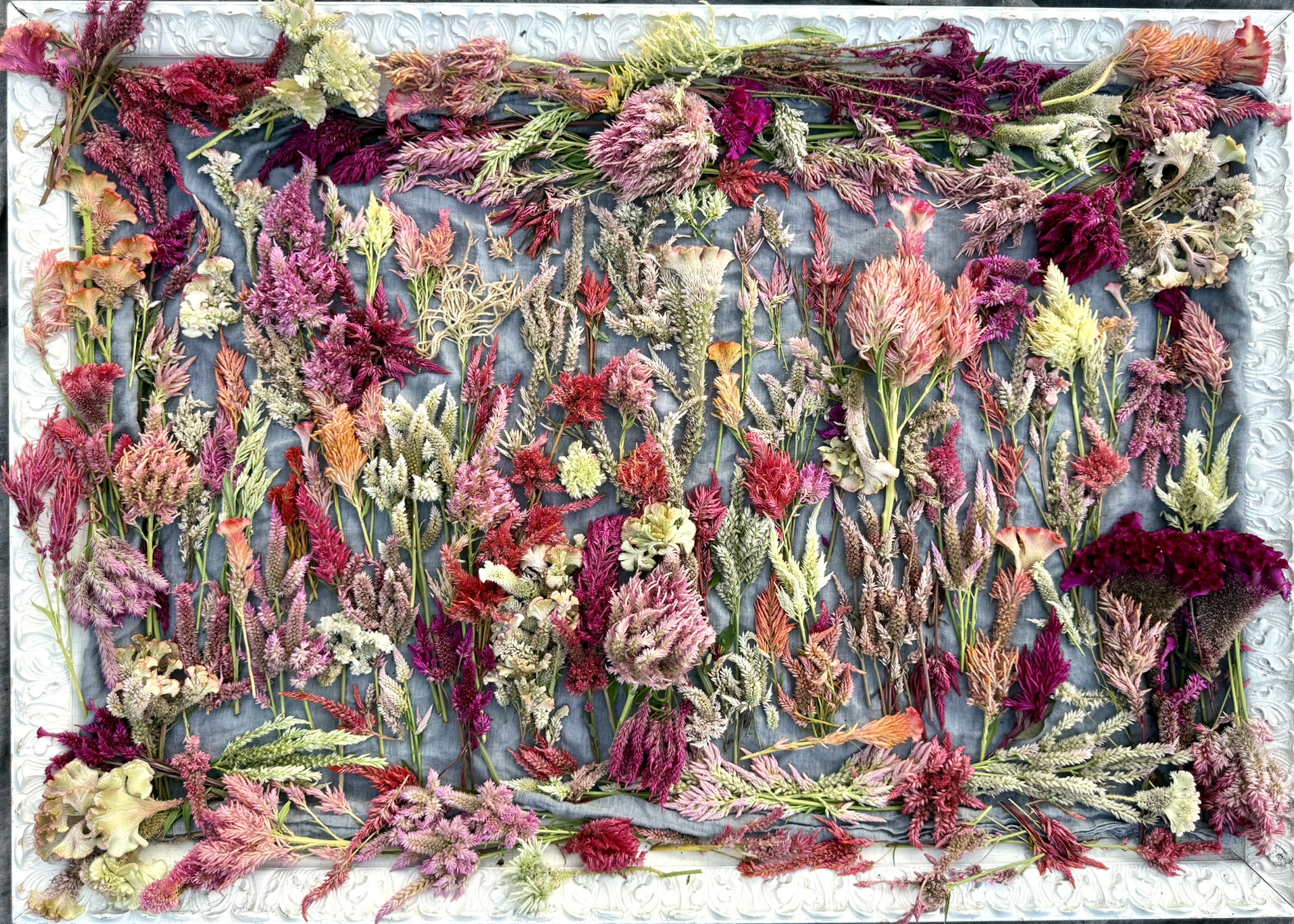 The collection — celosia and gomphrena grown on this land, dried whole
Some flowers were designed to be dried. Strawflowers and gomphrena are the best examples — their petals are papery to begin with, stiff and slightly rough at the touch. They are structured in a way that holds together without any intervention. Cut them at peak, hang them upside down in small bundles in a warm space with good air circulation, and leave them alone.
Within two to three weeks, they are ready. The color deepens slightly. The form holds almost exactly as it was on the plant. Celosia — both the plume and the cockscomb types — responds the same way. Amaranth, grasses, statice, most ornamental seedheads. These are the reliable ones, the flowers that want to be preserved.
The wire rack shown below holds a batch mid-process — dahlias and amaranth together, stems down, heads hanging free so air moves around the petals evenly. The whole structure looks like a garden suspended in time.
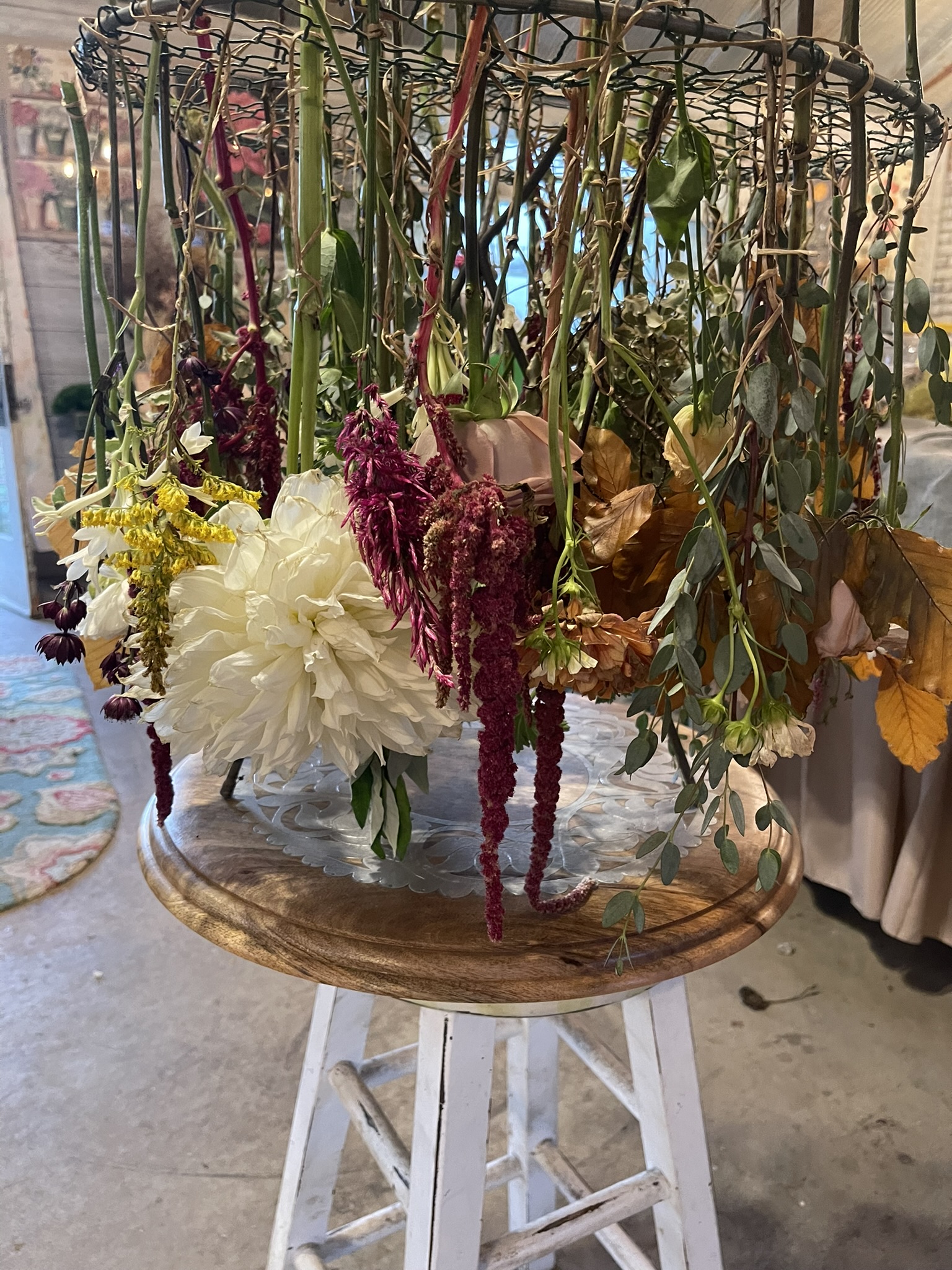
A wire cage inverted over a wooden stand becomes a drying station. Stems thread through the wire so each head hangs free, with air moving around it from all sides. No touching, no crowding.
The dahlia in the center — cream, full-petaled — will take three to four weeks. The hanging amaranth will be ready sooner. Everything waits at its own pace.
Of all the flowers that air dry, strawflowers are the most extraordinary. They change almost nothing in the process — the papery bracts hold their color, the center holds its structure, the stem holds its form. A dried strawflower looks like a flower that simply decided to stop moving.
Gomphrena behaves similarly: small, clover-shaped heads in crimson, magenta, and rose that dry into perfect spherical pompoms. Both are grown in abundance here because both go directly into the resin without any intermediate step.
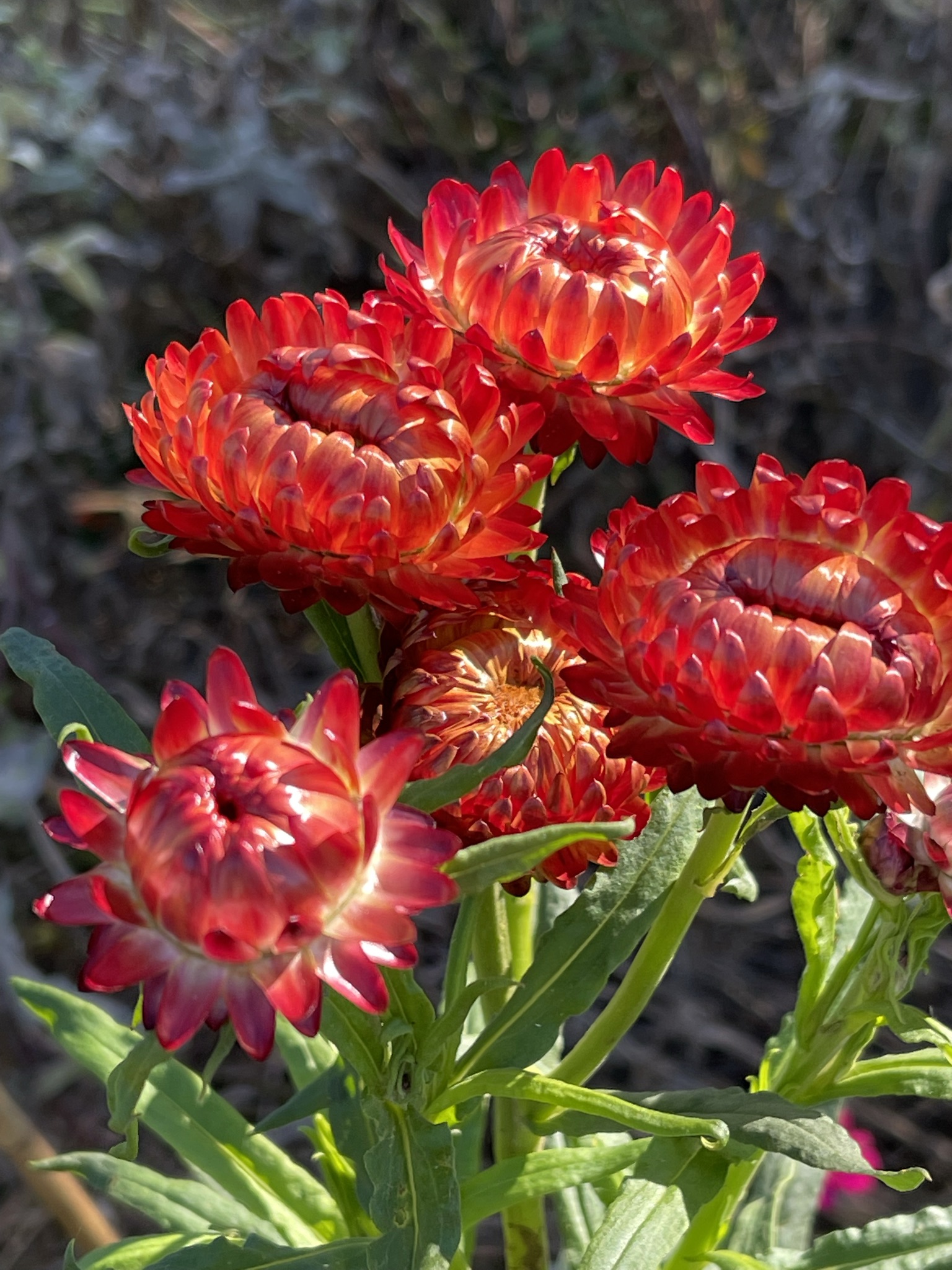
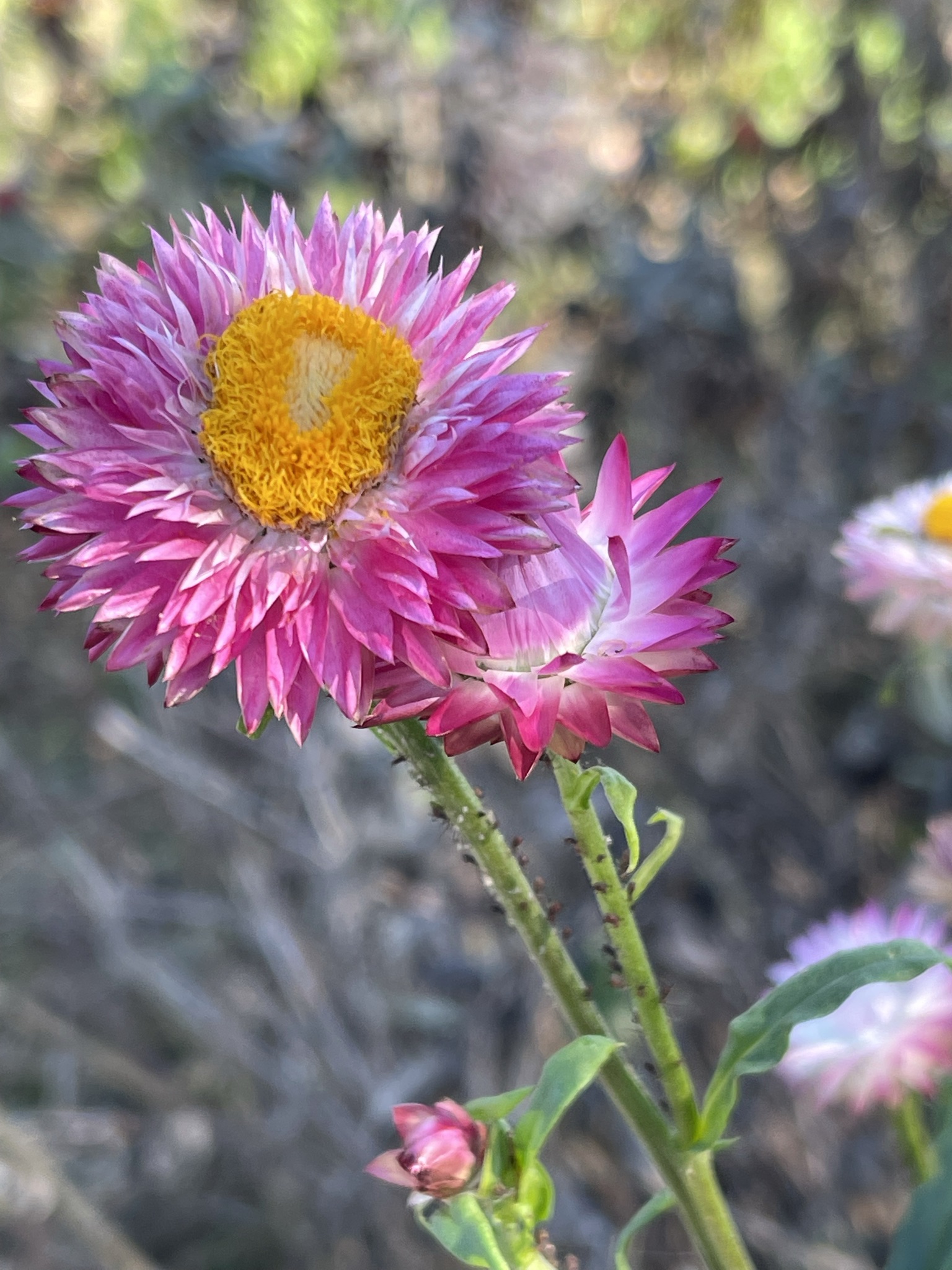
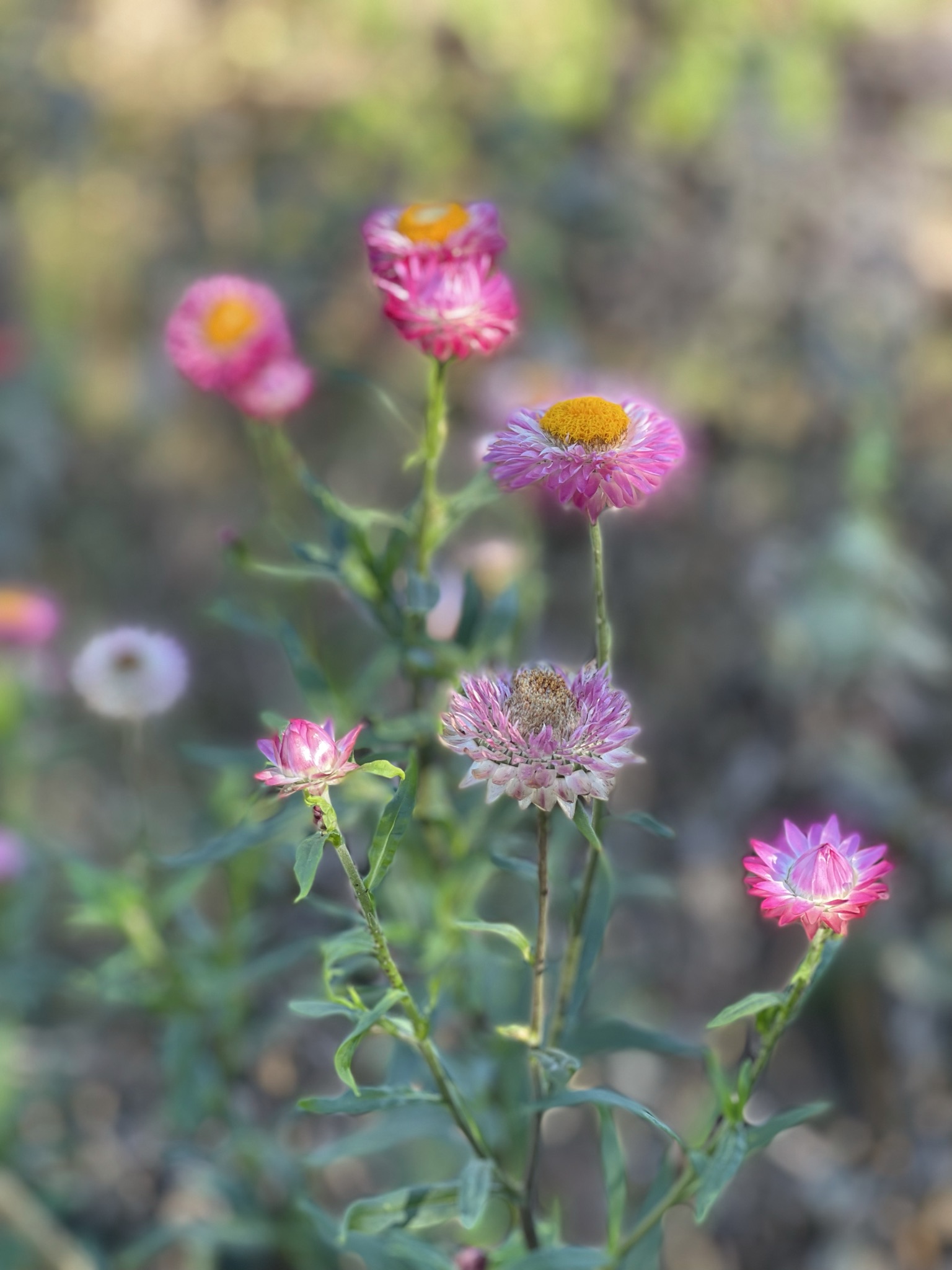
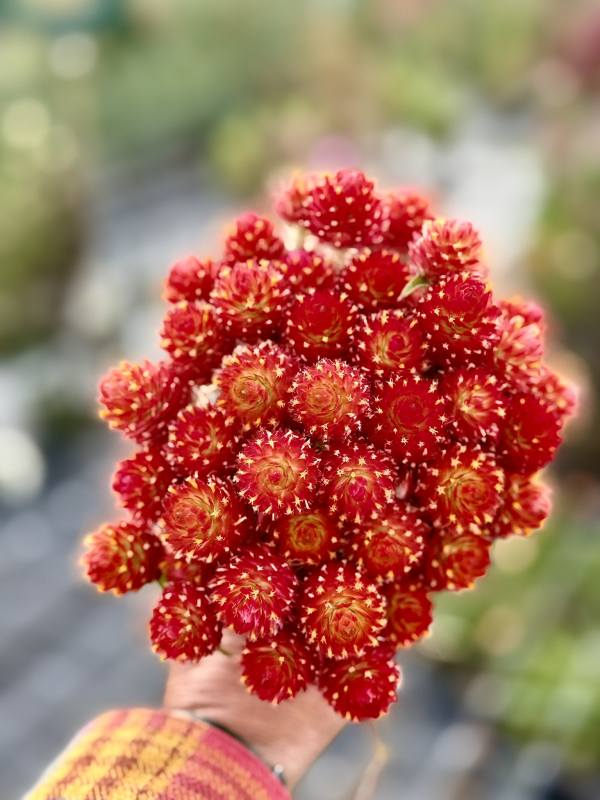
Gomphrena — one of the most reliable air-dry flowers grown here
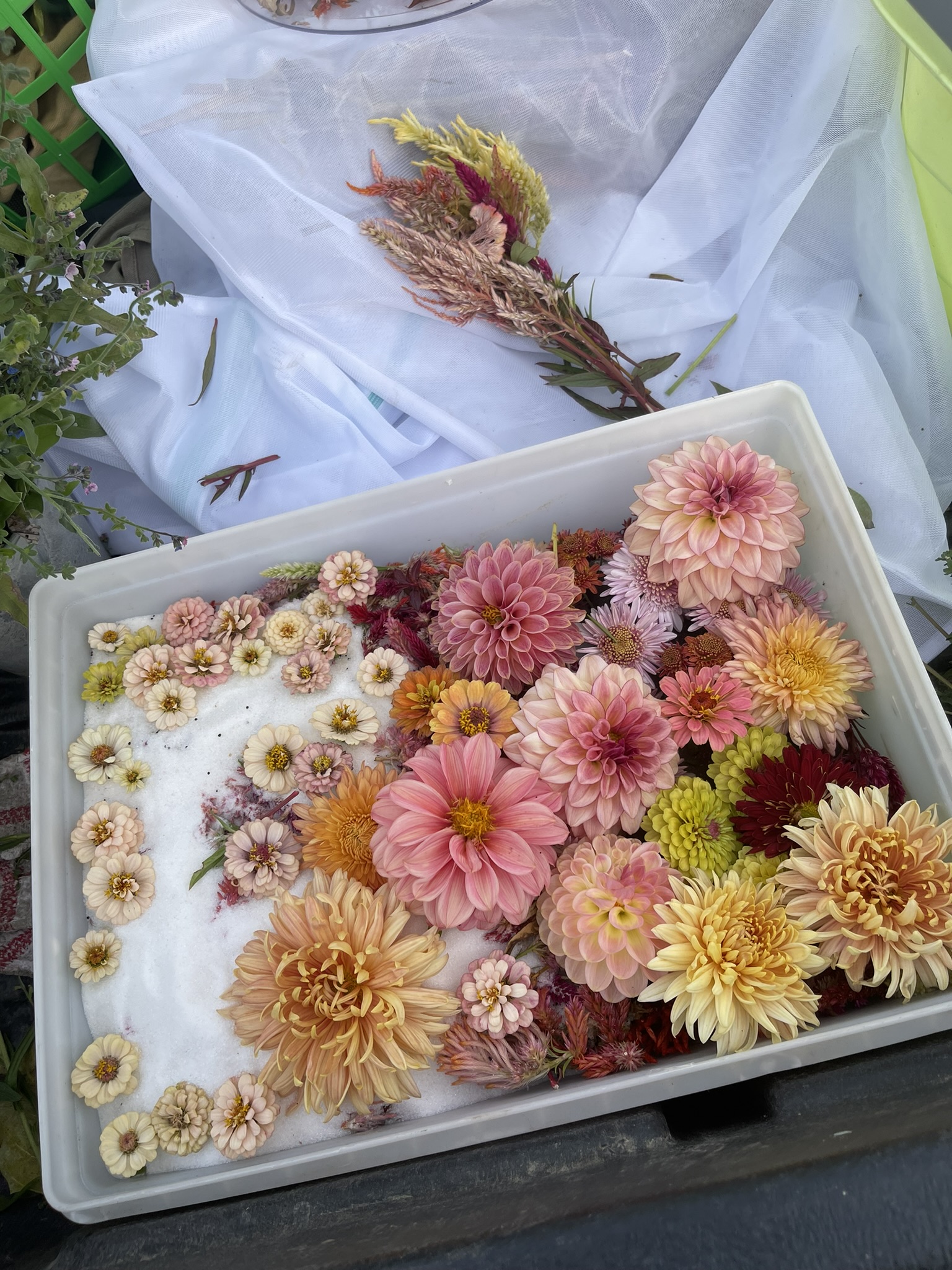
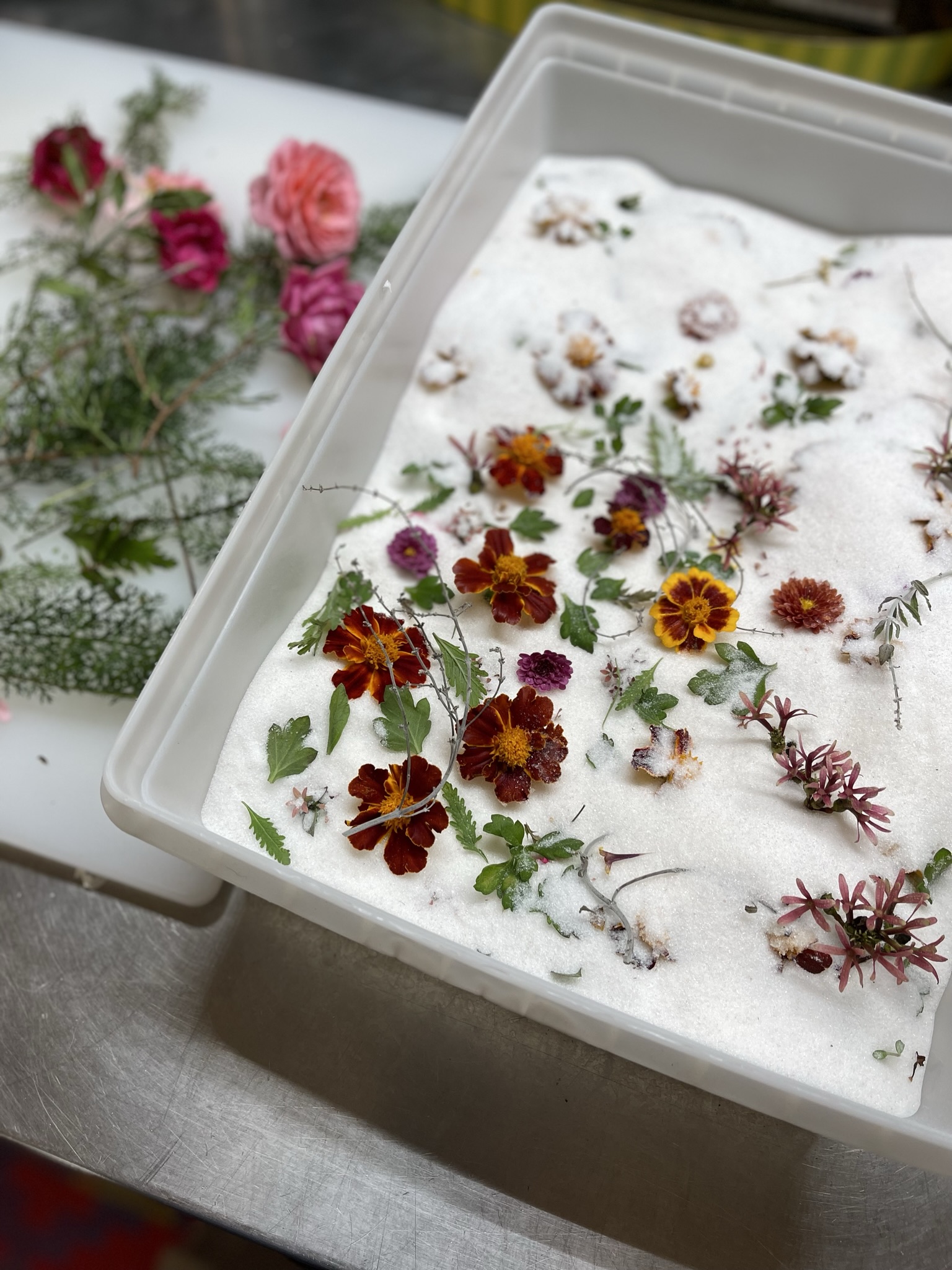
For flowers that would collapse or shrivel in open air — dahlias, zinnias, roses, marigolds — silica gel is the preservation method. The flowers are laid face-up in a shallow tray of silica crystals, then gently buried until completely covered. The silica draws moisture out of the petals slowly and evenly, from all directions at once.
This is why the form survives. A dahlia preserved in silica looks almost fresh — the petals hold their curve, the layering holds its depth, the center retains its detail. It takes one to two weeks, depending on the flower's water content. When it is done, each bloom is lifted out of the crystals and brushed clean with a soft brush.
The process is shown below: a full tray of dahlias and zinnias just beginning their time in silica, and a second tray with marigolds — smaller heads, more numerous, arranged so no two petals overlap. Foliage — ferns, delicate greens — can also be silica-preserved using the same method.
Pressing is the oldest of the three methods and the most demanding of patience. Flat-faced flowers — violets, pansies, single-petal blooms, most wildflowers — are laid face-down on parchment paper, covered with another sheet, and placed under weight for two to three weeks.
What emerges is a perfectly flat specimen, botanically correct in every detail, preserved in exactly the position it was laid. Violets are pressed here by the hundreds. The image below shows a single batch — dozens of individual flowers separated and arranged before the second sheet goes over them. Behind the parchment, a pile of freshly harvested violets waits for their turn.
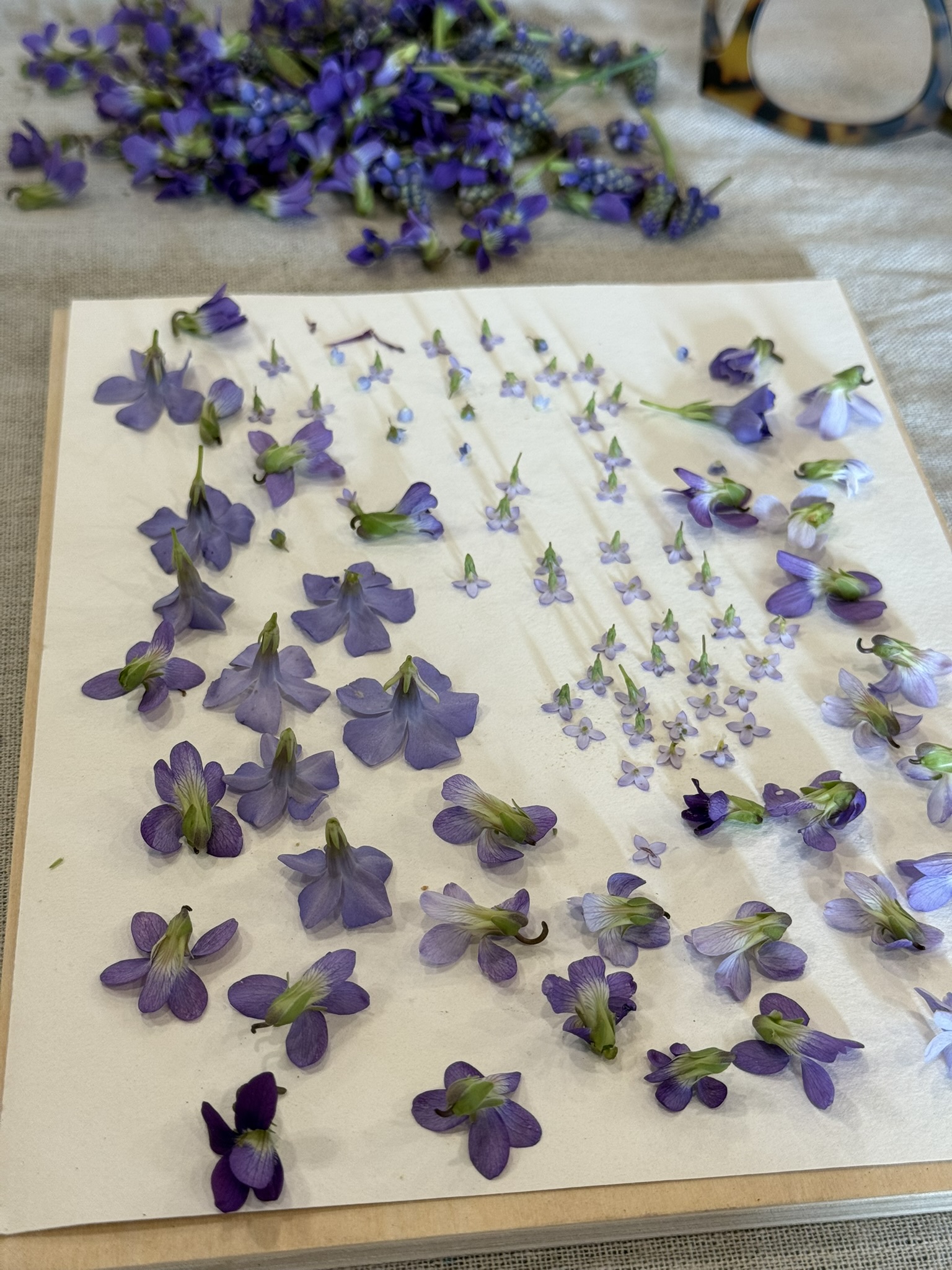
Violets harvested from the property are laid out one by one, face down, each petal positioned before the next flower goes alongside it. The spacing matters — touching petals fuse in the press and cannot be separated without damage.
This single sheet holds perhaps sixty flowers. They will be covered, weighted, and left undisturbed for three weeks. The pile of fresh violets in the background represents the next batch, waiting.
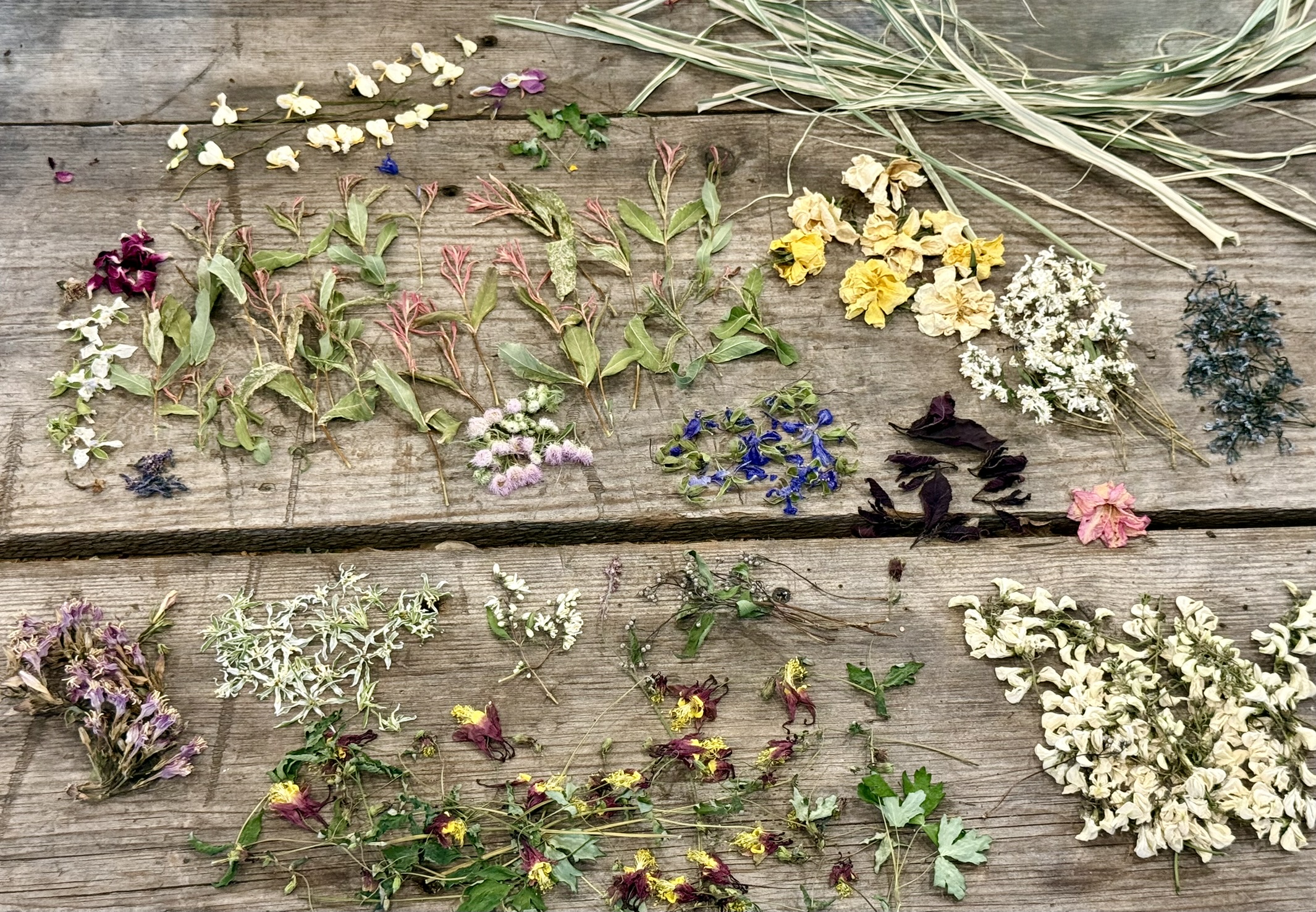 A season's work — sorted specimens ready for selection
The preserved specimens are stored until a piece calls for them. Some flowers are chosen immediately — a certain celosia plume that has the right form for a specific setting. Others wait months until the right piece arrives. The preservation step is also the moment of selection: not every flower that dries is worth using. The ones that are go into the pieces.
Everything in the resin passed through this room first.