31 symbolic concepts encoded into every piece. This is not shorthand — it is a private language built over years of making. Each symbol marks something that cannot be seen but must be recorded.
Form & State
WHL — Whole
Complete, unbroken, held in its original form. The botanical was not altered before it entered the resin.
Form & State
PCS — Pieces
Intentional fragmentation. Beauty found in dissolution — the whole deliberately opened to become something else.
Form & State
CRSH — Crushed
Surrendered form. The moment before full transformation — structure released but not yet dissolved.
Form & State
SHT — Shattered
Radical release. What remains after complete surrender — not broken, but freed into a new arrangement.
Form & State
GRD — Ground
The finest dissolution. Becoming elemental — the plant reduced to the pure pigment of itself.
Form & State
PRS — Pressed
Time-flattened. Memory made thin — the weight of days pressed into two dimensions.
Form & State
SLCA — Silica-cured
Preserved in stillness. The amber moment — the flower suspended exactly as it was at its most alive.
Form & State
HNG — Hung-dried
Suspended between life and fixed form. The slow surrender, upside down, releasing moisture to become permanent.
Form & State
DEH — Dehydrated
Drawn inward. Concentrated essence — water removed so that only the truest self remains.
Concept
WND — Wonder
The original frequency. The reason everything begins — the felt sense that something matters before you know why.
Concept
MEM — Memory
Not nostalgia — the body's own record. What the hands remember without being asked.
Concept
TRN — Transition
The threshold itself. Not the before or after — the charged space of becoming.
Concept
LMN — Liminal
Neither here nor there. The pause between states where everything is still possible.
Concept
ALK — Alchemical
Transformation that changes the nature, not just the form. Something was made that could not be unmade.
Season
SP — Spring
The first language. Emergence, tenderness — the plant finding its form for the very first time.
Season
SU — Summer
Fullness. The loudest moment of being alive — gathered at the peak before the turn begins.
Season
AU — Autumn
The golden surrender. Abundance releasing itself — the most beautiful moment is also the letting go.
Season
WN — Winter
Stillness that holds everything that came before. The garden goes quiet but forgets nothing.
Season
HVT — Harvest
The act of receiving what was given. Not taking — being met by the garden at the moment it offers itself.
Season
FRS — First Frost
The last breath before dormancy. A threshold — gathered at the precise moment everything changes.
Color Palette
GLD — Gold
Not wealth, but warmth. The color of preserved light — summer held past its season.
Color Palette
CPR — Copper
Earth's own alchemy. The color of change — what happens when elemental things meet time.
Color Palette
SLV — Silver
The cooler truth. Clarity and reflection — what the moon says when the sun has gone.
Color Palette
CRM — Cream
Softness. The ground from which all other color rises — the quietest presence.
Color Palette
CHR — Char
What remains after burning. The color of transformation survived — depth that only fire makes.
Moon Phase
NM — New Moon
Beginning in darkness. The invisible potential — everything present before anything is visible.
Moon Phase
WXG — Waxing
Becoming. The rise toward fullness — the feeling of gathering momentum, of something building.
Moon Phase
FM — Full Moon
The moment of complete illumination. Nothing hidden, nothing held back — gathered at the peak.
Moon Phase
WNG — Waning
The return. What is released is not lost — the moon pulling back to gather itself again.
Garden Origin
WLD — Wild
Untamed. Found where it chose to grow — the garden's own decision about where to be.
Garden Origin
CLT — Cultivated
Tended with intention. Grown in relationship — the plant that was asked to be there and came.
Garden Origin
HRL — Heritage
Lineage carried forward. What the garden remembers across years — seed to seed to seed.
Garden Origin
HBD — Hybrid
Two lineages meeting. Something new made from what was — the unexpected conversation between parents.
Garden Origin
SPT — Spontaneous
Self-seeded. The garden's own choice — not planted, not planned, arrived exactly where it wanted to be.
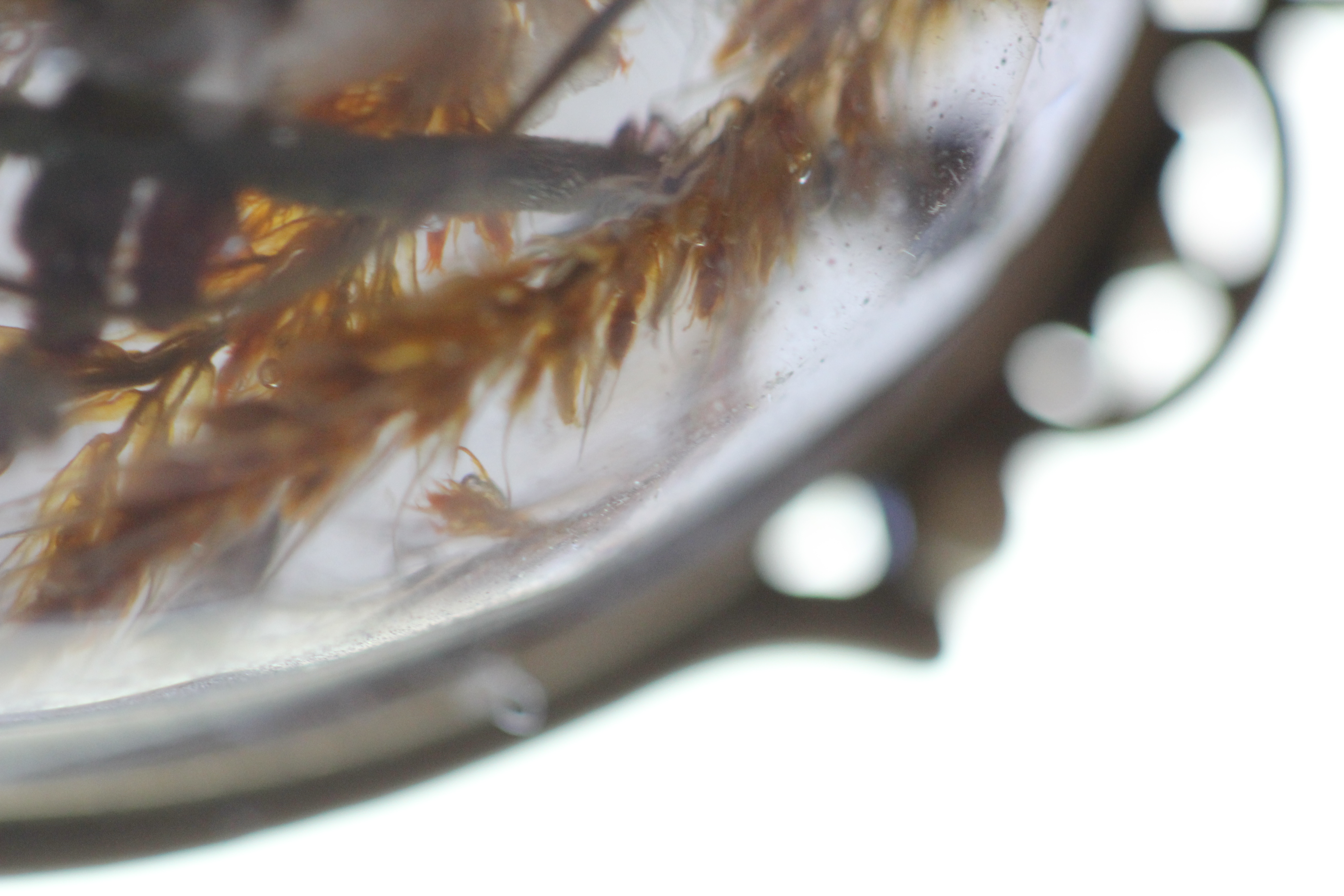
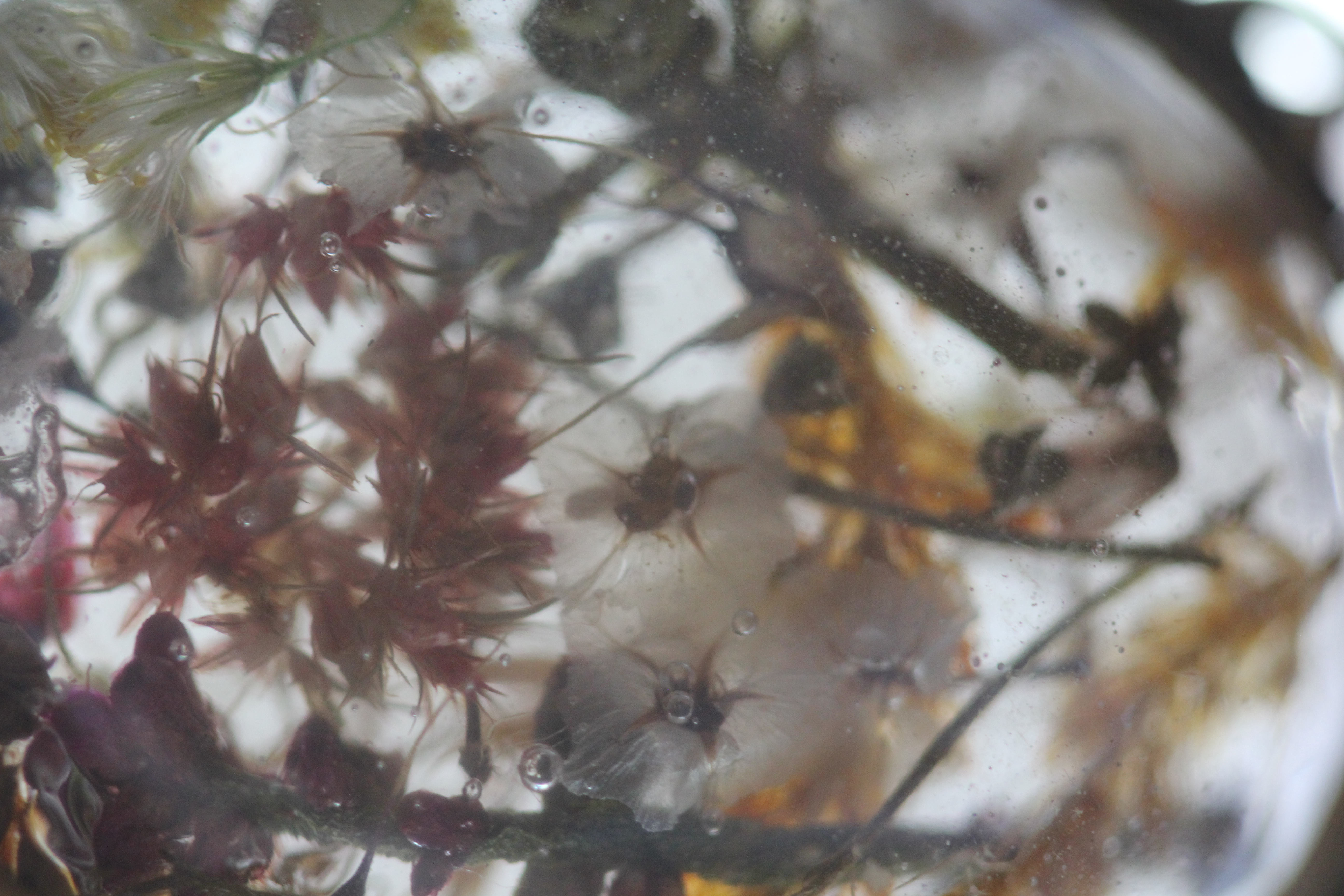
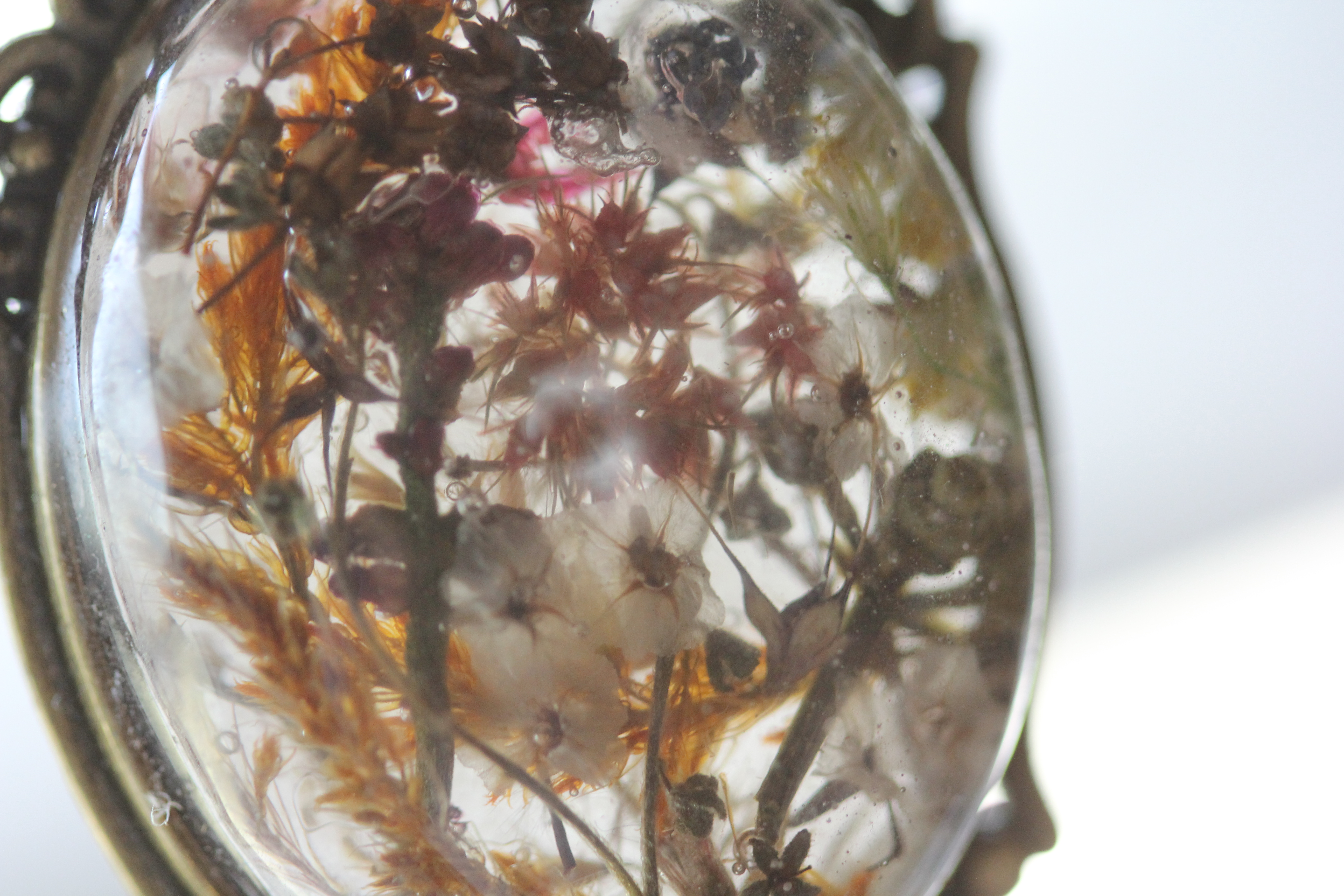 Fig. I — interior detail, resin field