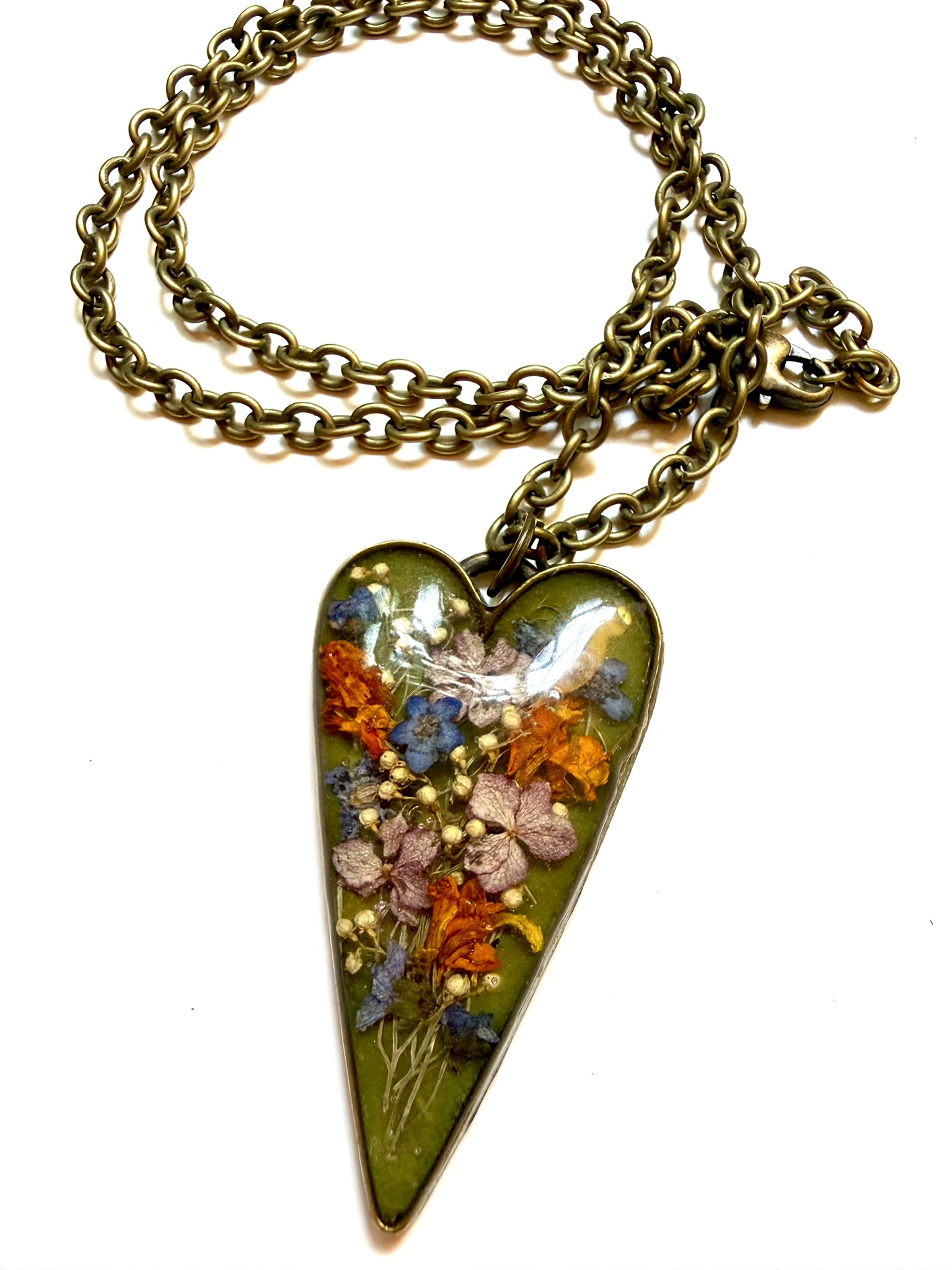



'Juliet'
"What's in a name? That which we call a rose by any other name would smell as sweet." Shakespeare put his most radical question in a garden, spoken by a girl at a window, at night, to no one she could see. She wasn't asking about Juliet. She was asking whether the labels the world gives things actually determine what those things are. Whether a person can be more than what they were named.
Shakespeare was almost certainly connected to the Hermetic and alchemical tradition circulating through Elizabethan England. The Tempest is a Hermetic text. A Midsummer Night's Dream encodes the fairy tradition of the liminal. Romeo and Juliet, at its core, is about two people who find each other across every constructed boundary — family, name, time — and choose the real thing over the official story. The garden is where that conversation happens. Naturally.
This is for the woman who has chosen the real thing over the official story, every time.
Pressed flowers · resin · mixed metals
$295
Each piece is singular and unrepeatable.
When it finds its person, it is gone.