

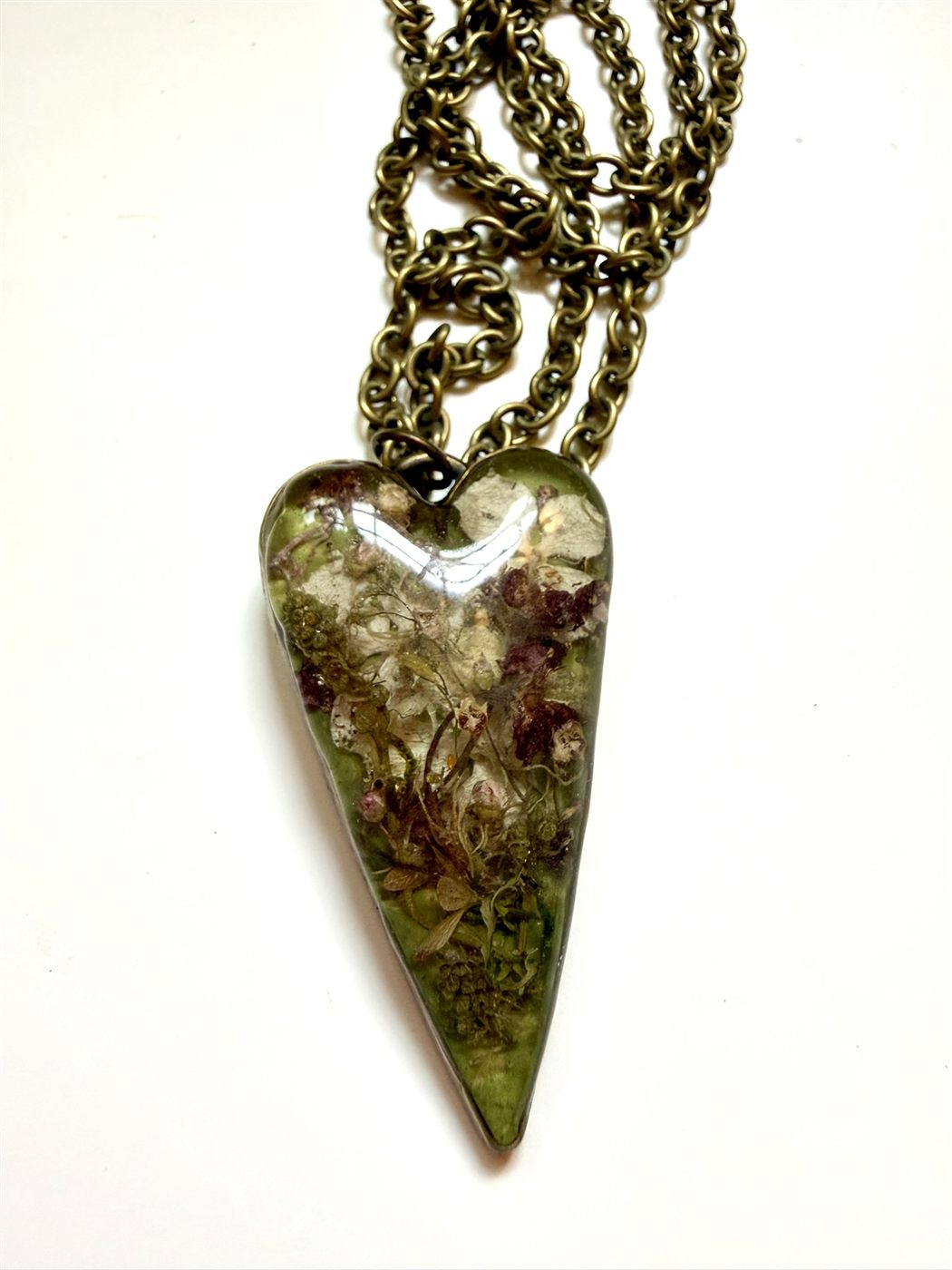

'Ophelia'
In 1851, John Everett Millais needed a model for the drowning Ophelia. He found Elizabeth Siddal — red-haired, twenty-two, a glovemaker's daughter who would become a painter and poet in her own right. She lay in a bathtub filled with cold water for months while he painted her. The oil lamp he'd placed beneath the tub to warm it went out. She said nothing. She caught pneumonia. She nearly died for a painting of dying.
Water in the symbolic tradition is the unconscious. The formless. The world beneath the world. Ophelia drowns because she cannot contain what she has been given to carry — Hamlet's madness, her father's death, a court that gave her no language for grief. She goes into the water because the water is the only place large enough to hold what she feels.
This is for the woman who has been in water that was too cold and stayed anyway, because the work mattered.
Pressed flowers · resin · mixed metals
$295
Each piece is singular and unrepeatable.
When it finds its person, it is gone.