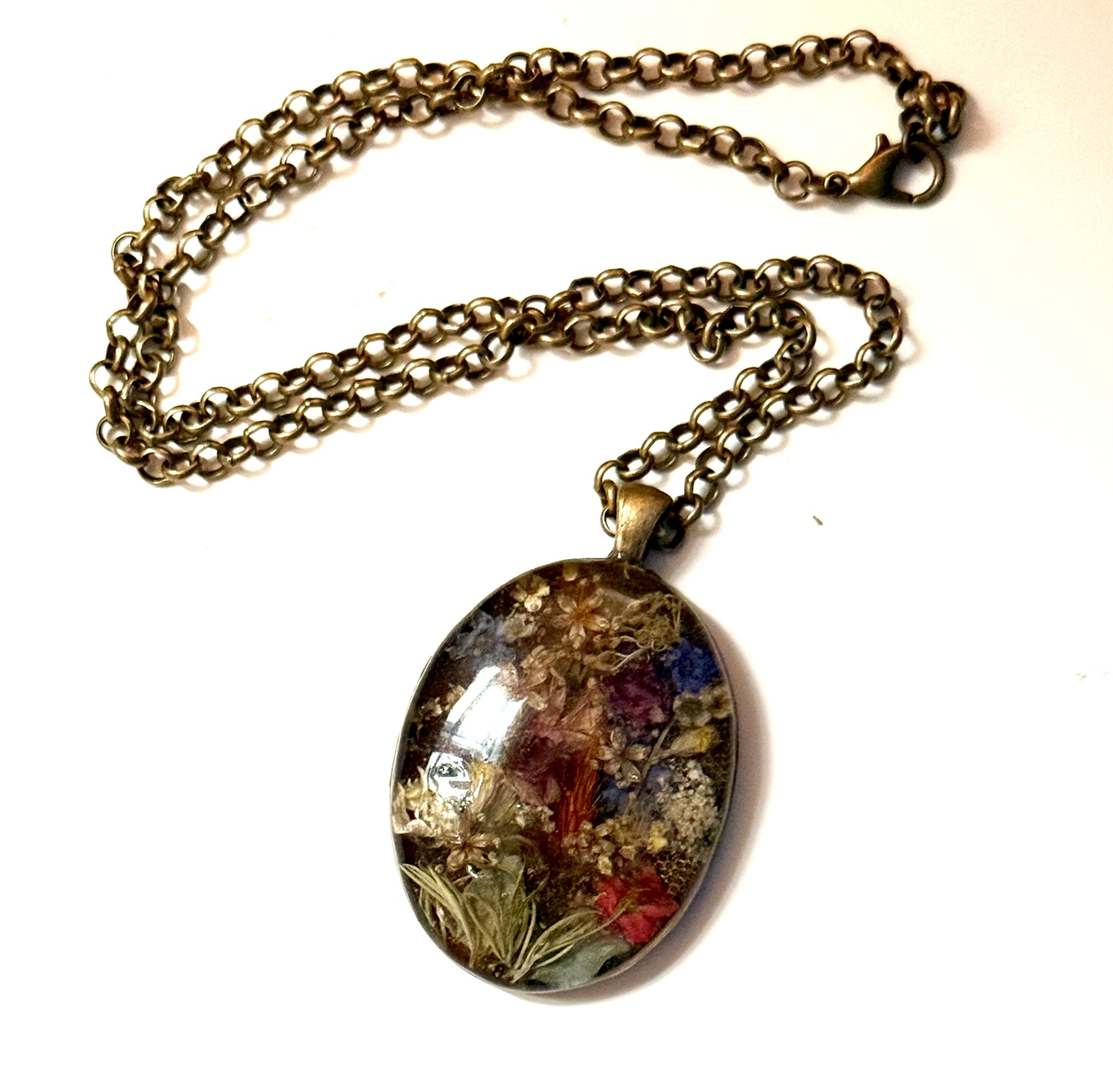
'The Heirloom of Memory'
Epigenetics has provided the first biological mechanism for something humans have always sensed: we carry more than our own lives in our bodies. The experience of our ancestors leaves chemical signatures on DNA — marks that are measurably passed to children and grandchildren, altering how genes express without altering the genes themselves. The memory of a grandmother’s hunger can arrive as anxiety in a granddaughter who has never gone without. The memory of a great-great-grandmother’s garden can arrive as longing that has no obvious source.
A pressed flower kept between the pages of a Bible: not sentimental object but transmission device. A recipe written in fading ink: not mere instruction but encoded knowledge of how to make something nourishing from what the land provides. A phrase repeated until it is part of your thinking: not nostalgia but inoculation. The heirloom is what someone considered worth keeping — which makes it a record of what mattered most to a woman whose name you may not even know.
Some inheritances arrive wrapped in velvet. Others arrive as a pull toward something you have never been taught to name.
This is for the woman who receives old knowing she didn’t know she was carrying — and finally recognizes it when it arrives.
FMN · Y · V4 · D4 · FC · EF · G2 · S3 · P5 · Q · C · Resin · Bronze setting
$265
Each piece is singular and unrepeatable.
When it finds its person, it is gone.
Codex
WI25 · IND · BR · FMN/Y/V4/D4/FC/EF/G2/S3/P5/Q/C · PTL+LF · OADR+SLCA+PND · DP · PCS/WHL
Remembrance · Homecoming · Consecrated