'Threes & Fours'
The number three and the number four carry opposite charges in almost every symbolic tradition. Three is the dynamic, the incomplete-seeking-resolution, the trinity that generates movement: thesis, antithesis, synthesis; maiden, mother, crone; past, present, future. Four is the stable, the complete, the square: the four directions, the four elements, the four seasons, the four chambers of the heart. Three seeks. Four has arrived. Together they make seven — the number of visible planets, of musical notes in the scale, of days in the week — the number that appears more frequently than any other in sacred texts and temple proportions across every culture that has left a record.
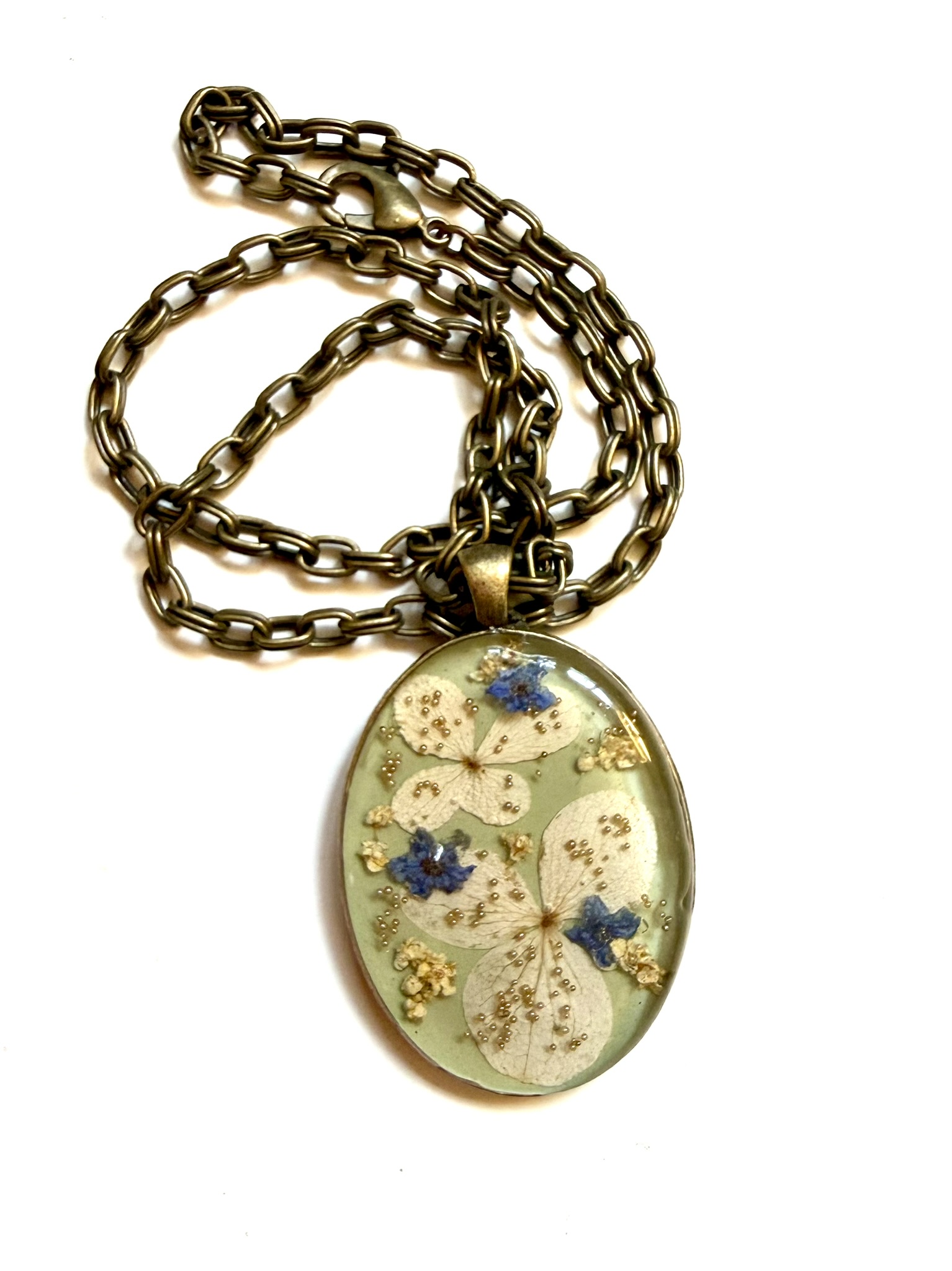
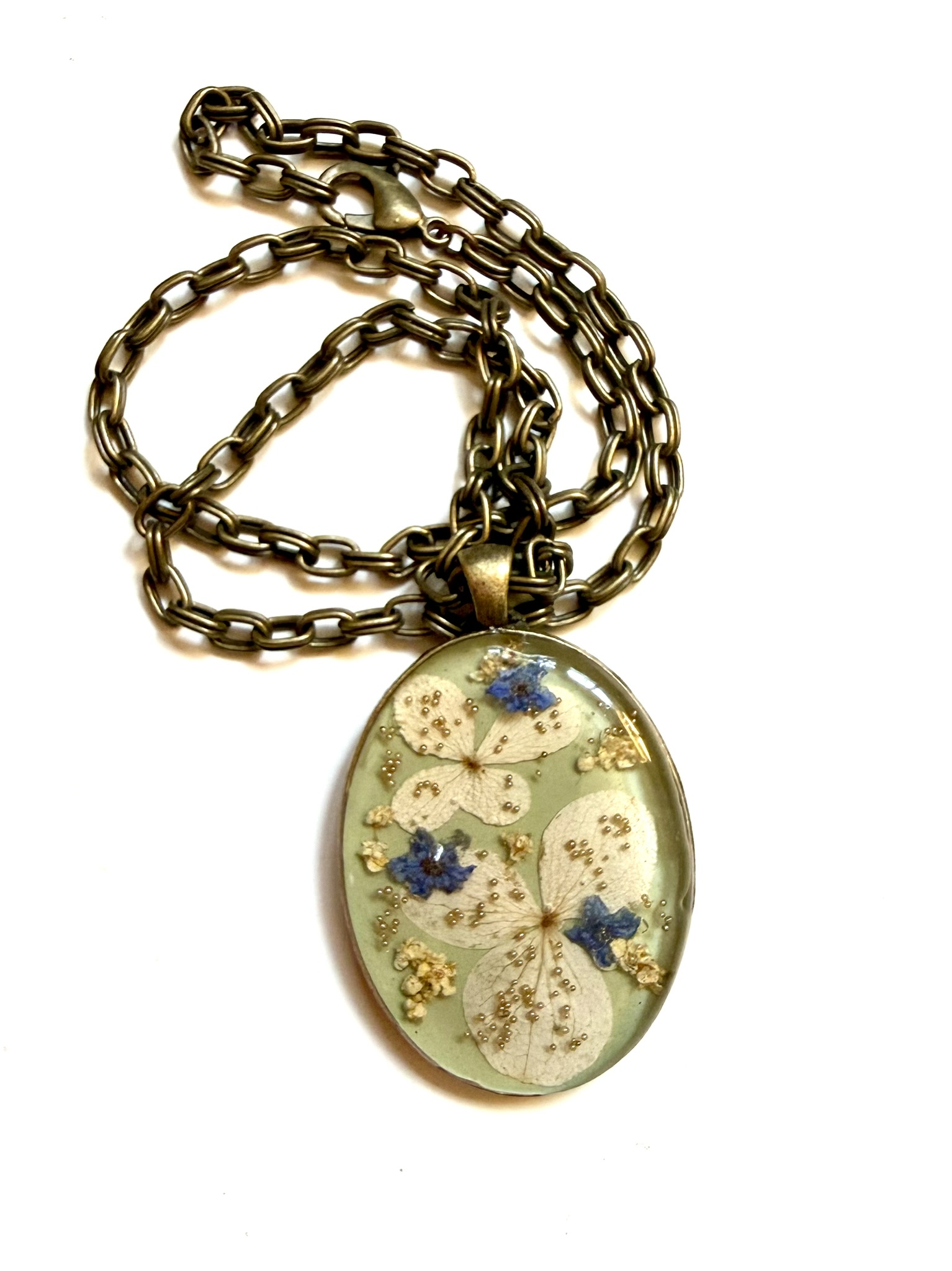
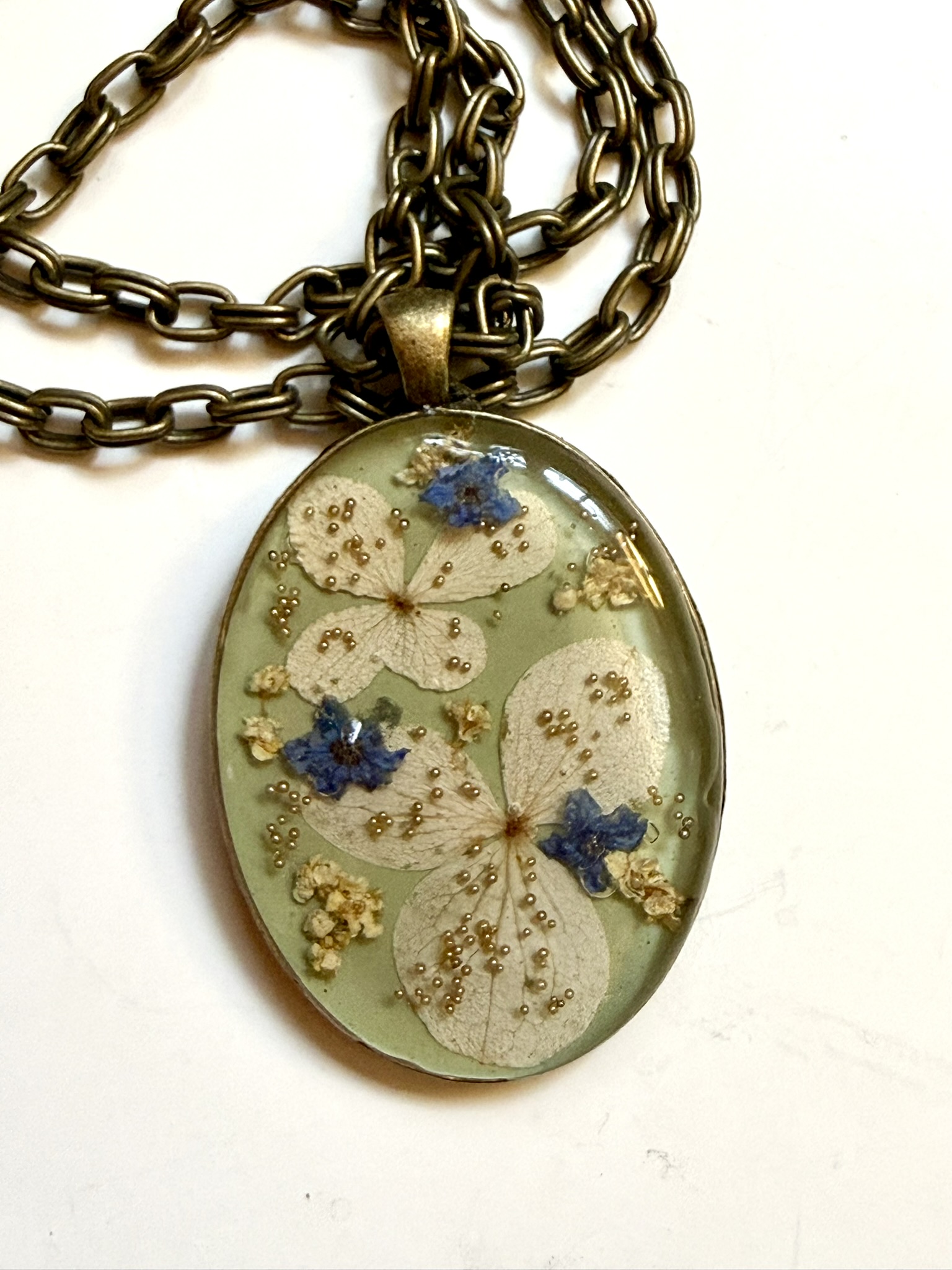
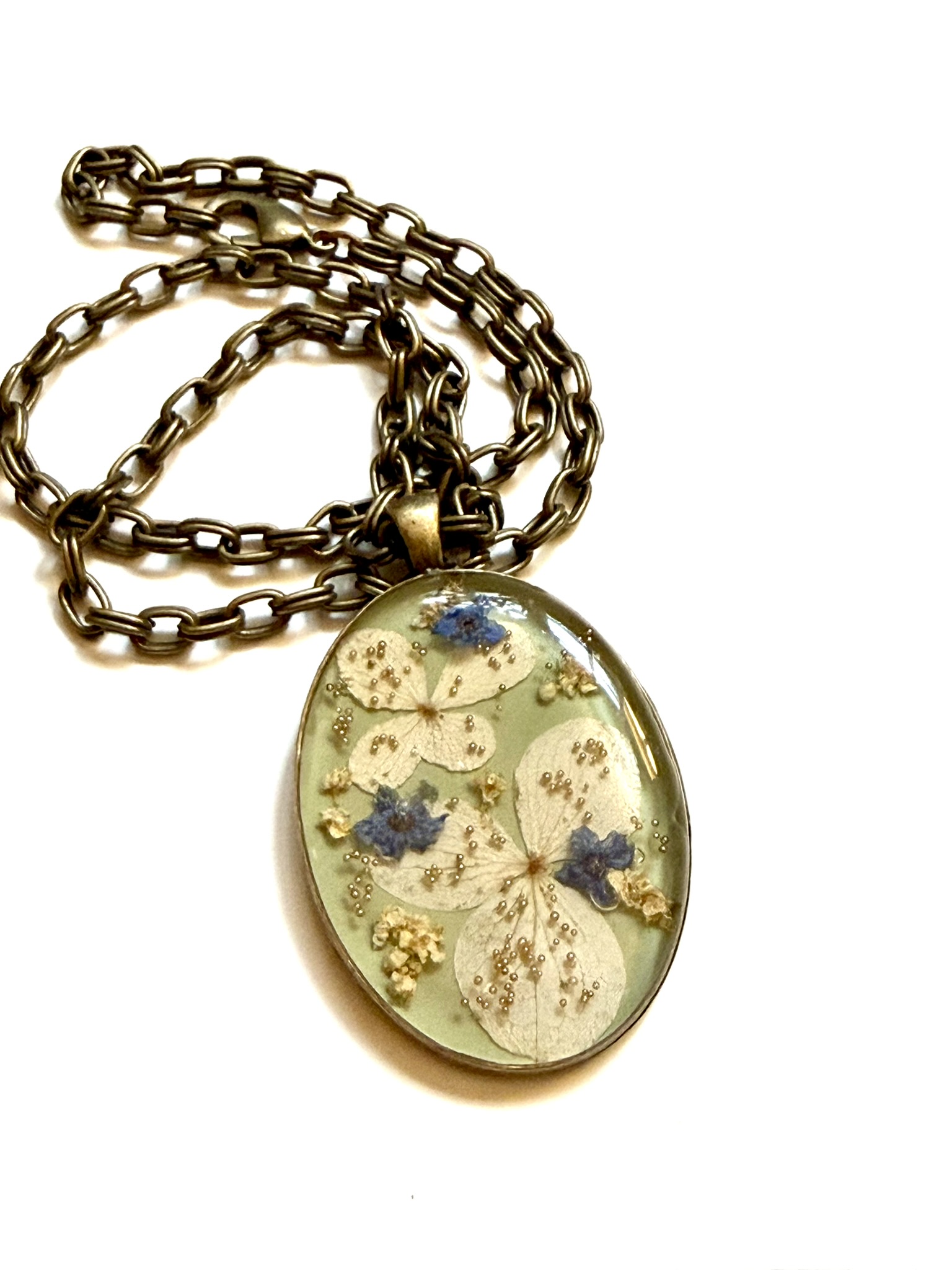
What appears to be the hydrangea’s flowers are not flowers. They are sepals — modified leaves that evolved to attract pollinators to the plant’s actual flowers, which are tiny and central and easily missed. The beautiful display is a structure designed to make the invisible visible. The showy part is in service to the essential part. This is either very efficient or very instructive, depending on what you are looking for.
The hydrangea counts neither three nor four. It simply multiplies until it has said everything it came here to say.
This is for the woman who doesn’t fit neatly into any system — and fills every space she enters completely.
H · V2 · FMN · Resin · Bronze setting
$175
Each piece is singular and unrepeatable.
When it finds its person, it is gone.
Codex
SP26 · IND · BR · oval · H/V2/FMN · DHY+PRS+PND · MED · WHL · gb
Affection · Healing · Minimal