'Will Never Forget'
During the Nazi period in Germany, when Freemasons were banned and their symbols could not be worn, members wore a tiny forget-me-not pin where a Masonic symbol would otherwise be — to recognize each other in public while remaining invisible to those who didn’t know the code. A flower as a survival strategy. The smallest possible signal carrying the most essential message: I remember. I am still here. We are still here. The resistance encoded in the humblest flower anyone could think to choose.
The forget-me-not appears in the folk mythology of nearly every northern European culture as the flower of love that outlasts the circumstances that generated it. Not held in memory as a thought. Woven into the structure of who a person becomes. There is a difference between remembering someone and being someone who was changed by having known them. The second kind of memory is not held in the mind. It is in the way you move through the world, in what you notice, in what you cannot pass by without feeling something.
Some bonds exist below the level of memory. The person is gone. What they left in you is not.
This is for the woman who carries someone not in her thoughts but in her bones — who knows the difference between memory and being changed.
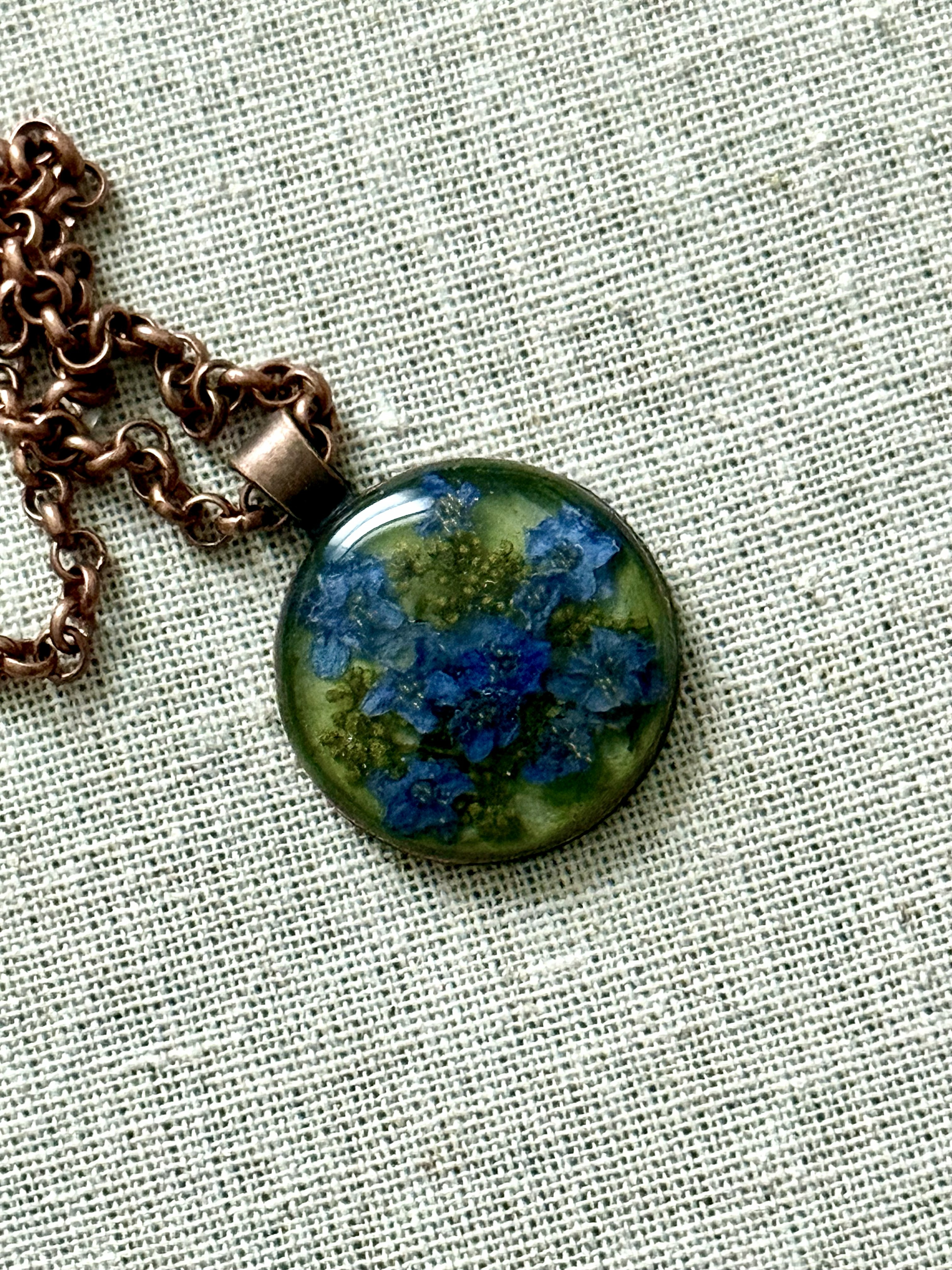
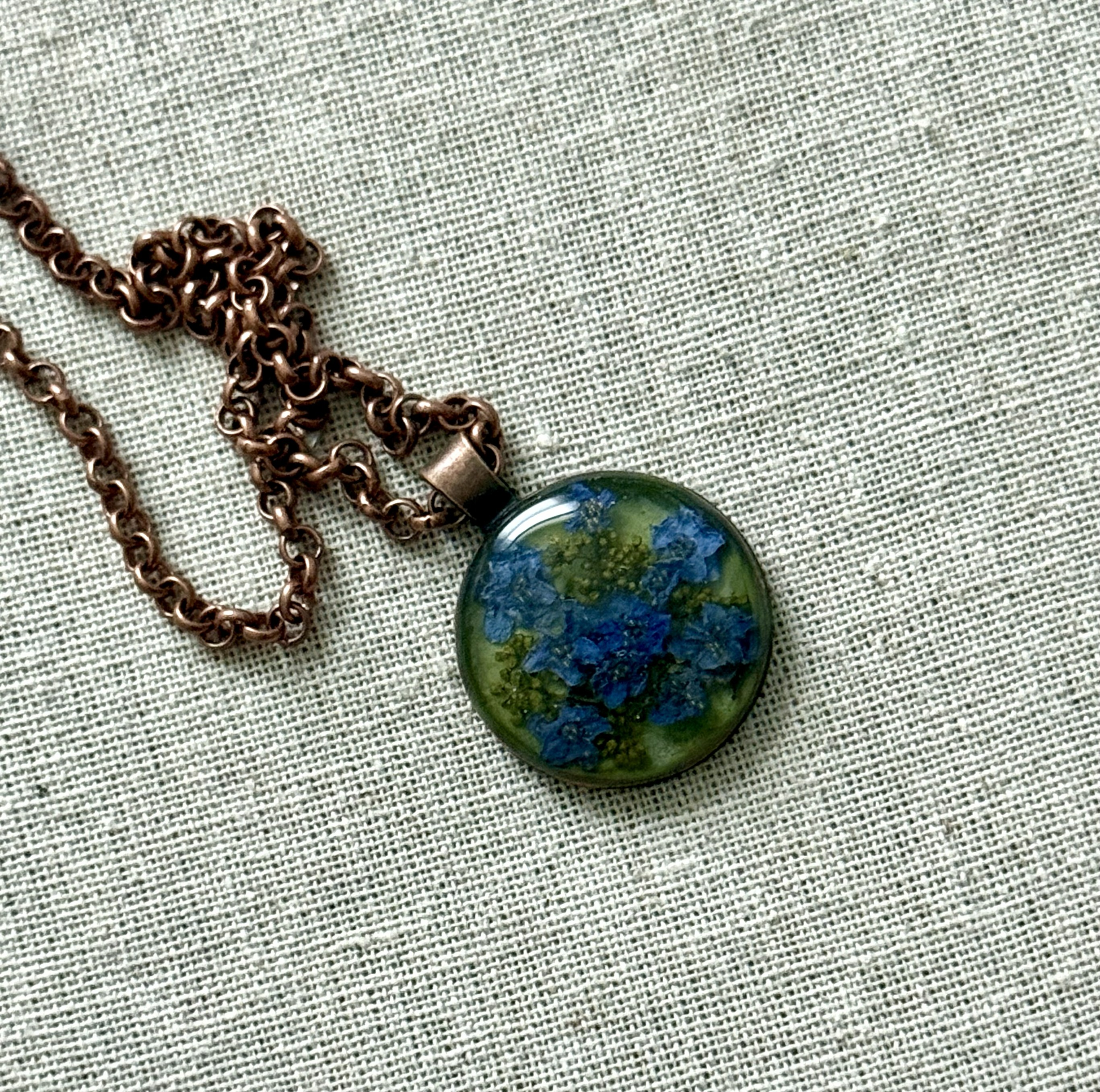
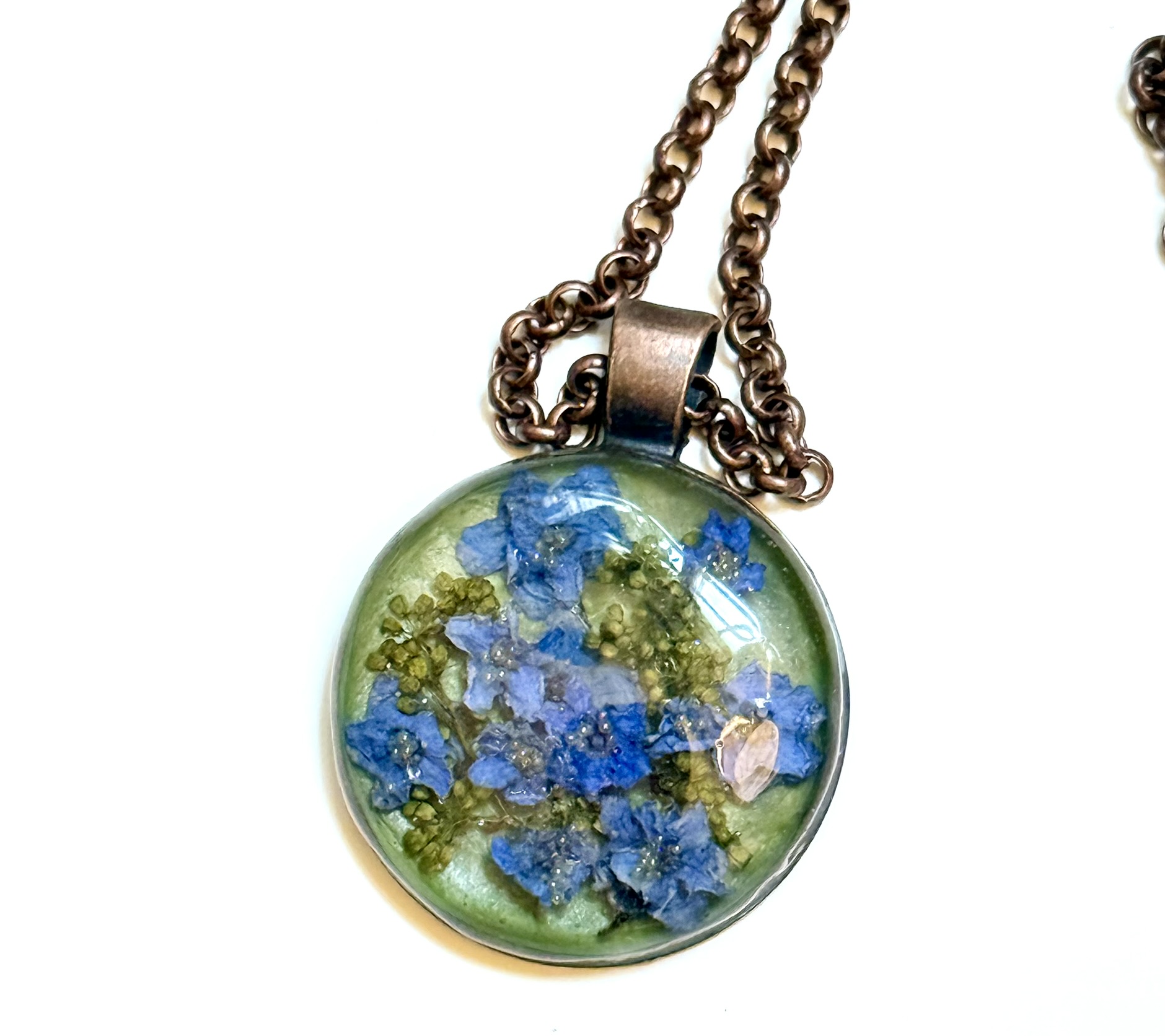
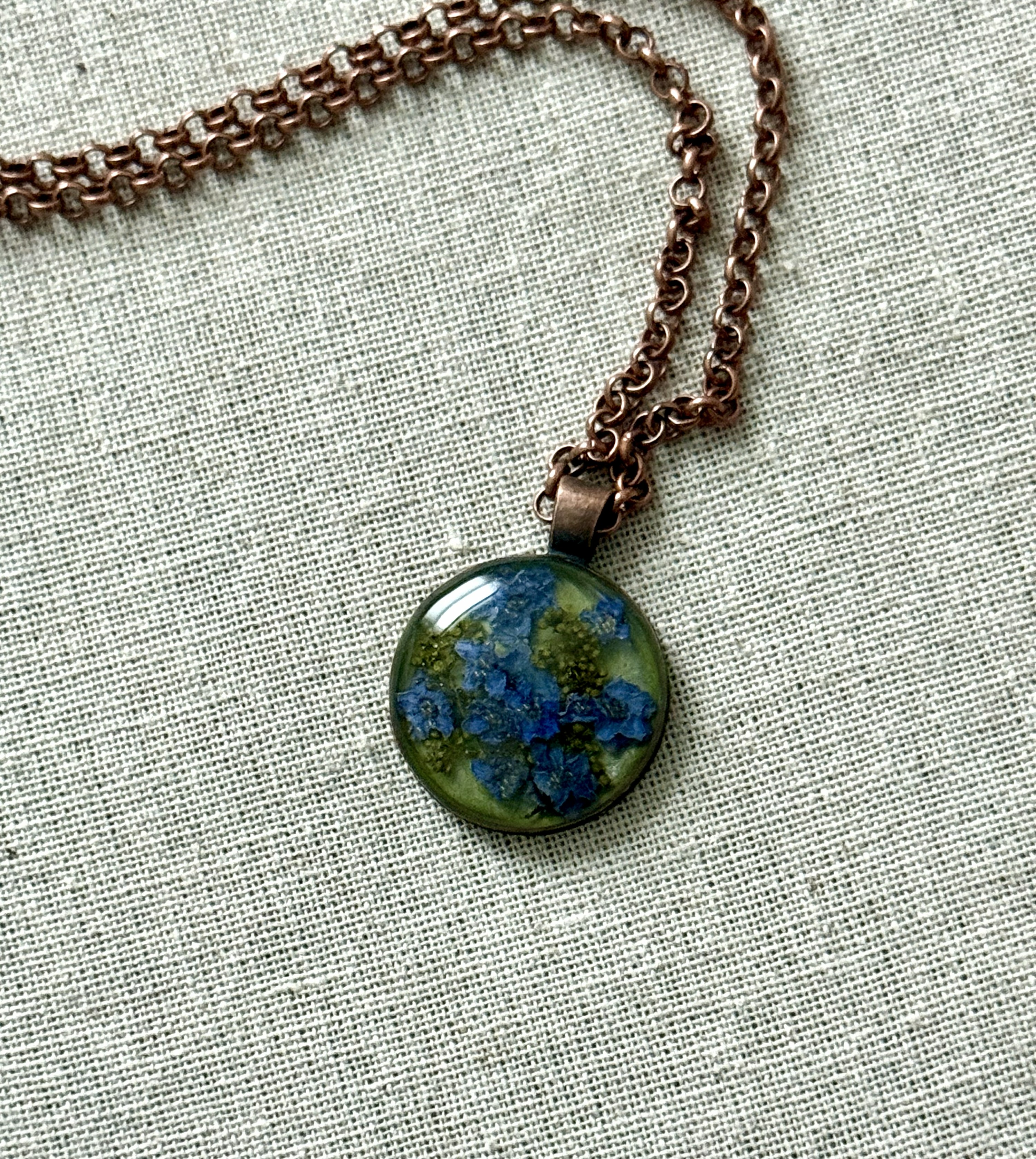
FMN · G · Resin · Copper setting
$155
Each piece is singular and unrepeatable.
When it finds its person, it is gone.
Codex
SU25 · AMR · CP · round · FMN/G · PND · MED · PCS/WHL
Remembrance · Embodiment · Luminous